Board Meeting Outfits for Men
Board meeting outfits for men need more restraint than most business clothes. The room is senior, the stakes are visible, and every detail either supports your authority or distracts from it.
The goal is not to look interesting. The goal is to look steady, prepared, and congruent with the level of responsibility in the room.
If your wardrobe already works, this decision is simple. If it does not, a board meeting is usually where the weak points become obvious.
Start with the boardroom, not the clothes
A board meeting can mean a formal corporate boardroom, a private investor update, an advisory board, or a senior leadership session inside a more casual company. The outfit should follow the room before it follows your taste.
Look at four cues: industry, seniority, location, and who controls the meeting. Finance, law, enterprise, family offices, and public-company environments usually need more formality. Founder-led, creative, and technology rooms may allow softer tailoring, but they still expect discipline.
This is where many men make the wrong adjustment. They hear “modern” and dress too casually, or they hear “board” and wear a stiff interview suit. A strong founder wardrobe gives you options between those extremes.
The safest board meeting outfit
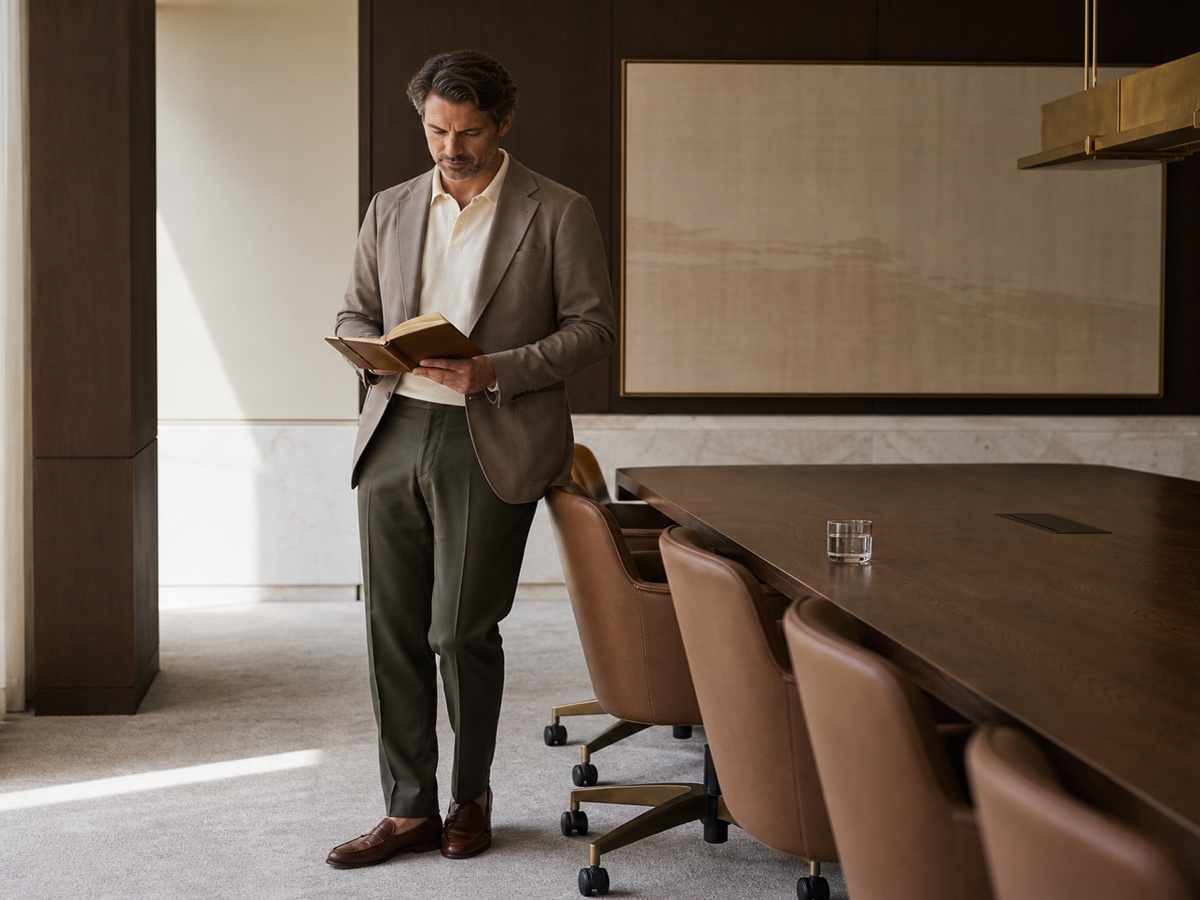
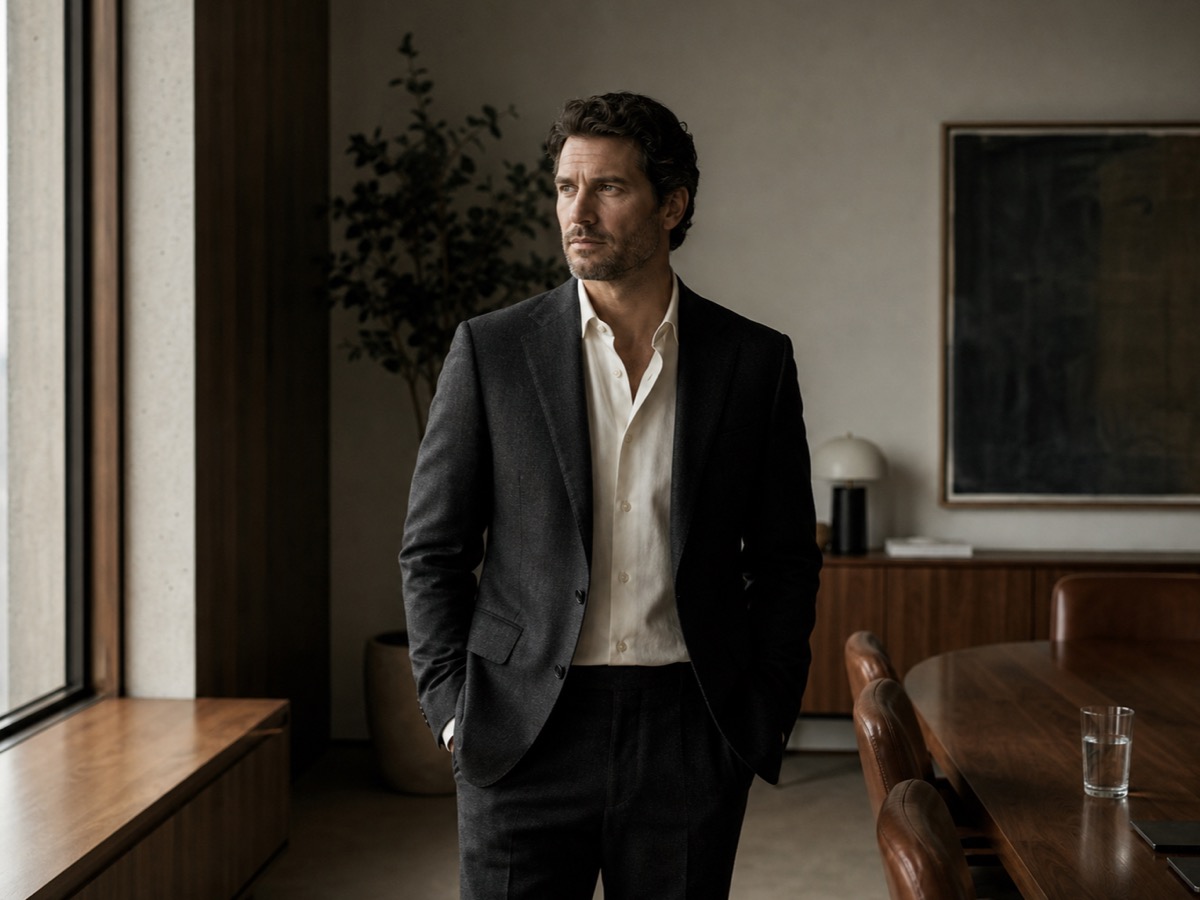
For most men, the safest board meeting outfit is a dark suit or dark tailored separates, a crisp shirt, restrained shoes, and very quiet accessories.
- Suit or jacket: navy, charcoal, dark brown, or deep olive tailoring with enough structure to hold the shoulder.
- Shirt: white, pale blue, cream, or a subtle stripe if the room is not highly conservative.
- Trousers: matching suit trousers or sharply cut wool trousers in a dark neutral.
- Shoes: polished oxfords, derbies, loafers, or clean boots depending on the room.
- Accessories: simple belt, quiet watch, no loud pocket square, no novelty socks, no visible brand performance.
The outfit should look considered from a distance and better up close. Fit, cloth, shoe condition, collar shape, and grooming do most of the work.
When a full suit is the right choice
Wear a full suit when the meeting is formal, externally facing, investor-heavy, legally sensitive, or attached to a conservative industry. A board does not need your most expressive clothes. It needs your clearest signal of judgment.
Navy and charcoal are still the most useful choices. They carry authority without theatre. Brown, tobacco, and deep green can work when the cut and cloth are excellent, but they ask for more confidence and better context reading.
If you skip the tie, the shirt has to behave. A soft, collapsed collar can make a good suit look unfinished. If you wear a tie, keep it matte, textured, and quiet. The tie should support the outfit, not announce it.
When tailored separates work better
Tailored separates work in modern boardrooms where a full suit would feel too corporate for the company culture. Think private tech company, advisory board, scale-up leadership meeting, or an off-site board session.
A useful formula is a dark soft jacket, mid-grey wool trousers, pale shirt or fine knit, and dark loafers or derbies. Another is a charcoal jacket, cream shirt, taupe trousers, and brown suede shoes if the room has some ease.
The separates still need a clean vertical line. If the jacket is too soft, the trousers too casual, and the shoes too relaxed, the outfit becomes nice dinner clothing rather than board meeting clothing. Use the thinking in business meeting outfits for men, then raise the restraint by one level.
What to avoid in a board meeting
A boardroom punishes exaggeration quickly. Avoid tight tailoring, shiny cloth, loud shoes, aggressive sneakers, novelty linings, oversized watches, and shirts that pull at the chest or stomach.
Also avoid the “I am too busy to care” look. Wrinkled shirts, tired shoes, overstuffed pockets, stretched knitwear, and a jacket that no longer fits all send a message before the meeting starts. It may not be fair, but it is visible.
The deeper issue is often not the outfit. It is that the wardrobe was built through random purchases rather than a system. A wardrobe audit will usually find the exact failure point: no serious jacket, weak shirts, shoes that only work casually, or trousers that never match the authority of the room.
Board meeting outfits by role
Founder presenting to the board
Wear the version of your style with the most clarity. A dark suit without a tie can work well if the shirt collar is strong and the shoes are excellent. If your company culture is relaxed, use dark separates with a sharp jacket and no casual shortcuts.
Executive joining a formal board
Choose a suit. Navy or charcoal, clean shirt, serious shoes, restrained watch. The outfit should make you look experienced enough to be in the room and calm enough to handle what is discussed there.
Consultant or advisor presenting recommendations
Dress slightly above the client’s daily baseline. A suit is right for formal clients. For modern clients, a structured jacket, wool trousers, and refined shoes usually create enough authority without looking detached from the company culture.
Board off-site or strategy day
Use softer tailoring, but do not become casual by accident. A textured jacket, merino knit or open-collar shirt, tailored trousers, and loafers can handle a long day while still looking senior.
Build a repeatable boardroom formula
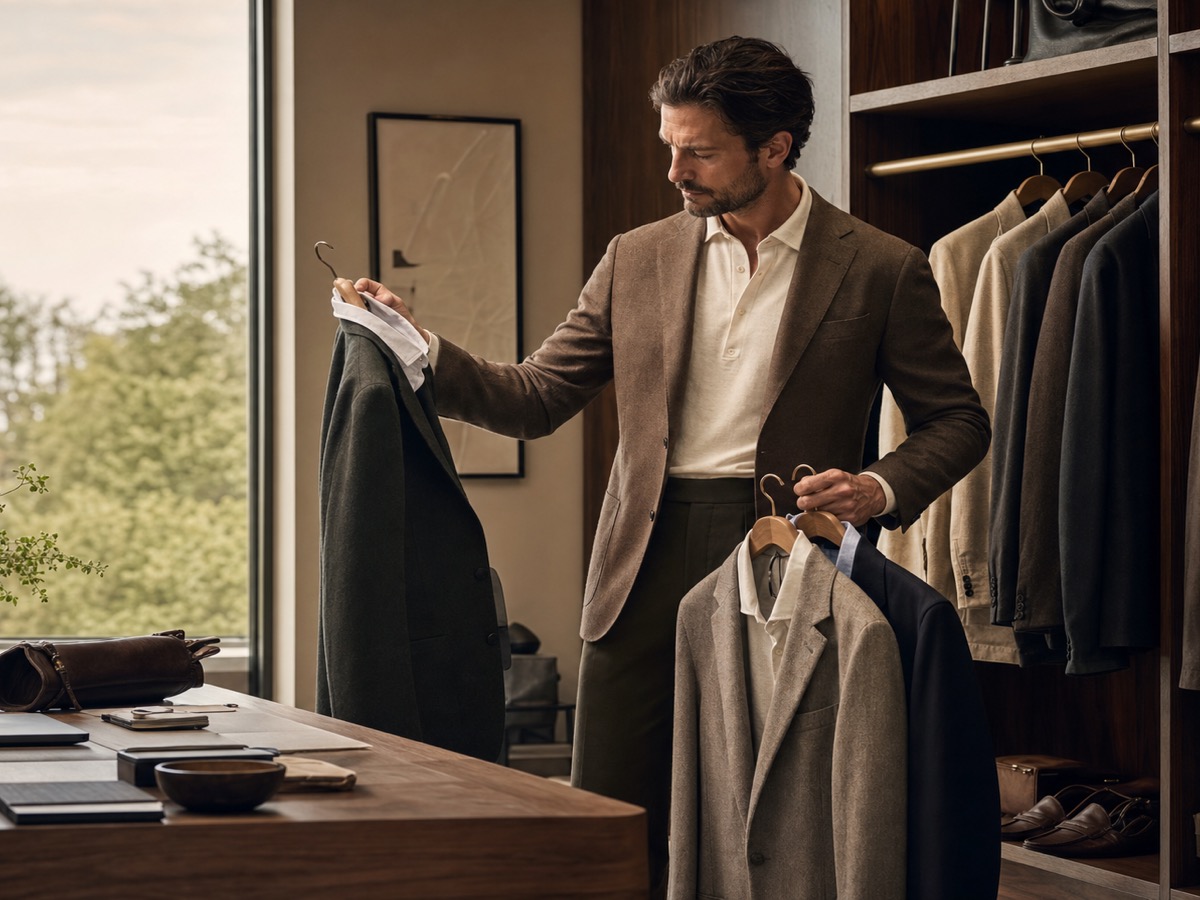
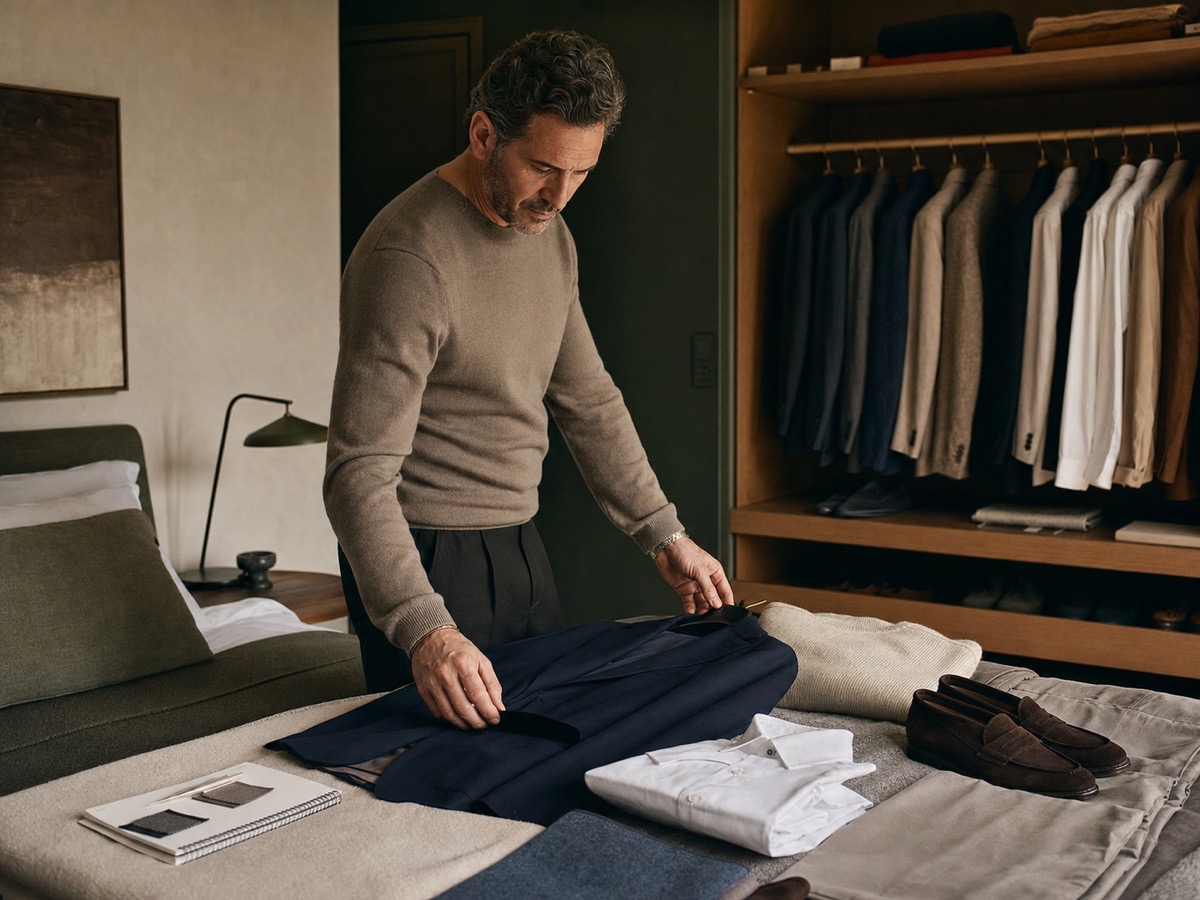
The easiest system is to build one reliable boardroom base: dark tailoring, two excellent shirts, one quiet knit, polished dark shoes, and a simple belt and watch. Then adjust only one variable by room: tie, shirt formality, shoe texture, or jacket structure.
This removes the morning negotiation. You are not asking, “What should I wear?” You are choosing which version of authority the room needs.
That is the work inside The Curated Outfit. We do not build wardrobes for men who want to think about clothes all day. We build systems for serious men whose calendar already asks more of them than their closet can currently answer.
Where The Curated Reset fits
The Curated Reset is an application-only wardrobe system for founders, executives, consultants, and senior operators who need their clothes to match the rooms they are already in.
Board meetings are a useful diagnostic because they expose congruence. The clothes need to match your role, your body, your industry, your calendar, and the authority you already carry.
If you want that handled with structure instead of more saved outfits and uncertain purchases, read the client reviews, then apply for The Curated Reset.
FAQ
What should men wear to a board meeting?
Men should wear a board meeting outfit that signals authority, restraint, and preparation. A dark suit or dark tailored separates, crisp shirt, polished shoes, and quiet accessories are the safest choice for most boardrooms.
Do men need to wear a suit to a board meeting?
Men should wear a suit to a board meeting when the industry, seniority, or external stakes are formal. In modern founder-led rooms, tailored separates can work if they still look sharp, grown-up, and clearly intentional.
Can men wear business casual to a board meeting?
Business casual can work for some board meetings, but only at the sharp end of the category. A jacket, tailored trousers, refined shirt or knit, and serious shoes are safer than chinos, casual shirts, or sneakers.
What colors work best for board meeting outfits?
Navy, charcoal, dark brown, deep olive, white, pale blue, cream, grey, and taupe work best for board meeting outfits. They create authority without pulling attention away from the conversation.
How can men look authoritative without looking stiff?
Men can look authoritative without looking stiff by using excellent fit, softer tailoring, matte fabrics, open-collar shirts, and polished but not severe shoes. Keep the structure clear, then soften one element.