Business Casual Men Examples That Work
If you search for business casual men examples, you usually get the same formula: chinos, Oxford shirt, blazer, loafers. It is not wrong. It is just too generic to solve the real problem.
Business casual is difficult because it sits between roles. You need enough structure to be taken seriously and enough ease to look current. For a founder, consultant, executive, or senior operator, the question is not “what counts as business casual?” It is “what reads correctly in the rooms I am actually in?”
What business casual should do for you
Business casual should make you look clear, capable, and at ease. It should not make you look like you are trying to dress younger, hiding inside corporate clothes, or guessing what the room expects.
The strongest version starts with your week, not with a clothing list. A board meeting, a client dinner, a travel day, a casual Friday, and a founder event can all sit under business casual, but they need different levels of polish.
If your closet is already full and still unreliable, start with a wardrobe audit for men. The issue may not be a missing blazer. It may be that your pieces do not share the same level of formality, color temperature, or fit logic.
Example 1: The client meeting outfit
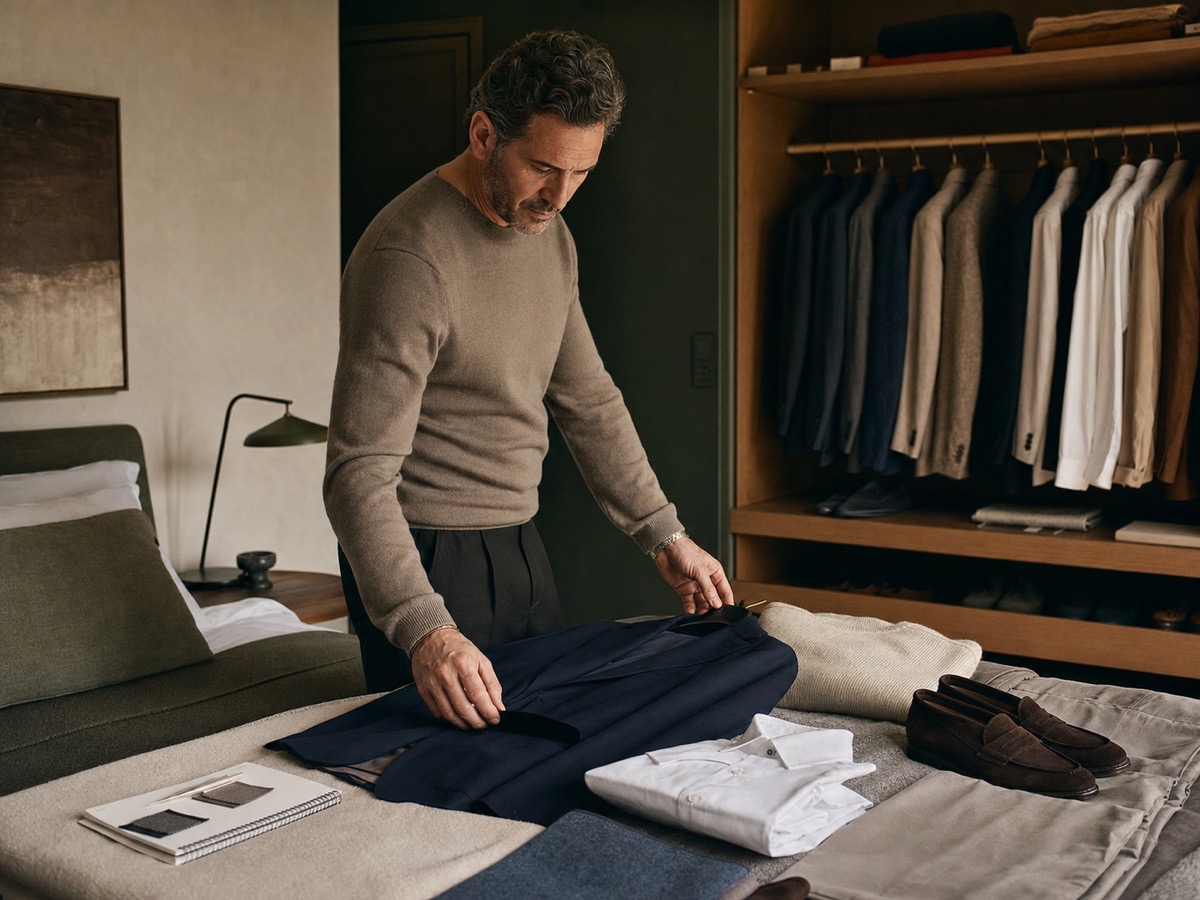
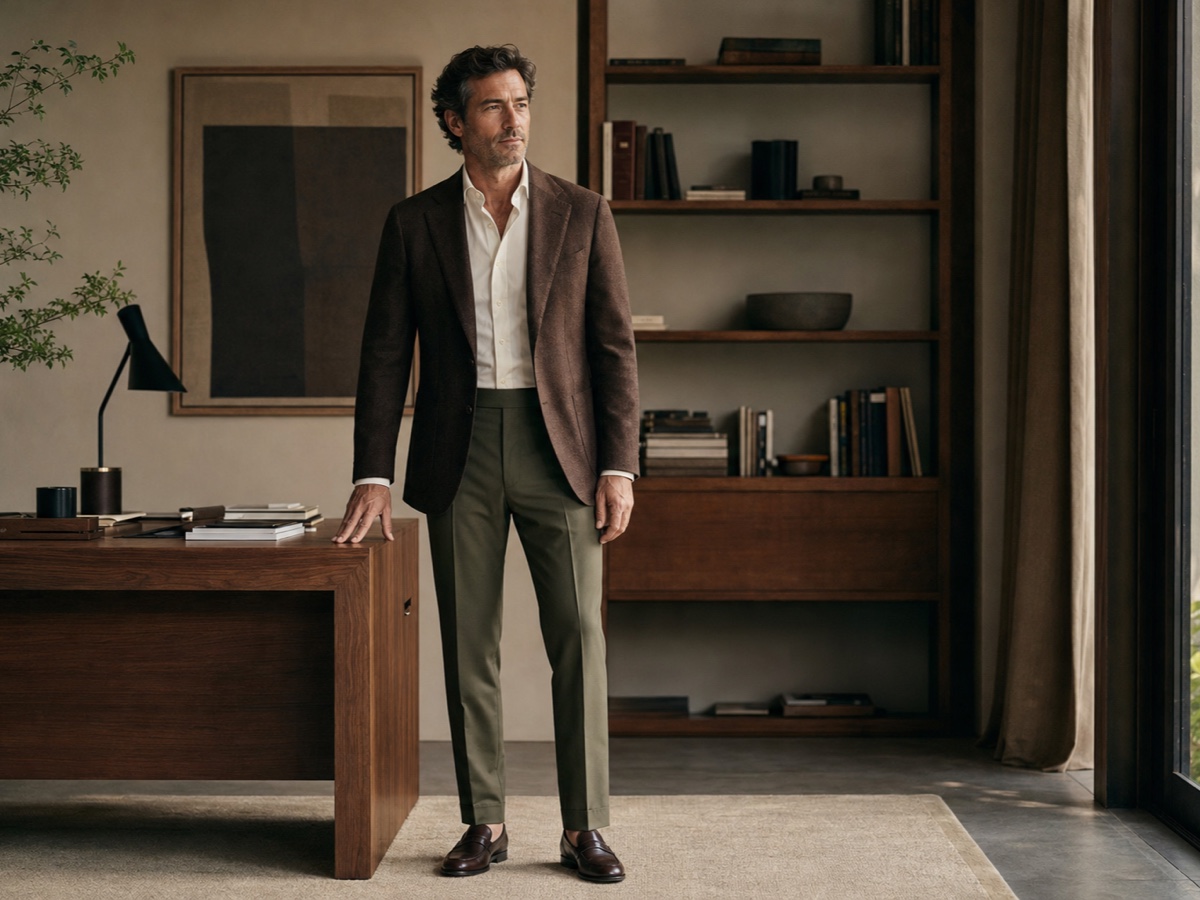
Wear an unstructured navy or brown blazer, an open-collar shirt, tailored trousers, and loafers or clean derbies. This is the safest business casual example for a room where you need authority without full corporate formality.
The important detail is softness. A stiff suit jacket with chinos often looks like you forgot part of the suit. A softer jacket, better cloth, and a trouser with shape make the outfit intentional.
Use this for client meetings, advisory calls, networking lunches, and any day where you may move between a screen, a boardroom, and dinner. If you work with senior clients, this is usually more useful than a hoodie-with-blazer version of business casual.
Example 2: The travel day that still looks serious
Wear a fine-gauge knit polo or merino crewneck, a chore jacket or soft overshirt, tapered trousers, and leather sneakers or suede loafers. The outfit should be comfortable enough for movement but still shaped enough to arrive well.
This is where many men lose the thread. They dress for comfort alone, then land in a city, hotel lobby, or informal dinner looking less serious than they are. The fix is not discomfort. It is better fabric, better proportions, and one layer that gives the outfit a frame.
If overshirts are hard to place in your wardrobe, this guide to the overshirt explains why the right one can replace both a casual jacket and a too-formal blazer in the middle of the week.
Example 3: The founder dinner outfit
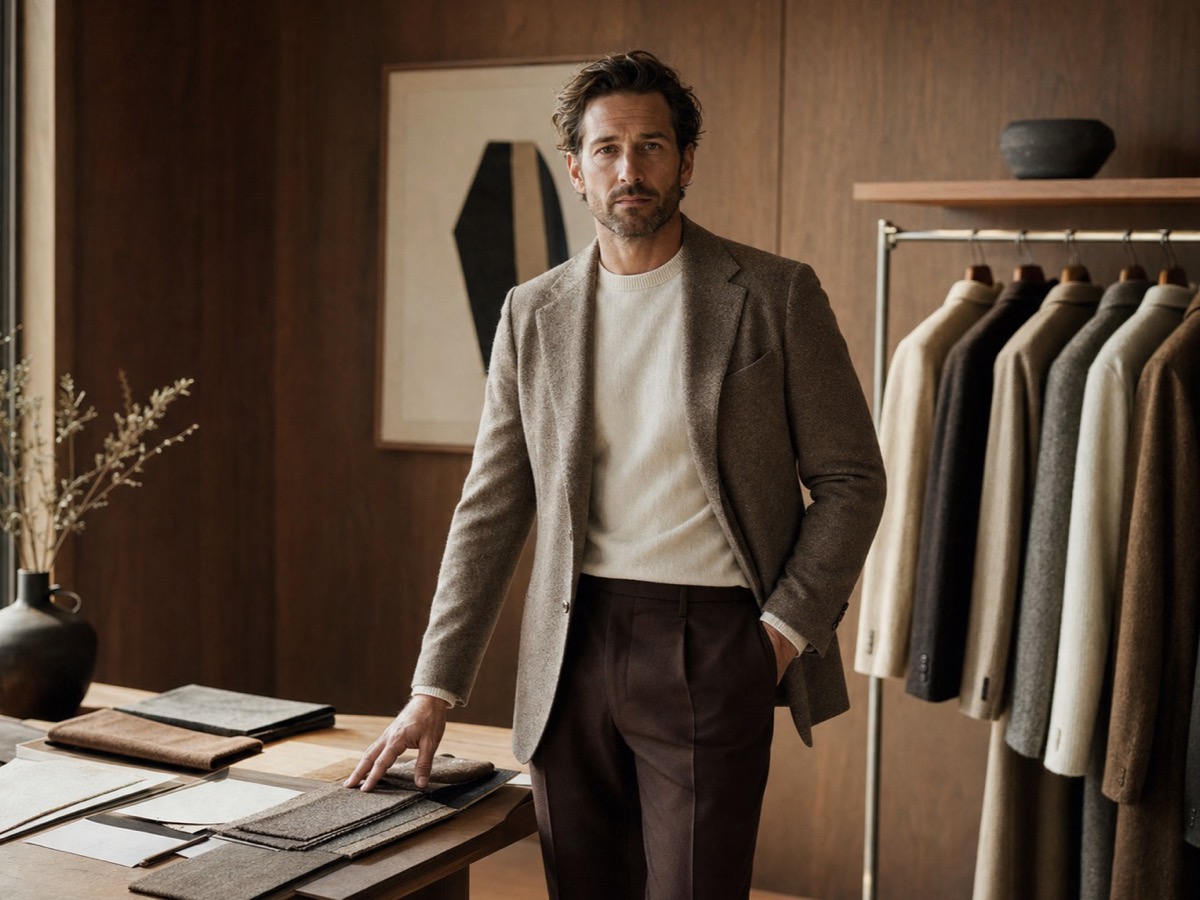
Wear a textured jacket, a dark knit or soft shirt, tailored trousers, and shoes with some substance. Think suede loafers, split-toe derbies, or a minimal boot rather than a thin dress shoe.
The founder dinner outfit should not look like office clothing carried into the evening. It needs a little depth: texture, richer color, better shoes, and a silhouette that feels relaxed without collapsing.
This is also where personality can come in quietly. A brushed brown jacket, a deep green knit, horn buttons, suede, or a better belt can make the outfit feel like yours without turning the evening into a costume.
Example 4: The smart casual office day
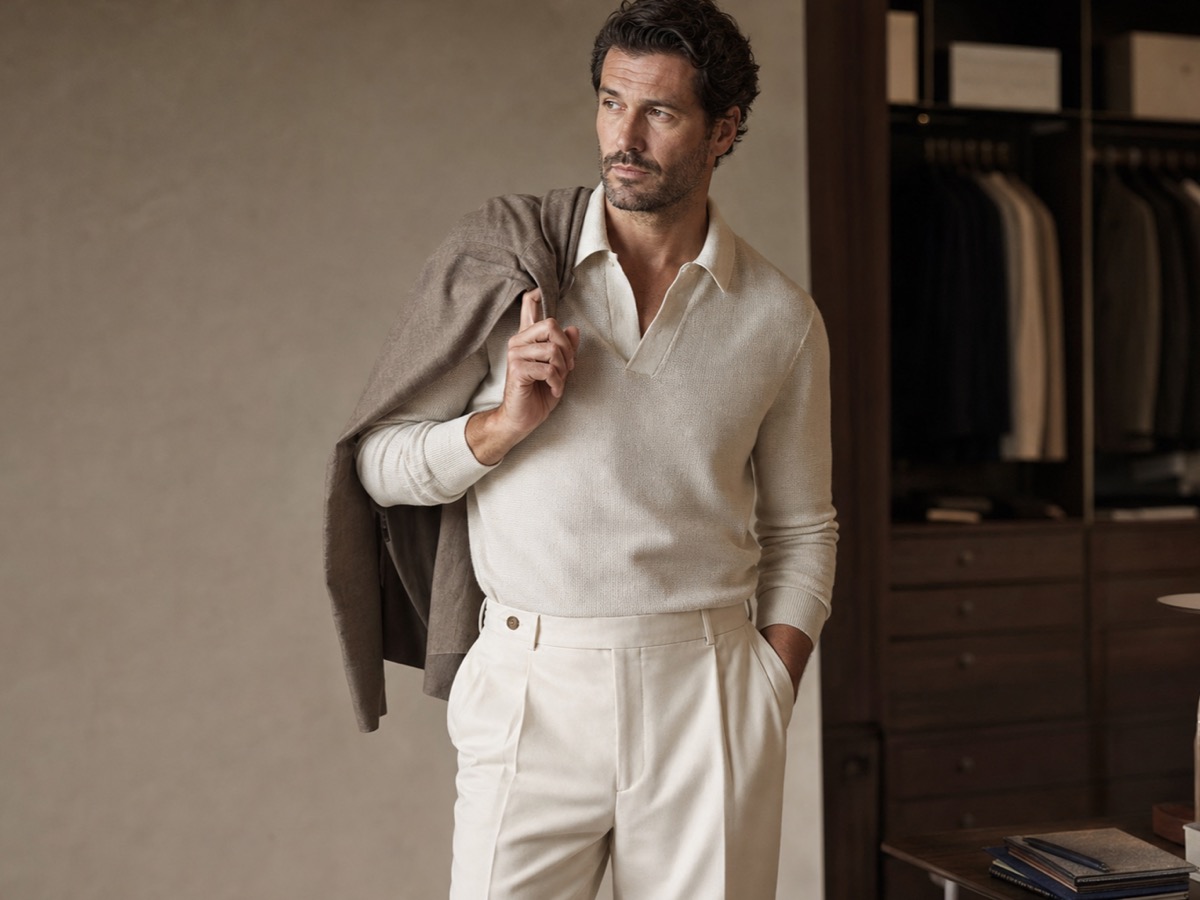
Wear a knit polo, a clean cardigan or light jacket, wool trousers, and loafers. This is useful for hybrid offices, creative teams, and days with internal meetings where a blazer would feel too much.
The mistake is making every item casual. If the top is soft and relaxed, keep the trousers sharper. If the shoes are casual, make sure the knit has weight and the colors are composed. Business casual works through balance, not through one magic item.
For men who default to jeans and a T-shirt, this is often the first repeatable formula. It still feels easy, but it gives the body better lines and the room a clearer read.
Example 5: The conference or offsite outfit
Wear a soft jacket, a knit tee or fine polo, trousers with stretch, and shoes you can stand in. Keep the palette calm: olive, tobacco, navy, cream, charcoal, grey, or brown.
Conferences create a strange dress code. Some men overdress and look like they came from a banking floor. Others underdress and look like they are avoiding visibility. The better answer is business casual with movement built in.
Choose pieces that photograph well and survive a long day. Matte textures usually read better than shiny fabrics. A trouser that holds its crease will do more for you than another novelty sneaker.
Example 6: The Friday outfit that is still adult
Wear dark denim or casual trousers, a structured knit, a suede jacket or overshirt, and good leather shoes. If you wear sneakers, keep them minimal and clean.
Casual Friday goes wrong when the clothes belong to a completely different man than the rest of the week. If Monday says disciplined and Friday says unfinished, the wardrobe is not integrated.
The goal is continuity. Your relaxed outfit should still share the same colors, fit preferences, and level of taste as your more structured outfits. That is what makes a wardrobe feel like a system instead of a costume cupboard.
The business casual pieces worth owning
You do not need a large wardrobe. You need the right middle-category pieces, because they do the most work in a modern professional life.
- One soft blazer in navy, brown, olive, or charcoal
- Two pairs of tailored trousers that are not suit trousers
- One knit polo and one fine merino crewneck
- One overshirt, suede jacket, or light chore jacket
- One pair of loafers, derbies, or minimal boots
- One refined belt, ideally in a texture that matches your shoes
This is where a wardrobe consultant for men can be useful. The job is not to tell you to buy basics. It is to identify which middle-category pieces make your actual week easier.
What to avoid
Avoid business casual that is just office clothing with the tie removed. It often looks tired. Avoid stretch chinos that lose shape by lunch. Avoid shiny dress shoes with casual trousers. Avoid novelty socks, loud pocket squares, and anything that tries to add personality because the outfit itself has none.
Also avoid copying a business casual example without checking your body, industry, climate, and visibility. A founder in Lisbon, a consultant in London, and an executive in New York may all need business casual, but the same outfit will not read the same way in each room.
Where The Curated Reset fits
The Curated Outfit helps serious men build wardrobes that work across their actual lives. The Curated Reset is a virtual, application-only wardrobe system for men who want clarity without turning style into a hobby.
Business casual is exactly the kind of problem that benefits from a system. It is not one dress code. It is a set of decisions about formality, fabric, proportion, color, body, work, travel, and social context.
If you want your wardrobe to stop feeling slightly behind your role, read the client reviews and look for the repeated language: accuracy, ease, clarity, and relief. Those are the signs that the clothing is finally doing its job.
FAQ
What is business casual for men?
Business casual for men is a dress code between formal business wear and relaxed casual clothing. In practice, it usually means tailored trousers, soft jackets, knitwear, collared shirts, refined shoes, and a level of polish that matches the room.
Can men wear jeans for business casual?
Men can wear jeans for business casual in some industries, but the jeans need to be dark, clean, well-fitting, and paired with more refined pieces. If the room includes senior clients, investors, or formal hospitality, tailored trousers are usually safer.
Are sneakers business casual?
Sneakers can be business casual when they are minimal, clean, and paired with structured clothing. They become too casual when they are athletic, bulky, brightly branded, or used to compensate for an outfit with no polish elsewhere.
What is the easiest business casual outfit for men?
The easiest business casual outfit for men is a soft blazer, open-collar shirt, tailored trousers, and loafers. It works because every piece has enough structure without becoming a full suit.
How should business casual look after 40?
After 40, business casual should look cleaner, better fitted, and more intentional. Avoid clothes that feel too young, too corporate, or too shapeless. The best outfits usually rely on better fabric, calm color, and accurate proportions.
If you want a business casual wardrobe built around your actual week, apply for The Curated Reset.