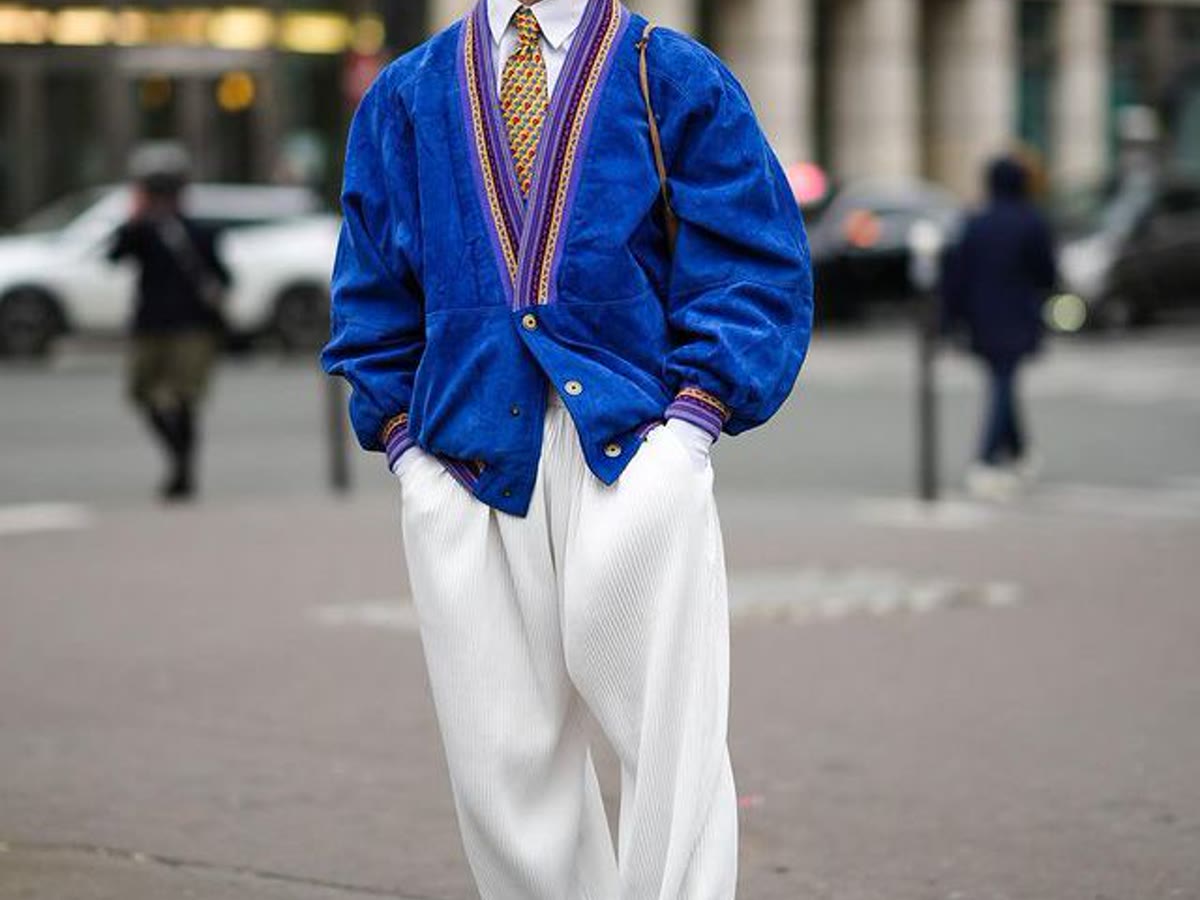
You’re dressing on accident. Here’s how to do it with intent.
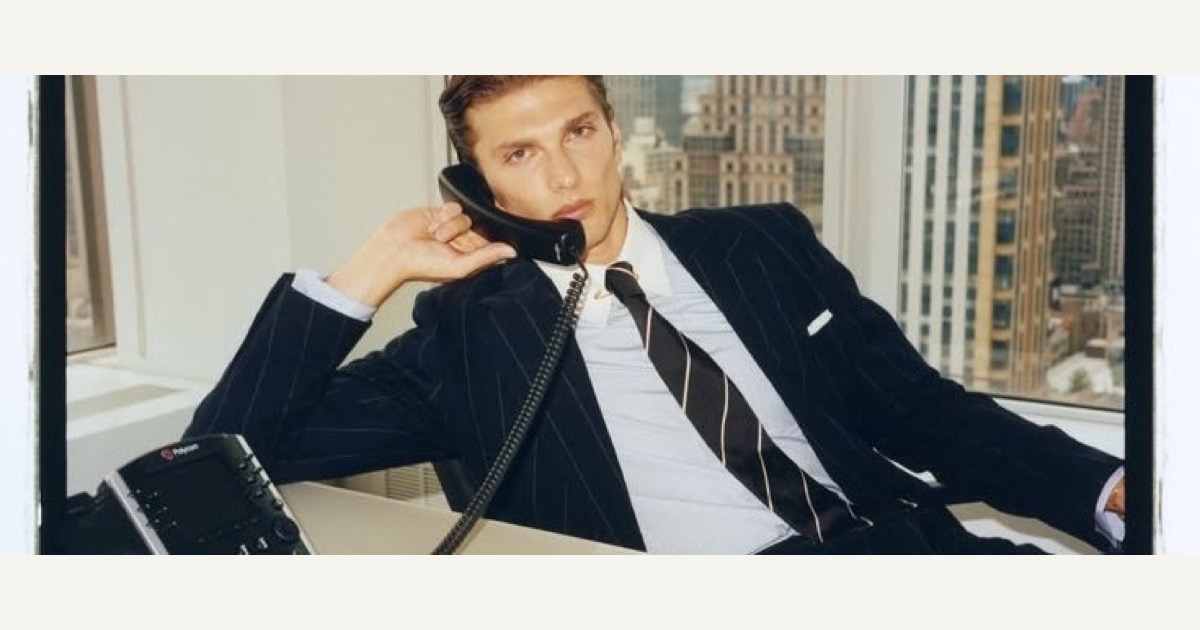
Last year, one of my Instagram videos went viral.
The point was simple: clothes are one of the most underused tools a man has for showing what he stands for.
I still agree with it, though I did not unpack it as clearly as I should have. So here it goes.
Most men are already communicating through what they wear. Very few have chosen the message.
There are three ways to dress with intent. Before any of them works, there is one element almost nobody starts with. Together they form four parts, and they stack in order: The Intent Stack.
Element one: contrast
This is the foundation, and it is often the fastest way to improve how you look, especially how good clothes look on you.
Your personal contrast level is the difference between your lightest and darkest natural features. Hair, skin, and for some of you, beard. When the combinations you wear match that balance, especially near your face, two things happen:
Your features stay distinct instead of flattening out
You stop accidentally wearing the shades that make people ask if you are feeling alright
Every man has colors he gets complimented in and shades where someone once asked if he was tired. Some of that is undertone. Often, the cleaner fix is contrast.
Finding yours is simple.
Take a selfie in daylight, then add a black and white filter. The less separation between your skin and hair, the lower your contrast.
Very dark hair against light skin creates high contrast, which is why those men often look strong in sharp black and white, think a tux. I am medium contrast: dark brown hair, tanned most of the year. Erling Haaland sits lower on the scale, though this is about more than being blond.
Get this right and everything after it becomes easier. Get it wrong and the best jacket you own can still look slightly off, no matter how perfect it looks on the hanger.
Element two: enclothed cognition
You have probably heard of this one. It gets quoted constantly in my industry. I think it is interpreted poorly most of the time, usually as a point about how others perceive you. External. The more useful effect is internal.
The original experiment worked like this: participants wore the same white coat. One group was told it was a doctor's coat, the other a painter's coat. They completed the same task. The men in the doctor's coat scored higher on attention and precision.
The garment did not change. What changed was what they believed they were wearing, and their performance shifted to match it.
Worth noting: the study has had replication issues, so take the exact finding with some salt. The underlying mechanism still matters, and I see it in client work all the time. A man puts on the jacket we chose and immediately sees the difference in how he leads.
This is the practical version: your clothes send a message, and you are the first important recipient. Once you know what competence, authority, or ease looks like for you specifically, you can dress to produce more of it.
For someone else it may be approachability, trust, or calm control.
Take a sports coat. One man sees his old teacher, elbow patches included, and refuses to consider it. Another sees it with jeans + loafers (the stylish way) and wears it on days when he needs to lead. Same garment, different association. The association is what puts force behind his behavior.
That is why vocabulary matters. You cannot wear what you cannot name.
How to work out your own:
Pull up your references. The photos you keep returning to, the ones you wish you could copy and paste into your wardrobe.
What is the underlying message? Precision, unbothered energy, command, warmth? Then identify the pieces or combinations that carry that energy.
Find your version. Run those pieces through your own filter: your colors, your fit, your real life.
The reference gives you the direction. You make it yours.
Element three: your values
This is the outward half, and it is where most men either overthink the process or abandon it.
One of my clients played in an indie rock band for years. He owns multiple bagel shops, has made art, drawn comic books, and sold at flea markets. Always building something. Now he runs several businesses, and we are refining his image to match where he has landed.
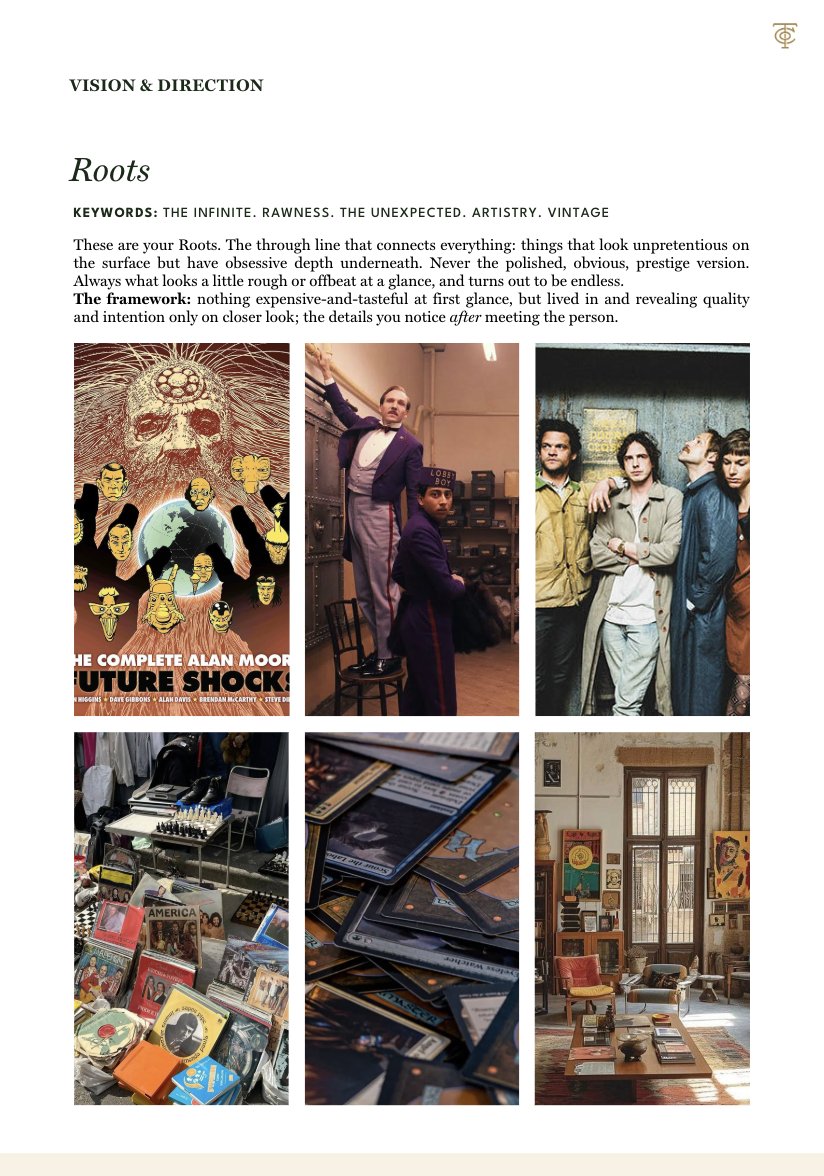
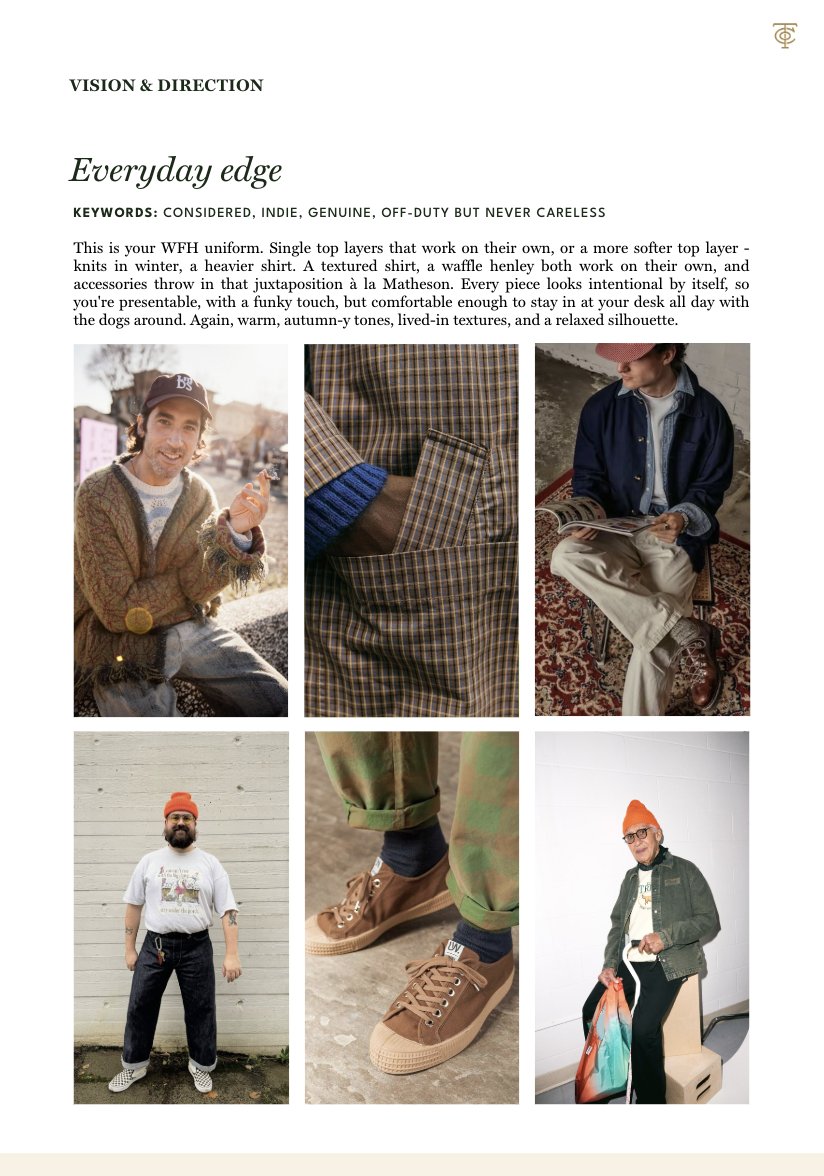
We are not putting him in what he calls standard white man clothing. We are carrying his vintage sensibility into a more mature version of itself. A chore jacket with embroidery, painter pants, Solovair Monkey Boots. The through line stays visible, including in the upgrade.
So what is your version? Your character turned into a through line?
If you are analytical or detail-driven, ask what that should look like on the body.
I have been multi-passionate in the creative space my whole life. Painting, writing, curating, always with a lot of color, and I can lose hours to one detail (blessing and curse). My wardrobe works the same way. I do not own only statement pieces, yet every piece has something special, whether that is shape, fit, or a very subtle colored seam.
Your values are already visible in what you buy. What makes style wearable, personal, and unique without trying too hard is making that deliberate.
Element four: color
This is the last lever for a reason. Treat it as depth rather than foundation. If you enjoy geeking out on the details, this part is for you.
There is psychology here, and you already know most of it. Sage green reads as wellness, nature, calm. Purple carries luxury and spirituality. Red brings intensity. White reads clean, efficient, precise.
White is the useful example. Wearing white or off-white suggests you are the kind of man who can keep it clean through a full day. I will give men with young children a pass on that one. Still, it shows the mechanism: color can communicate something that would feel strange if said out loud.
With clients, I build a palette from their coloring first, then their role and how they want to be perceived. Color meaning gets added after the foundation is right.
One thing that overrides all four..
None of this survives discomfort.
When you feel natural in what you wear, people notice. It also changes how you perform. When something is off, when you keep adjusting your collar, checking every reflection, pulling at sleeves or a waistband, people notice that too. They may miss the clothing as the cause and still file it under "something feels off."
Contrast, cognition, and values, with color as the added layer. That is the Intent Stack. Get the vocabulary and the rest follows, because you cannot wear what you cannot name.
This is what I work on with private clients inside The Curated Reset, my 10-week 1:1 program. DM me for details, or apply here.
The first step is to audit your style. Do it in 2 minutes with the Founder Style Archetype quiz & get 3 immediate wins to improve.
Take the quiz