Personal Style Mood Board for Men
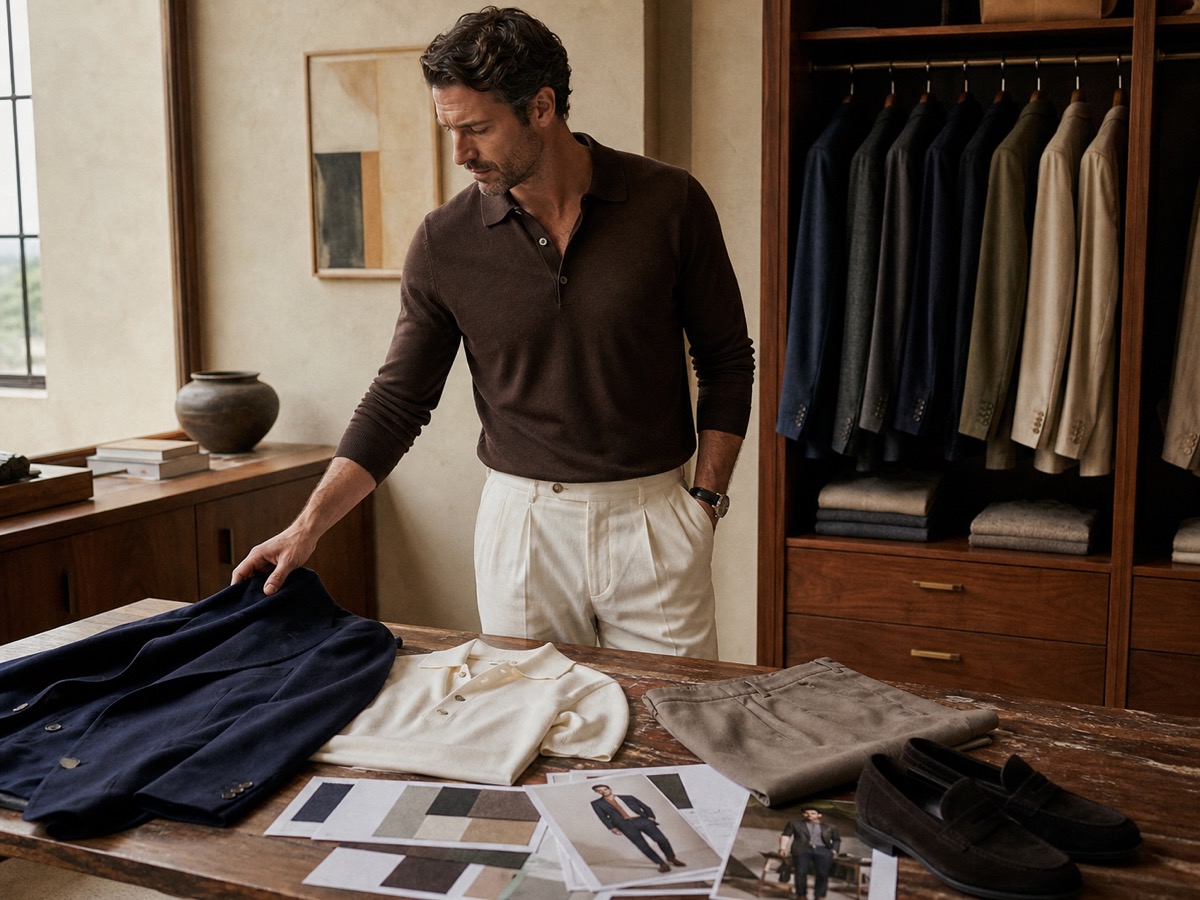
A personal style mood board for men can be useful, but only if you know what job it is doing. Most men use it as a place to collect taste. That is pleasant for ten minutes and almost useless when Monday morning asks for an actual outfit.
The problem is not inspiration. The problem is translation. A board can show you a beautiful coat, a soft trouser break, a certain shade of brown, or a man who looks relaxed in clothes you would never actually wear. It does not tell you what belongs in your closet, what fits your body, or what your calendar requires.
For a founder, executive, consultant, or business owner, the useful question is stricter: how do you turn taste into a wardrobe that works under pressure?
What a mood board can do well
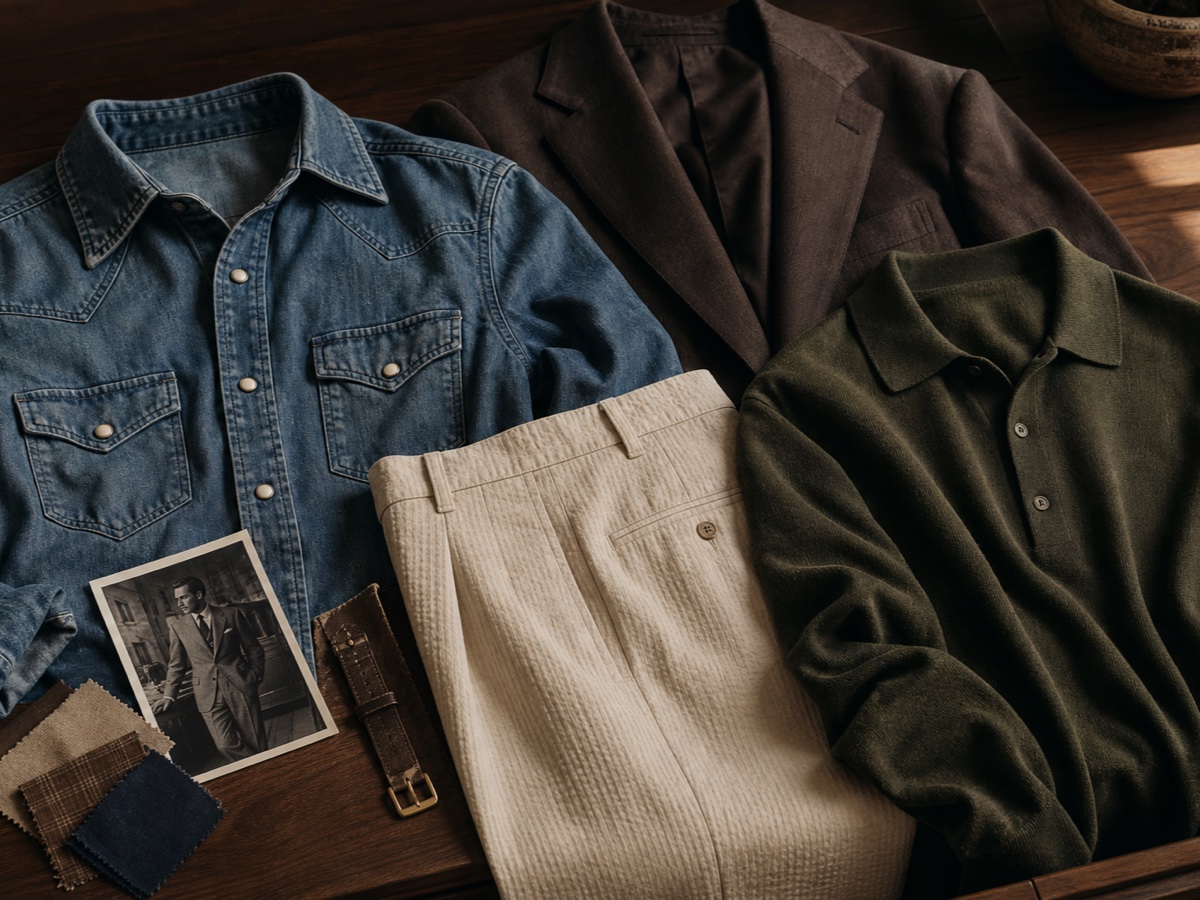
A good mood board can reveal patterns before you have words for them. You may notice that you keep saving soft tailoring, suede, knitted polos, longer coats, grey flannel, dark denim, textured shirts, or loafers with a heavier sole. You may see that the clothes you like are quieter than the clothes you buy.
That is valuable. Taste often speaks in repetition before it becomes clear. The board gives you evidence. It lets you see what keeps attracting your eye without asking you to make a purchase yet.
It can also separate the atmosphere you like from the items you need. You may not need the exact linen suit in the picture. You may need the relaxed proportion, the lower contrast, the matte texture, or the way the outfit feels considered without looking styled.
Where mood boards go wrong for men
Mood boards fail when they stay visual. A man saves twenty images of men in beautiful clothes, then buys one similar piece and wonders why it does not work. The missing layer is context.
Images rarely show your real constraints: climate, role, body shape, commute, client rooms, dress codes, laundry habits, travel, and how much attention you actually want your clothes to draw. A board can make a camel coat look inevitable. It cannot tell you whether your life has enough cold days, enough polish, or enough supporting pieces to justify it.
This is why I do not treat a mood board as a shopping list. It is a diagnostic tool. The board shows direction. The wardrobe system decides what to do with it.
Start with situations, not aesthetics
Before saving another image, list the situations you dress for most often. For many TCO clients, the list looks something like this: leadership calls, investor meetings, client dinners, travel days, office days, weekend lunches, conferences, and the occasional room where everyone is looking at the founder before he has spoken.
Then match each situation to the level of formality and ease it needs. A board full of casual linen is not wrong, but it will not solve a calendar full of board meetings. A board full of sharp suits may look impressive and still be too formal for your actual work.
This is the same logic behind a wardrobe audit for men. You do not start with categories. You start with use. The clothes have to answer the life before they answer the image.
Look for rules hiding inside the images
Once you have a board, do not ask, "Do I like this?" Ask what rule the image is showing you.
- Is the appeal in the color palette?
- Is it the relaxed fit, not the exact garment?
- Is it the contrast between a structured jacket and casual trousers?
- Is it the absence of loud details?
- Is it the way the shoe makes the outfit feel grown-up?
- Is it the texture, such as suede, brushed cotton, flannel, linen, or knitwear?
Those rules matter more than the images. "Soft navy jacket with off-white knit and taupe trouser" is usable. "Italian man in nice outfit" is not.
If accessories keep appearing in your board, treat them the same way. You may not need luxury sunglasses, but you might need sharper eyewear, cleaner metal tone, or better scale around the face. A curated overview like CSD's guide to Gucci sunglasses can be useful as a reference for silhouette and finish, as long as you translate the idea back to your face and wardrobe rather than copying the label.
Separate inspiration from identity
One of the quiet traps of a mood board is borrowed identity. You save the man in the image, not the clothes. He looks relaxed, authoritative, lean, artistic, wealthy, mysterious, or unbothered. Then the clothing becomes a shortcut to a feeling.
That shortcut rarely works. Your wardrobe has to make sense on your body, in your rooms, with your work, and at your current level of visibility. If you are running a company, advising clients, or leading a team, clothes need to support your signal instead of asking people to decode a new character every week.
This is where finding your personal style as a man becomes less romantic and more useful. Personal style is not a costume of preference. It is a set of repeatable decisions that make you recognisable in the right way.
Turn the board into a wardrobe filter
After you find the patterns, write a one-page filter. It should be practical enough to use while shopping and honest enough to stop bad purchases.
- Colors: three to five colors that connect with what you already own.
- Silhouette: the trouser width, jacket shape, shirt collar, and knitwear volume that suit your frame.
- Formality: the level of polish your real week needs.
- Textures: materials that make the wardrobe feel like you.
- Exclusions: pieces you admire on other men but should not buy.
The exclusions are important. Good taste includes knowing what to leave alone. A man with strong judgment does not need to own every good idea he recognises.
Build outfits before you buy more clothes
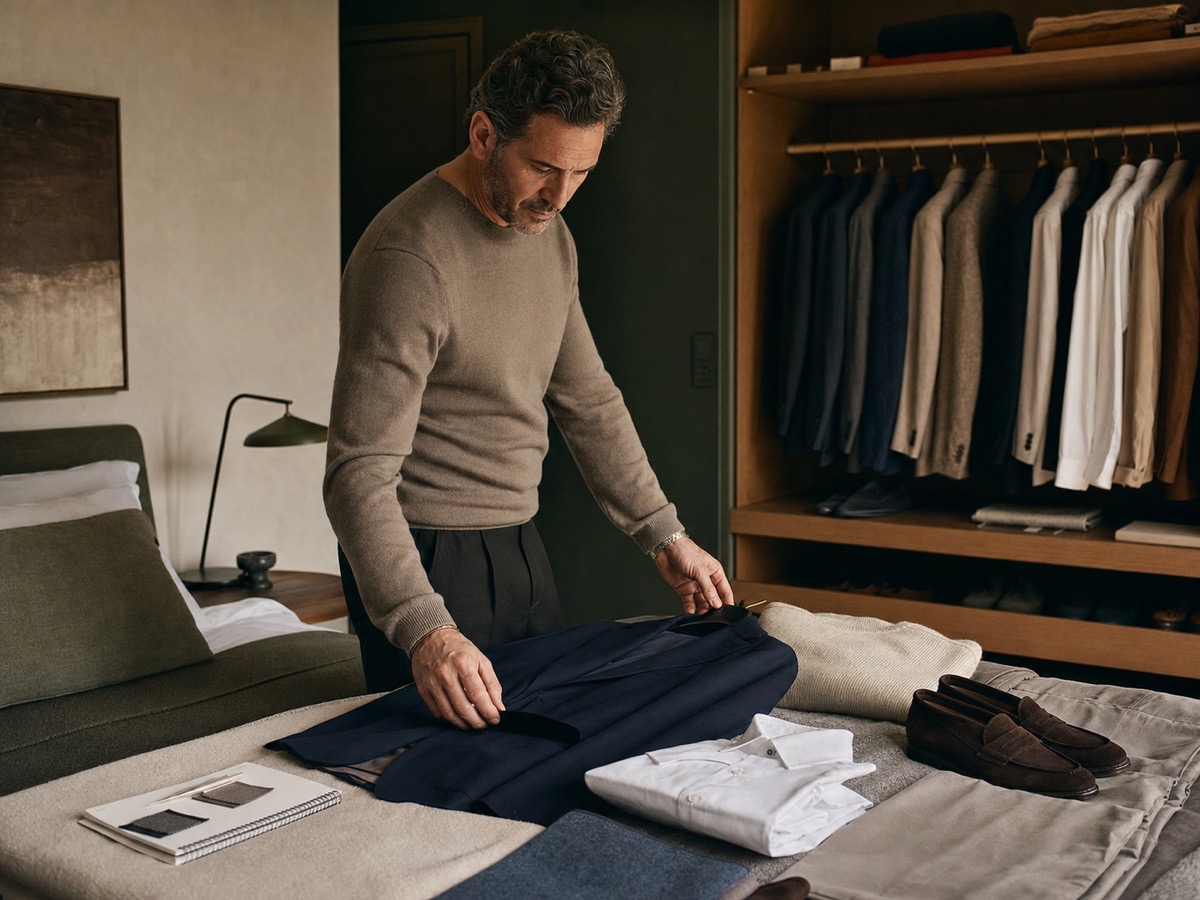
Before buying anything inspired by the board, build three outfits from your existing wardrobe that move in the same direction. If you cannot create even a rough version, note what is missing. If you can create it, wear it in the actual situation and see what feels off.
This step prevents fantasy shopping. It shows whether the aesthetic can survive your life. Maybe the jacket works but the shoes make it too formal. Maybe the trouser shape is right but your shirts are too crisp. Maybe the whole idea only works when you are on holiday and not when you are leading a meeting.
That is useful information. The goal is not to prove the board right. The goal is to extract what can become part of your real wardrobe.
When a mood board is not enough
A mood board is not enough when you keep collecting references but still feel badly dressed. It is not enough when your closet is full, your taste is good, and getting dressed still takes too much negotiation.
At that point, the issue is usually not inspiration. It is structure. You need a way to connect fit, proportion, role, shopping, tailoring, outfits, and personal signal. That is why a wardrobe consultant for men should do more than send links. The work is judgment, editing, and translation.
Inside The Curated Outfit, mood direction is only one layer. The Curated Reset turns that direction into a wardrobe system: what to keep, what to remove, what to tailor, what to buy, how pieces combine, and how the whole thing should read when you walk into the room.
You can read the client reviews if you want to see the practical result men describe: less second-guessing, clearer purchases, and a wardrobe that finally matches the level of their life.
FAQ
What is a personal style mood board for men?
A personal style mood board for men is a collection of images that shows the colors, silhouettes, textures, outfits, and general atmosphere a man is drawn to. It is most useful when it becomes a decision tool, not just an inspiration folder.
Should men use Pinterest for personal style?
Yes, men can use Pinterest for personal style, but it should not become the whole process. Use it to identify repeated preferences, then translate those preferences into fit, formality, wardrobe gaps, and outfit formulas that suit your actual life.
How many images should be on a style mood board?
Twenty to forty images is usually enough. More than that often creates noise. The useful part is not collecting endlessly. It is reviewing the images and naming the repeated rules that should guide your wardrobe.
What should a men's style mood board include?
Include full outfits, color palettes, fabrics, shoes, outerwear, grooming direction, and any rooms or settings that clarify the level of formality. Avoid saving only dramatic images. You need references for normal Tuesdays too.
Can a mood board replace a personal stylist?
No. A mood board can clarify taste, but it cannot judge fit, proportion, shopping strategy, tailoring, or how clothes read on your body in real situations. A stylist or wardrobe consultant turns inspiration into decisions.
If your inspiration is clear but your wardrobe still is not, apply for The Curated Reset. We will turn the references into a wardrobe system you can use.