Client Dinner Outfits for Men
Client dinner outfits for men sit in an awkward middle. The room is professional, but the setting is social. You need to look like someone worth listening to over dinner without looking as if you are still presenting in the boardroom.
The right outfit gives the evening a clear signal: relaxed authority. It shows that you understand the context, respect the client, and can move from work into conversation without changing personality.
This is not about dressing up for dinner in the abstract. It is about making a commercial room feel easier to enter.
Read the dinner before you choose the outfit
A client dinner can mean several different things. It might be a casual meal after a workshop, a founder dinner with investors, a private restaurant with a senior client, or a conference dinner where half the room has just come from panels.
Start by reading three things: who is there, who chose the restaurant, and what happened before dinner. A dinner after a long working day can carry a little ease. A first dinner with a potential client usually needs more structure. A meal with board members or investors needs even more restraint.
This is why a strong professional wardrobe cannot be built from isolated outfits. The same man may need business meeting outfits, conference clothes, travel clothes, and dinner clothes in one week. The pieces should relate to each other.
The safest client dinner formula
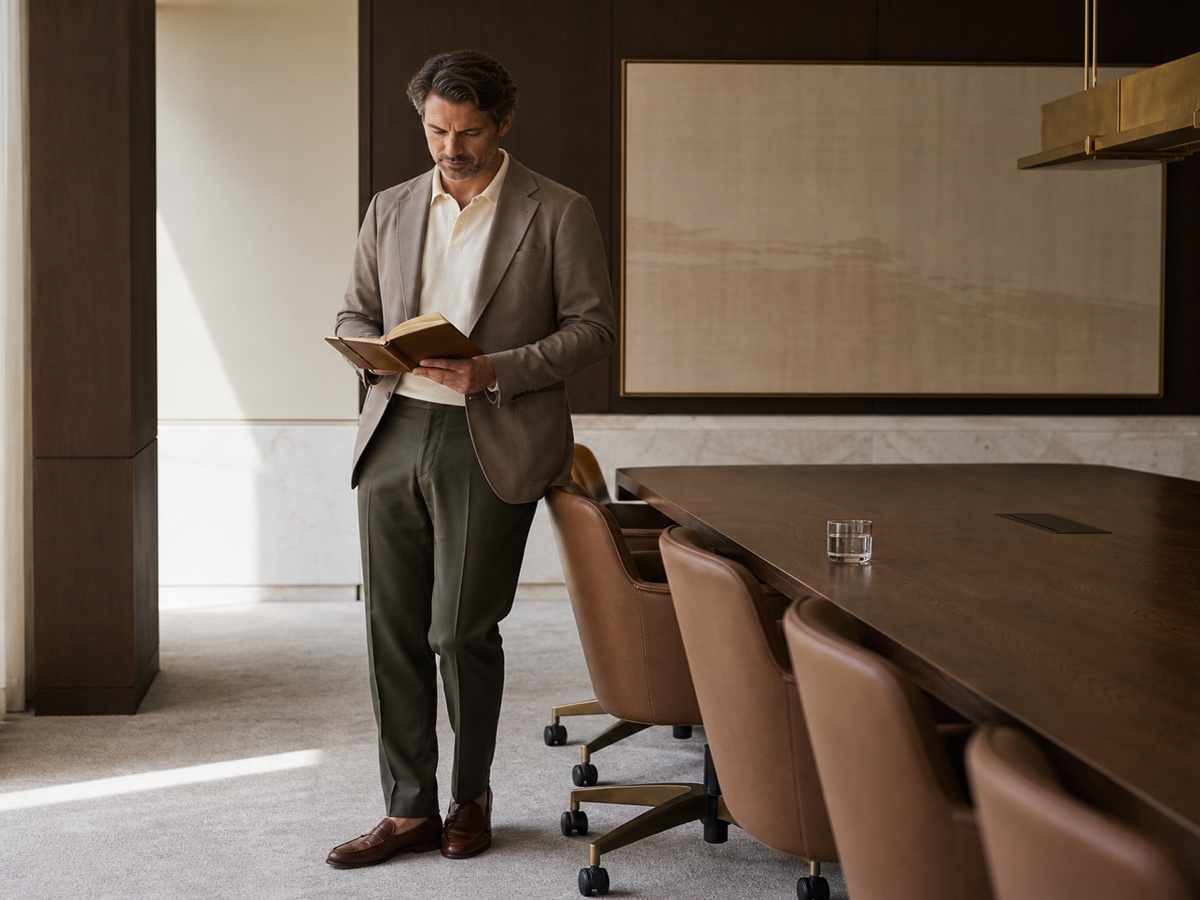
For most serious men, the safest client dinner outfit is a soft jacket, open-collar shirt or refined knit, tailored trousers, and polished shoes. It is sharper than office casual and easier than a suit.
- Jacket: unstructured blazer, soft sport coat, or refined suede/knit jacket.
- Base layer: open-collar shirt, fine knit polo, merino crewneck, or clean long-sleeve knit.
- Trousers: wool trousers, brushed cotton trousers, tailored chinos, or dark five-pocket trousers if the client culture allows it.
- Shoes: loafers, suede derbies, chukkas, Chelsea boots, or polished minimal sneakers for very modern rooms.
The jacket carries the authority. The open collar or knit softens it. The trousers keep the outfit grown-up. The shoes stop the whole thing from sliding into weekend dinner clothes.
When to wear a suit
Wear a suit when the client is formal, the dinner is attached to a high-stakes meeting, or the seniority in the room makes casual clothing feel like a gamble. Finance, law, enterprise sales, board dinners, and conservative family offices often still reward a suit.
The suit should not look like an interview suit. Dark navy, charcoal, tobacco, or deep brown can work well. Keep the shirt clean and the shoes quiet. A tie is usually only needed when the invitation, industry, or venue clearly points that way.
If you wear a suit without a tie, make sure the shirt collar holds itself. A collapsing collar makes the outfit look tired by the time the main course arrives.
When smart casual is enough
Smart casual works when the client culture is modern, creative, tech-led, or already relaxed during the day. But smart casual for a client dinner still needs intention. A shirt and jeans is not enough if both pieces look ordinary.
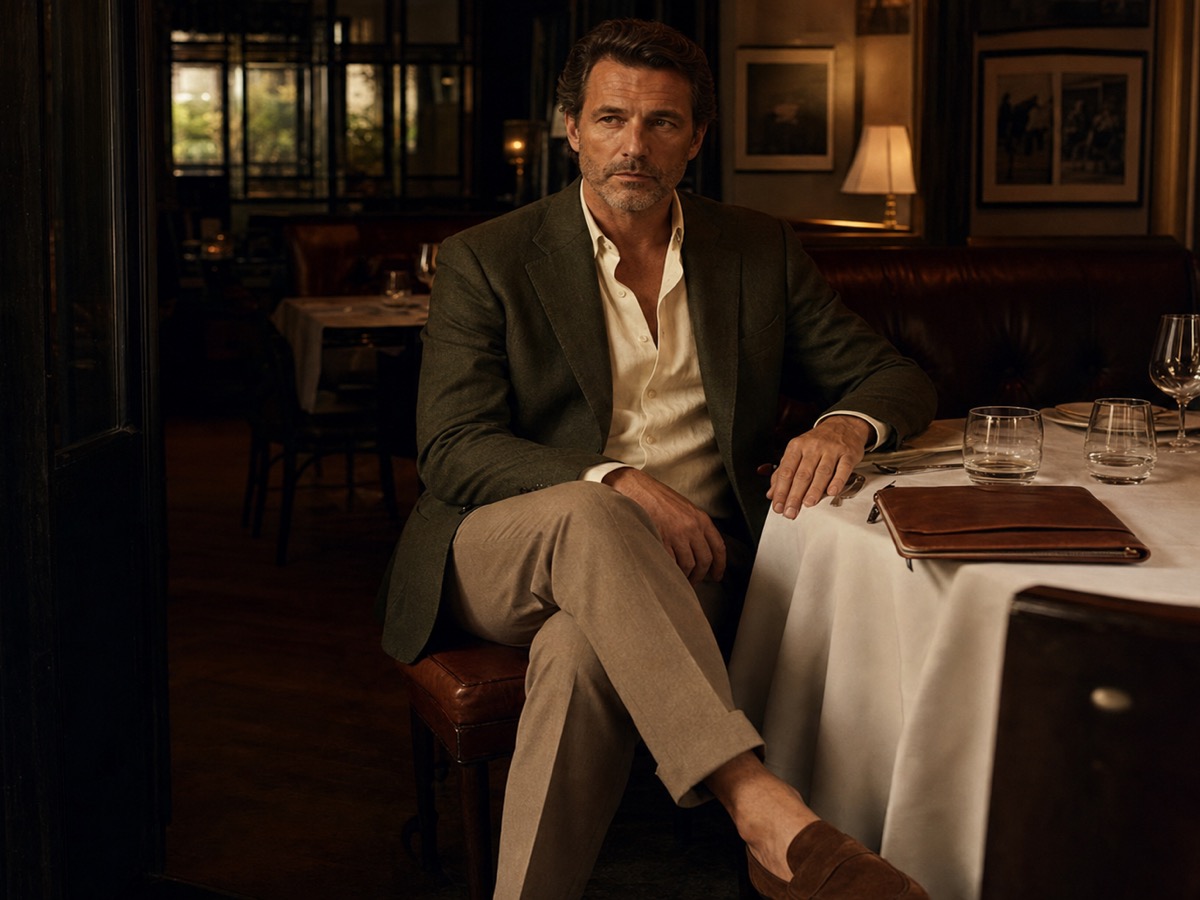
A useful version is a dark overshirt or soft jacket, cream knit polo, tailored trousers, and suede loafers. Another is a textured blazer, fine merino crewneck, dark trousers, and clean boots. These outfits feel current without asking the client to decode whether you made an effort.
If this category feels vague, use the framework in Smart Casual for Men. The point is not to dress more casually. It is to choose lower-formality pieces that still hold a professional line.
The mistakes that make dinner outfits feel off
The first mistake is wearing your exact office outfit to dinner. A stiff shirt, corporate trousers, and business shoes can feel efficient at 10am and slightly tense at 8pm. Loosen one element: texture, collar, shoe, or jacket construction.
The second mistake is swinging too far into date-night clothes. Shiny jackets, tight shirts, aggressive shoes, heavy fragrance, and visible brand signals can make the evening feel more performative than professional.
The third mistake is treating travel wrinkles as unavoidable. If dinner follows a flight or full-day session, choose fabrics that recover: textured wool, brushed cotton, merino, suede, and shirts with enough body. A tired outfit makes you look tired before you have said anything.
What to wear by dinner type
First dinner with a potential client
Choose a soft jacket, open-collar shirt, tailored trousers, and loafers or derbies. Stay close to the room’s expected formality. The goal is to make trust easier, not to show your most expressive taste.
Dinner after a workshop
Use the same base you wore during the day, but make sure the layer still looks intentional. A refined overshirt, soft blazer, or knit jacket can handle movement during the workshop and still look composed at dinner.
Conference dinner
Wear clothes that photograph well and sit well. A textured jacket, knit polo, good trousers, and loafers are usually enough. If the conference is more formal, move toward a suit or dark separates. The thinking overlaps with what to wear to a conference, but dinner asks for slightly more ease.
Investor or board dinner
Keep it sober. Dark suit or dark separates, excellent shirt, restrained shoes, no novelty details. The outfit should make you look calm with responsibility.
Build one dinner outfit that solves most evenings
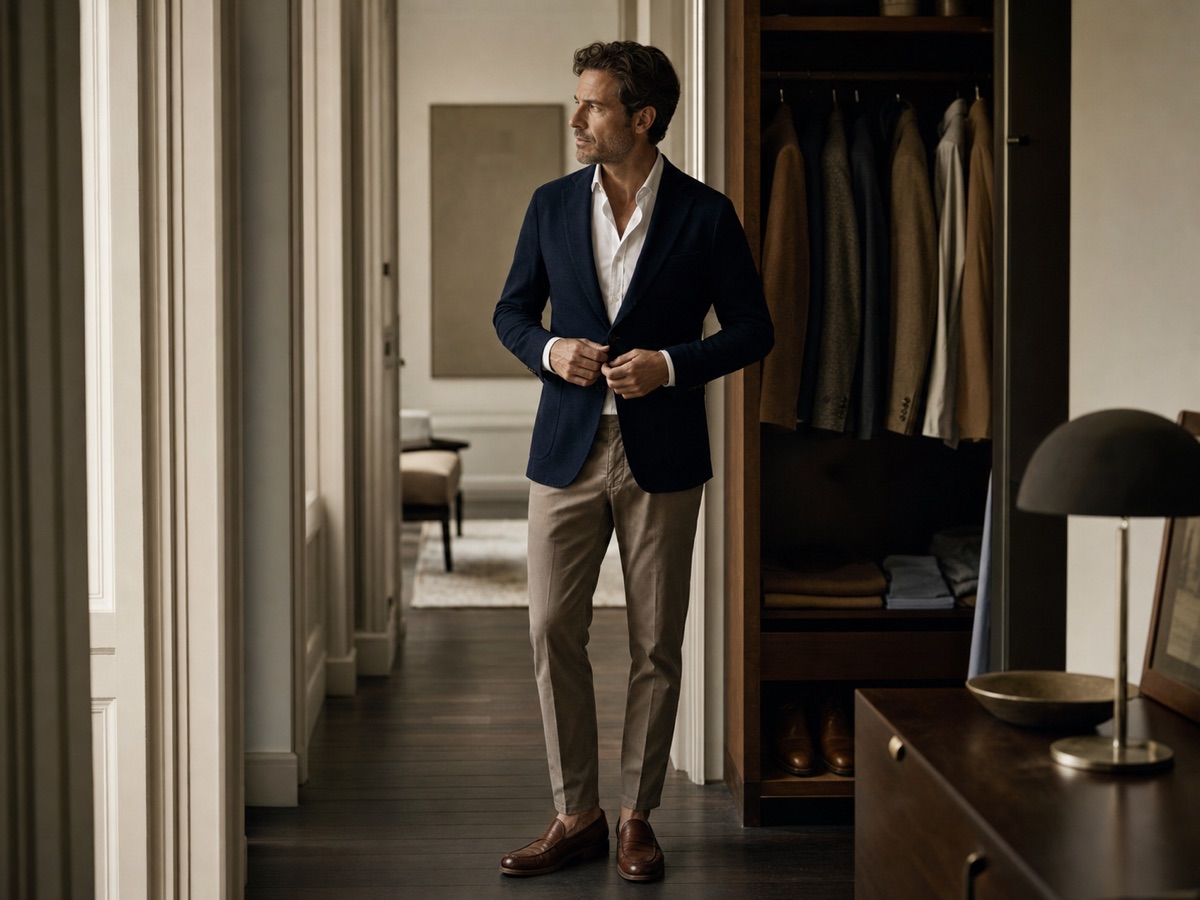
If you want one reliable client dinner outfit, build it around a dark soft jacket, cream or blue open-collar shirt, mid-grey or taupe trousers, and brown loafers. Add a fine knit in colder months. Keep the belt, watch, and bag quiet.
This outfit can move up or down. Swap the shirt for a knit polo when the client is relaxed. Swap the trousers for darker wool when the room is senior. Add a tie only when the context calls for it. A small system like this removes the false choice between underdressed and overdressed.
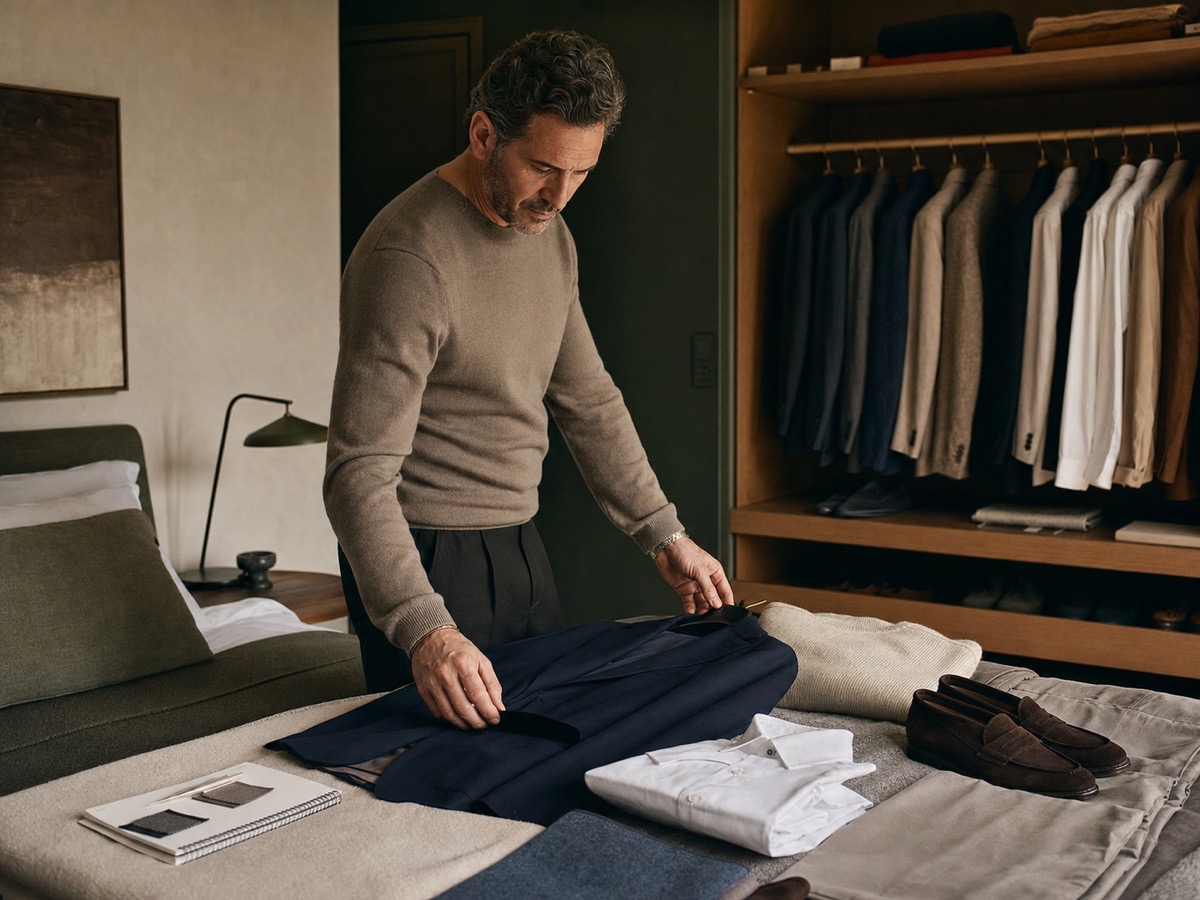
If your closet cannot make that adjustment easily, the issue is probably not dinner. It is the system behind the dinner. A wardrobe audit will usually show where the gaps are: no evening-appropriate jacket, trousers that only work with sneakers, shirts that collapse without a tie, or shoes that do not bridge work and dinner.
Where The Curated Reset fits
The Curated Outfit works with founders, executives, consultants, and senior operators who need clothes that match the rooms they are already in. Client dinners are a good test because they expose whether the wardrobe has range.
Inside The Curated Reset, we look at your actual calendar: client meetings, dinners, travel, stage moments, video calls, climate, body, budget, and how much attention you want to spend on clothes. Then we build a wardrobe system that makes those transitions repeatable.
If your dinner outfits still feel like improvisation, read the client reviews. The pattern is not just better clothes. It is less friction before important rooms.
For a wardrobe that can handle the client dinner without overthinking, apply for The Curated Reset.
FAQ
What should men wear to a client dinner?
Men should wear a client dinner outfit that is professional but relaxed: a soft jacket, open-collar shirt or fine knit, tailored trousers, and polished shoes. Adjust formality based on the client, restaurant, industry, and seniority in the room.
Can men wear jeans to a client dinner?
Men can wear jeans to a client dinner only when the client culture is clearly casual. Choose dark, clean, straight or gently tapered jeans with a jacket and refined shoes. If the client is senior, formal, or new, trousers are safer.
Should I wear a tie to a client dinner?
Wear a tie to a client dinner when the industry, invitation, venue, or seniority clearly expects formal dress. In many modern business dinners, an open-collar shirt under a well-cut jacket looks more natural than a tie.
What shoes work for a client dinner?
Loafers, derbies, suede chukkas, Chelsea boots, and refined minimal sneakers can all work for a client dinner. Choose the shoe by the room. Conservative clients usually need leather shoes. Modern casual clients may allow cleaner relaxed options.
How do I avoid looking overdressed at a client dinner?
To avoid looking overdressed, soften one element of the outfit. Wear an unstructured jacket instead of a sharp suit jacket, an open collar instead of a tie, or suede shoes instead of polished black oxfords. Keep the overall shape intentional.