Smart Casual for Men: The Clear Guide
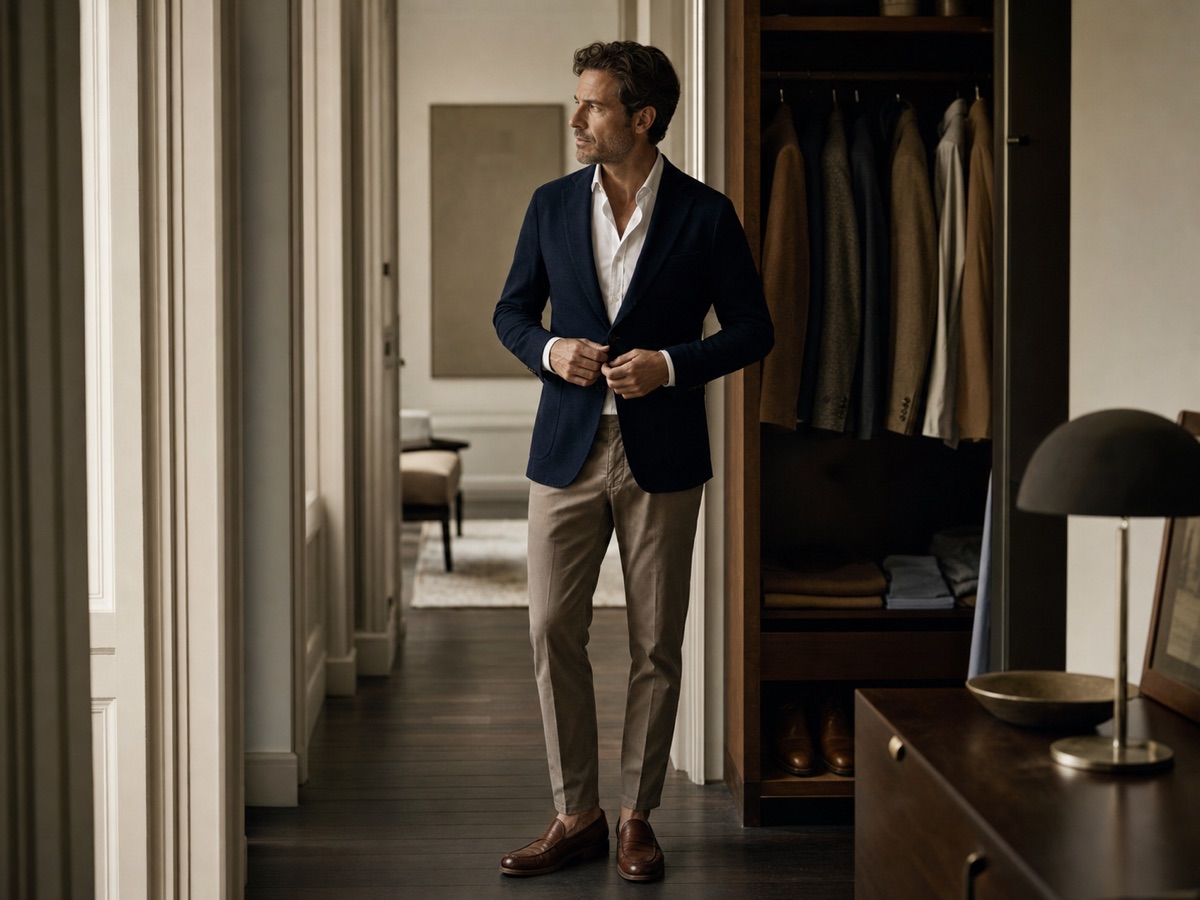
Smart casual for men sounds simple until you have to get dressed for a room that is neither formal nor relaxed. A client lunch, a founder dinner, a conference day, a nicer travel outfit, a casual office with senior people in it. This is where many wardrobes start to wobble.
The mistake is treating smart casual as permission to average two categories together. Half smart, half casual. Blazer over whatever was already there. Dress shoes with jeans that were never meant to carry them. The result often looks technically acceptable and personally unclear.
A better approach is to build a small system. You need clothes that have ease, shape, texture, and enough polish for the room. You do not need to become precious about clothes.
What smart casual actually means
Smart casual means relaxed clothing made more intentional through fit, fabric, structure, and shoes. It sits below business formal and above weekend casual. The useful version is not a dress code. It is a signal: I am comfortable here, and I still understand the room.
That matters because modern professional life no longer gives men many obvious uniforms. The suit is no longer automatic. Jeans are no longer automatically wrong. Sneakers may be fine in one room and careless in another. Smart casual is the middle language that handles those shifts.
The current search results agree on the confusion. Yahoo surfaced guides from Restart Your Style, Style Sensei, FashionBeans, Gentleman Within, Man of Ambition, and Real Men Real Style for this phrase. Most of them cover definitions, outfit formulas, blazers, chinos, shirts, knitwear, shoes, and examples. The gap is rarely information. The gap is choosing what applies to your life.
The smart casual formula
Use this formula before you buy anything: one clean base, one structured layer, one considered trouser, one shoe with intention, and one texture that makes the outfit feel adult.
- Clean base: oxford shirt, fine knit polo, merino crewneck, or a crisp T-shirt if the room is genuinely relaxed.
- Structured layer: unstructured blazer, chore jacket, overshirt, suede jacket, cardigan, or refined outerwear.
- Considered trouser: wool trousers, cotton trousers, pleated chinos, dark denim with a clean line, or linen in warm climates.
- Intentional shoe: loafers, suede derbies, desert boots, clean leather sneakers, or minimal boots.
- Texture: suede, knit, brushed cotton, linen, wool hopsack, corduroy, or a matte leather belt.
This is why a business casual outfit and a smart casual outfit often share pieces. The difference is the room. Business casual usually leans toward work credibility. Smart casual can hold dinners, travel, creative rooms, relaxed client meetings, and weekends where you still want to look precise.
Start with the jacket
The easiest smart casual upgrade is a jacket that is not a suit jacket. Suit jackets often look stranded when worn with casual trousers because the fabric, shoulder, and finish expect matching trousers. A smart casual jacket needs softer construction and more texture.
Look for unstructured blazers in hopsack, linen blends, cotton, wool, or brushed fabrics. Navy is useful, but brown, olive, taupe, charcoal, and muted checks can feel less corporate. If you dislike blazers, use a substantial overshirt or chore jacket. The point is not the blazer. The point is a frame around the body.
For men who work with me, this is usually where the wardrobe starts to shift. The existing clothes may be fine, but nothing is connecting them. A jacket creates the bridge between the relaxed pieces you already wear and the level of polish your rooms now require.
Choose trousers before shirts
Most men buy shirts too early. They add another blue shirt, another white shirt, another polo, and still feel underdressed. The trouser is often the missing piece.
Smart casual trousers should hold a clean line without feeling stiff. Chinos can work if they are not too tight, shiny, or washed out. Wool trousers often work better than men expect because they make simple shirts look more deliberate. Dark denim can work when it is clean, straight, and paired with a better shoe.
If you have a heavier midsection or strong legs, do not force slim chinos because a guide said chinos are essential. Fit has to come before category. The article on dressing well with a heavier belly explains this in more detail: the line of the clothes matters more than the label on the item.
The shirt does not have to be a dress shirt
A dress shirt is useful, but it is not the only smart casual base. In many modern rooms, a fine knit polo, merino crewneck, rugby-style knit, button-down oxford, or high-quality T-shirt under a jacket looks more current than a stiff shirt worn open at the collar.
The test is simple. Does the shirt keep its shape when you sit down, take off the jacket, or appear on camera? If it collapses, clings, wrinkles aggressively, or makes the outfit look unfinished, it is not doing the job.
Collar shape matters too. A soft button-down collar, a knit polo collar, or a clean spread collar can change the whole expression. If you want the technical breakdown, read the guide to types of shirt collars.
Shoes decide how the outfit is read
Shoes are where smart casual either lands or falls apart. A good outfit with gym-adjacent sneakers becomes weekend casual. A relaxed outfit with very formal oxfords can look like two wardrobes collided.
Loafers are the most flexible option for many men. Suede derbies, desert boots, minimal leather sneakers, and clean boots also work. The shoe should match the weight of the trouser and the polish of the jacket. Heavy denim needs a shoe with enough substance. Fine wool trousers need something cleaner.
The point is not to collect shoe categories. The point is to have two or three pairs that cover your actual week. One polished, one relaxed, one weather-appropriate. That is usually enough.
Color should make decisions easier
Smart casual gets easier when the color palette is controlled. Navy, cream, white, grey, brown, olive, stone, charcoal, denim, and black can all work. The problem is not color itself. The problem is random contrast.
For serious professional wardrobes, I usually prefer lower contrast unless the man has the coloring, body language, and environment to carry more. A navy jacket with cream trousers can be beautiful. So can a brown suede jacket with grey wool trousers. So can a black knit with dark denim and loafers. The colors need to feel chosen together.
If you keep buying pieces that almost work, step back and build a palette. This is part of finding your personal style as a man. Taste is not only what you like. It is what you can repeat without friction.
Three smart casual outfits that work
For a client lunch
Wear an unstructured navy jacket, white or pale blue oxford shirt, grey wool trousers, and brown loafers. It is polished without looking like you came from a corporate boardroom.
For a conference day
Wear a fine knit polo, soft overshirt, tailored cotton trousers, and clean leather sneakers or suede derbies. You can move, sit, talk, and still look considered when someone takes a photo.
For dinner after work
Wear a merino crewneck, dark straight denim, suede jacket, and loafers or boots. It feels relaxed, but the texture and fit keep it from becoming default weekend wear.
What to stop doing
- Adding a blazer to clothes that are too casual underneath
- Buying more shirts when the trouser is the problem
- Wearing formal dress shoes with washed casual chinos
- Calling any outfit smart casual because it includes a collar
- Copying a Pinterest outfit without checking your body, climate, and rooms
- Using sneakers as the answer to every modern dress code
Etiquette references still describe smart casual as neat, polished, and adapted to context. The Emily Post Institute's attire guide is useful because it treats dress codes as social information, not as rigid costume rules. That is the right lens here: the outfit should help the room read you accurately.
Where The Curated Reset fits
The Curated Outfit works with serious men who want a wardrobe that supports their actual life. Smart casual is usually one of the biggest pressure points because it covers so many rooms and has so few fixed rules.
Inside The Curated Reset, we do not build a generic list of pieces. We map your work, travel, climate, body, habits, and level of visibility. Then we build formulas that remove the daily guessing. The result is not more clothing. It is fewer bad decisions in front of a full closet.
If smart casual keeps costing you time, confidence, or avoidable purchases, apply for The Curated Reset.
FAQ
What is smart casual for men?
Smart casual for men is relaxed clothing made more polished through fit, fabric, structure, and shoes. A typical outfit might use a soft jacket, knit polo or oxford shirt, tailored trousers, and loafers. It should feel comfortable while still looking deliberate enough for the room.
Can men wear jeans for smart casual?
Men can wear jeans for smart casual if the denim is dark, clean, well-fitting, and paired with more polished pieces. Avoid distressed washes, skinny stretch denim, and casual sneakers when the room needs more refinement. The rest of the outfit has to carry the polish.
Are sneakers smart casual?
Sneakers can be smart casual when they are clean, minimal, and made from leather or suede. They work best with tailored cotton trousers, dark denim, knitwear, and soft jackets. Running shoes or heavily branded trainers usually pull the outfit into casual territory.
Is a blazer required for smart casual?
A blazer is not required for smart casual, but some structured layer is usually helpful. An overshirt, chore jacket, suede jacket, cardigan, or refined coat can do the same job. The layer should give the outfit shape and make the casual pieces look intentional.
What is the difference between smart casual and business casual?
Business casual is usually anchored to work settings, while smart casual covers a wider range of modern social and professional rooms. Business casual tends to emphasize credibility. Smart casual emphasizes polish with ease. The same pieces can appear in both, but the styling and room decide the difference.