How to Dress for Executive Presence
Executive presence is not created by clothes alone. But clothes can support it, weaken it, or make the room work harder to place you.
For men in senior rooms, the goal is not to look fashionable. The goal is to look accurate. Your clothes should match your role, your judgment, the people in the room, and the kind of responsibility you are asking them to trust.
If there is a visible gap between how you speak and how you show up, people may not name it as a wardrobe issue. They will simply feel a small mismatch. Dressing for executive presence means removing that mismatch before the conversation starts.
Start with the room, not the outfit
The strongest executive outfits are chosen from context. A founder speaking to investors, a consultant entering a client steering committee, and a CEO hosting an offsite do not need the same level of formality.
Ask three questions before deciding what to wear:
- How much authority do I need to signal before I speak?
- How formal is the room compared with my daily working environment?
- What would look calm and repeatable if I had to do this every week?
This is why a good founder wardrobe is built around scenarios, not isolated pieces. The point is to make the decision obvious when the stakes are high.
Use restraint as the base
Executive presence usually benefits from restraint. That does not mean dull. It means fewer distracting signals.
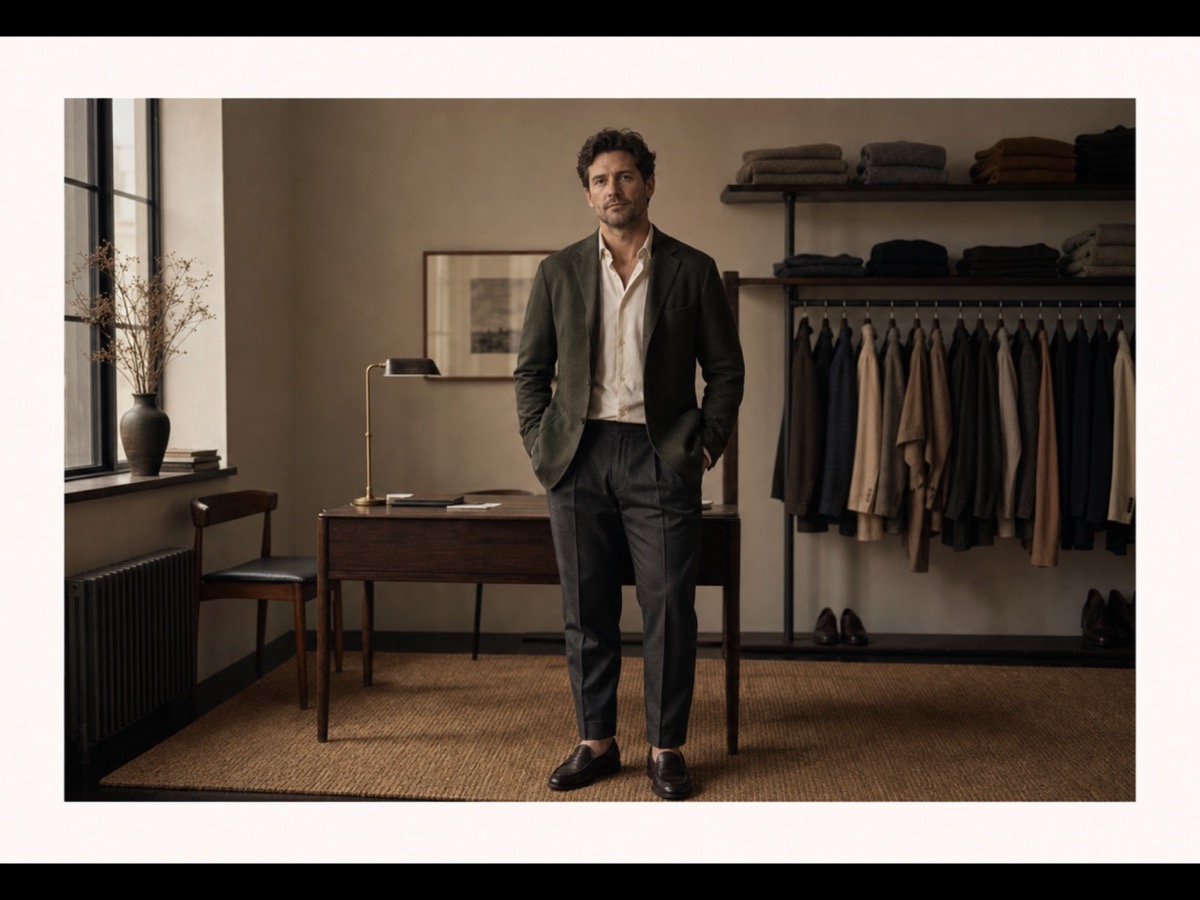
Use deep neutrals, matte textures, clean lines, and clothing that sits well on the body. Navy, charcoal, dark olive, espresso brown, cream, taupe, and soft white tend to do more work than bright blue suits, shiny shoes, loud watches, or visible luxury logos.
The room should notice that you look considered. It should not need to process the outfit as a separate event.
Build one senior uniform
Most men do not need ten executive outfits. They need one senior uniform that can flex across important rooms.
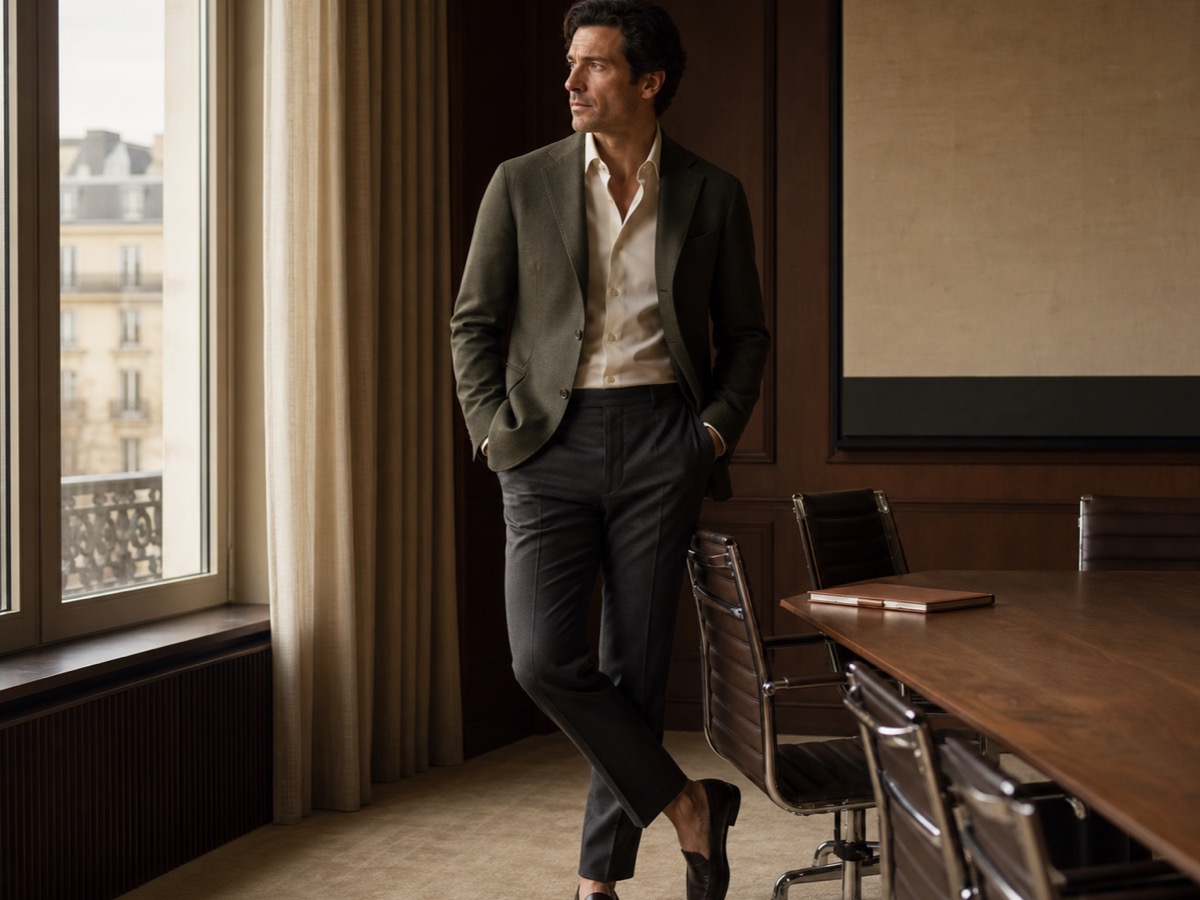
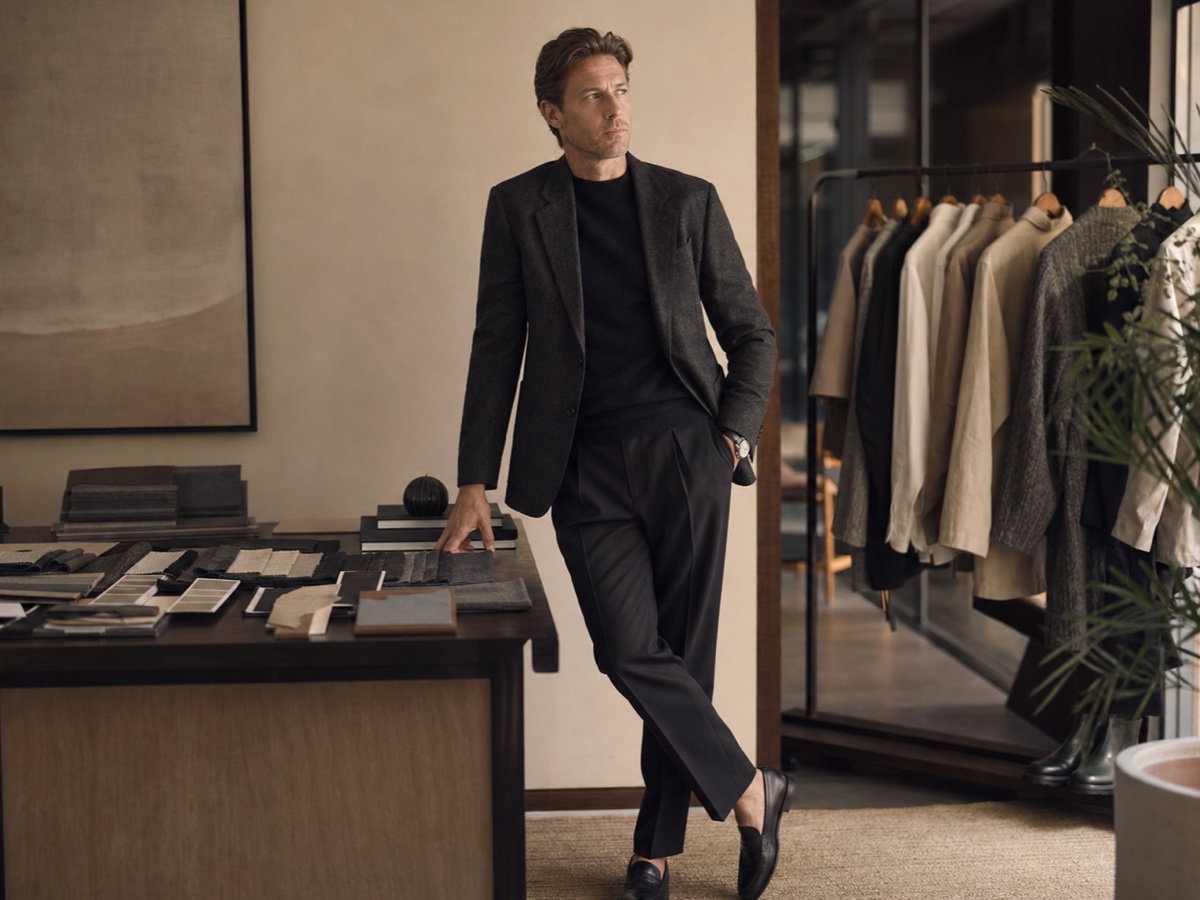
A useful formula is a dark jacket, clean shirt or fine knit, tailored trousers, refined shoes, and a quiet belt or watch. From there, the formality can move up or down. Add a suit for more traditional rooms. Use soft tailoring for modern founder or advisory rooms. Keep the quality level consistent.
If this sounds simple, that is the point. The difficulty is not inventing outfits. The difficulty is owning pieces that fit, relate to each other, and do not collapse under pressure. That is usually where a wardrobe audit exposes the real issue.
Choose fit that gives you authority
Fit decides whether restraint reads as sharp or tired. Clothing for executive presence should give the body structure without looking tight, stiff, or precious.
Jackets should give the shoulders a clean line. Trousers should sit without pulling at the waist or pooling at the shoe. Shirts should hold the collar, skim the torso, and stay calm when seated. Shoes should look maintained, not new for the wrong reason.
Many senior men underdress the details because they think only the general category matters. A blazer is not enough. A shirt is not enough. The condition, proportion, and relationship between pieces create the signal.
Avoid performative casualness
Some men resist dressing with authority because they do not want to look corporate, vain, or removed from the work. That resistance is understandable. It can also become its own performance.
A hoodie, technical vest, or old startup uniform may be honest in your daily environment and still wrong for a room where people are evaluating trust, steadiness, and judgment. Dressing with executive presence does not require abandoning ease. It requires knowing when ease needs more structure.
For many men, the answer is tailored separates. They can look senior without looking ceremonial. The same logic applies to business meeting outfits for men: the outfit should support the exchange happening in the room.
Make the outfit repeatable
Executive presence is weakened when the outfit looks like a one-off effort. If you look unusually polished only when something important happens, the contrast can feel slightly forced.
The better approach is a repeatable system. Two jackets that work with three trousers. Shirts that always sit correctly under those jackets. Shoes that are already maintained. A travel version. A warm-weather version. A more formal version.
This is where clothing becomes operational. You are not trying to think about style every morning. You are creating a set of decisions that can carry your role without draining attention.
What to wear by executive scenario
Investor or board-adjacent meeting
Wear dark tailoring, a strong collar or fine knit, sharp trousers, and polished shoes. Keep the palette quiet. If the room is conservative, wear a suit. If the room is modern, tailored separates can be stronger.
Client steering committee
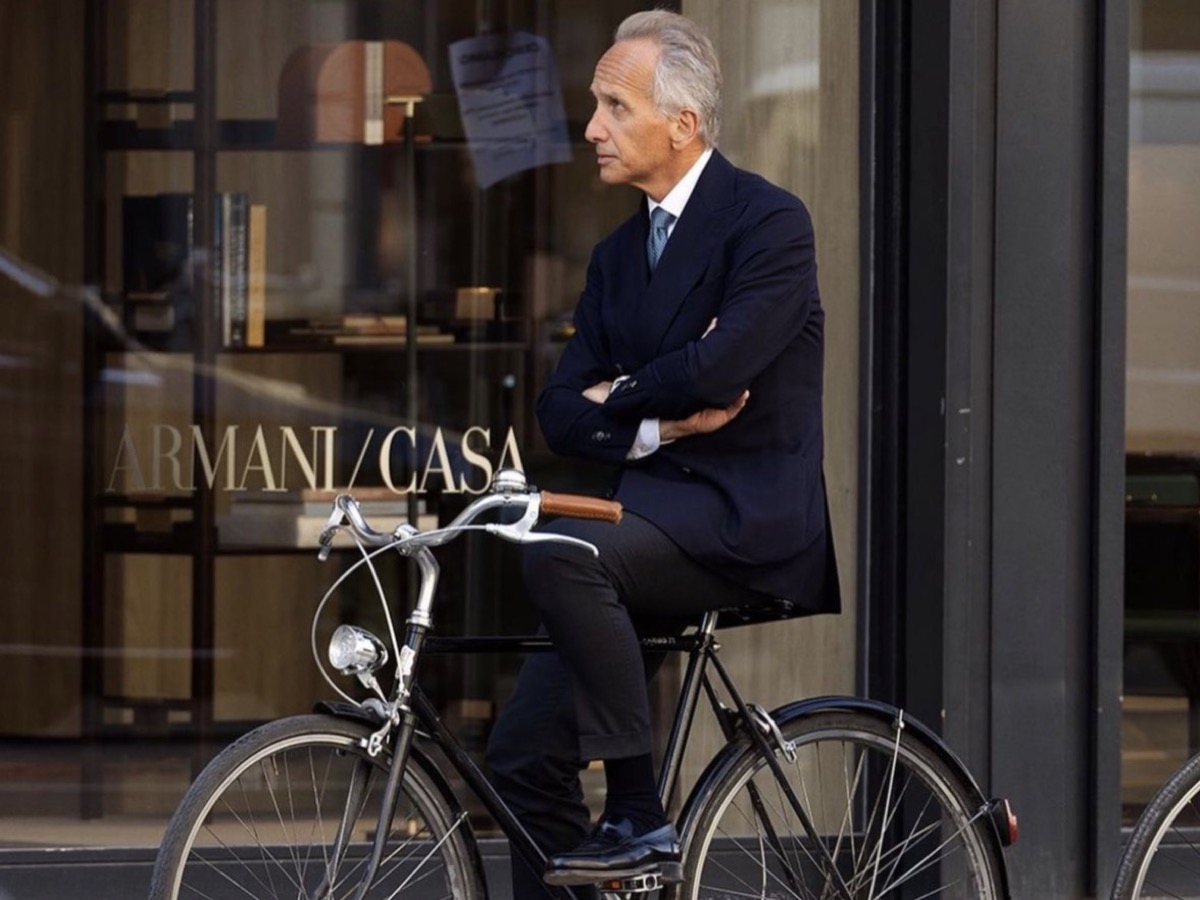
Use calm authority. A dark jacket, pale shirt, pressed trousers, and understated shoes usually work well. Avoid looking more casual than the most senior client in the room.
Leadership offsite
Use ease with structure. Soft tailoring, refined knitwear, clean trousers, and loafers can make you look present without creating distance from the team.
Speaking or media appearance
Choose contrast and shape. The outfit needs to read clearly from a distance or on camera. Avoid tiny patterns, weak collars, and pieces that wrinkle quickly under lights or travel.
When to get help
If your wardrobe works for ordinary days but becomes unclear before important rooms, the problem is probably not taste. It is decision architecture.
The Curated Reset is built for men who want a wardrobe system that reflects their role, body, pace, and standards without turning clothing into a hobby. If you want the senior version of your wardrobe mapped properly, you can apply for The Curated Reset.
FAQ
What does it mean to dress for executive presence?
To dress for executive presence means to choose clothing that supports authority, steadiness, and congruence in senior rooms. The outfit should match your role and the situation without pulling attention away from your judgment.
Do men need a suit for executive presence?
Men do not always need a suit for executive presence. A suit is right for formal, conservative, or high-trust rooms. In modern founder, consulting, or creative leadership settings, tailored separates often look more accurate.
What colors look most executive on men?
Deep neutrals usually look most executive on men: navy, charcoal, dark olive, espresso brown, cream, taupe, and soft white. The colors should feel calm, expensive in texture, and easy to combine.
How can a man look senior without looking corporate?
A man can look senior without looking corporate by using soft tailoring, refined knitwear, clean trousers, and polished shoes instead of defaulting to a stiff suit. Structure matters more than formality for many modern rooms.
What weakens executive presence in clothing?
Poor fit, tired shoes, loud branding, shiny fabrics, tight shirts, novelty details, and unclear formality all weaken executive presence. The most common problem is a wardrobe that has no system.
Conclusion
Dressing for executive presence is about accuracy. The clothes should make your role easier to read and your judgment easier to trust.
Start with one senior uniform, make it repeatable, and remove the details that create friction. If that system is missing, fix the system before buying more pieces.