
Why successful founders get stuck in a style rut (and how to get out)
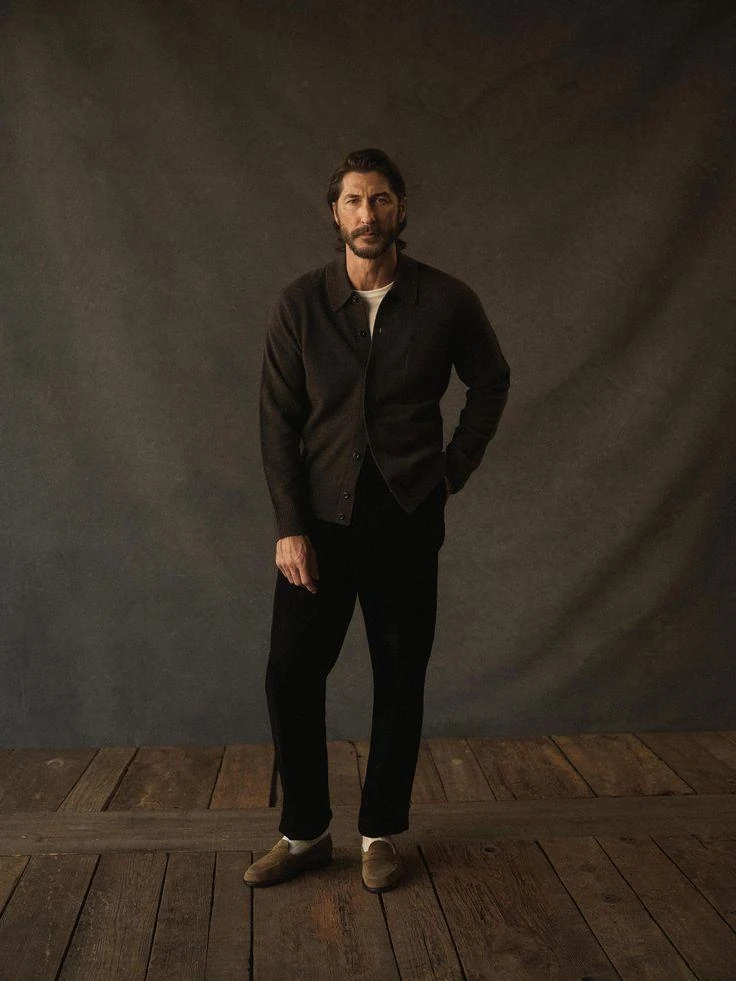
Here's something I keep hearing from driven founders right now. The major milestones are behind them. The business is running, health is dialed in, and family life has structure.
It's no longer a series of sprints; it's become a marathon. Their focus now is longevity: keeping things lean, showing up where it counts.
And when I talk to these men, the growth mindset is obvious. As you'd expect. Curiosity is in their DNA. They're reading, investing, refining how they operate across the board. But there's one area where that same energy somehow never lands. You guessed it, it's their style.
It stays stuck in sprint mode while everything else has matured.
You probably know the pattern. A few online orders here, an Asket T-shirt restock there, another Sunspel polo because the last one (which you found on good luck) worked.
Each piece is great on its own. But when you put it all together, something's off. It almost works. However, somewhere between "this looks great" and "this is actually me," the momentum dies.
And it's not a lack of effort or taste. It's that moment of doubt that creeps in right before you commit.
"Is this too try-hard?" "Will my team think I'm knee-deep in a midlife crisis?"
That's usually enough to pull you back to your "safe" navy and grey combo, calling it easy and simple. When really, you just didn't trust the move.
What nearly 100 founders taught me
After styling nearly a hundred founders with The Curated Outfit, I thought I would have seen it all by now.
But honestly, some things still surprise me.
Here is what I have learned that I did not expect:
The men who build the boldest companies are often the most cautious dressers. The more risk in the business, the less risk in the wardrobe.
Not because they lack confidence, but because they have been burned before.
Here's the cycle:
They got tired of wearing the same uniform → bought something new on impulse → ended tags-on in the back of the wardrobe because it doesn't go with the rest that's in there → they decided staying in the safe zone was easier than getting it wrong again → back to the start.
Most founders do not actually want more clothes. They want less.
Because the fewer clothes you have, the fewer decisions you make.
Fewer decisions means less noise in the morning, more time to spend on prepping that pitch or simply to spend at the breakfast table with your family.
Less time wasted on something that should just work.
For many business owners, their wardrobe is the last part in their life that's still underperforming.
And the biggest one: style problems are rarely about style. They are about the gap between where someone is and how they present to the world.
They are about creating a foundation for that awkward middle, what I call Style No Man's Land: the period after college outfits and your startup uniform but before a duplicate of your father-in-law's daily combo.
Your style isn't convenient. It's on autopilot.
Here's something most men don't want to hear: your style choices aren't intentional. They've just grown to be the path of least resistance… on an endless loop.
There are three habits keeping it that way:
The first is autopilot itself.
Most guys aren't reaching for the same 3 things because these are the best options they own. They reach for them because everything else in their wardrobe has failed them. So that makes defaulting to what works look like the easier option, compared to fixing the pile that doesn't.
The second is low standards disguised as high expectations.
You want a wardrobe that looks clean, timeless, and elegant. Each outfit needs to travel well, be versatile across life, and most of all, require zero effort in the morning.
And yet you're still holding onto pieces that were questionable when you bought them, bought for a version of your life that doesn't exist anymore, or kept alive purely by sunk cost. A wardrobe built on compromises will always feel like one.
The third is the "staple pieces" myth.
I'm sure you've read it. More than once. The internet has a very strong opinion about what every man should own. The problem is that those lists are created for men who are starting from zero and need something to hold onto. And it's not even the beginner to semi-advanced thing: they're directed to the average man, and you're not average.
The pieces that actually earn their place in your wardrobe are the ones that work for your life, your body, your schedule, and your context. Not John with his minivan from across the street. Nothing against minivans, by the way.
The way out
Here's what I've found while working with hundreds of men in this position: the fix is never buying better individual pieces or saving more references on Instagram.
The real shift happens when you build and operate from what I call a Style DNA™.
A personal strategy that takes the ideas and aesthetics that genuinely speak to you and funnels them through your actual lifestyle, body type, physical features, character, and where you're headed.
A Style DNA™ is built on:
- Your actual life, not the aspirational version
- Your character, growth, and ambitions
- Your taste, stripped from trend noise
- Your hero styles, colors, and fits on repeat
Without that kind of framework, style stays reactive: you're constantly starting from scratch, second-guessing each purchase, stuck in a loop of dressing like a version of yourself that no longer exists.
With one, it compounds. The friction disappears, and what you wear starts to feel as intentional as every other decision you've already figured out.
Close that gap with a success wardrobe, and something clicks.
I have seen it shift how a founder walks onto a stage, how they arrive at dinner with the wife, and how they feel on a random Wednesday afternoon picking up the kids.
None of this was in the plan when I started. I thought I was going to help people shop better. Turns out, I help people show up as themselves.
This is exactly what The Curated Reset is built to solve. It's not just a shopping list, an easy click + buy + bye. It's a complete wardrobe rebuild, done with precision, built on your image.
When you're ready to stop defaulting, this is where you start:
Rinske

Rinske Fris, founder of The Curated Outfit. 11 years in menswear as a personal shopper, menswear buyer and men's stylist.