Networking Event Outfit for Men
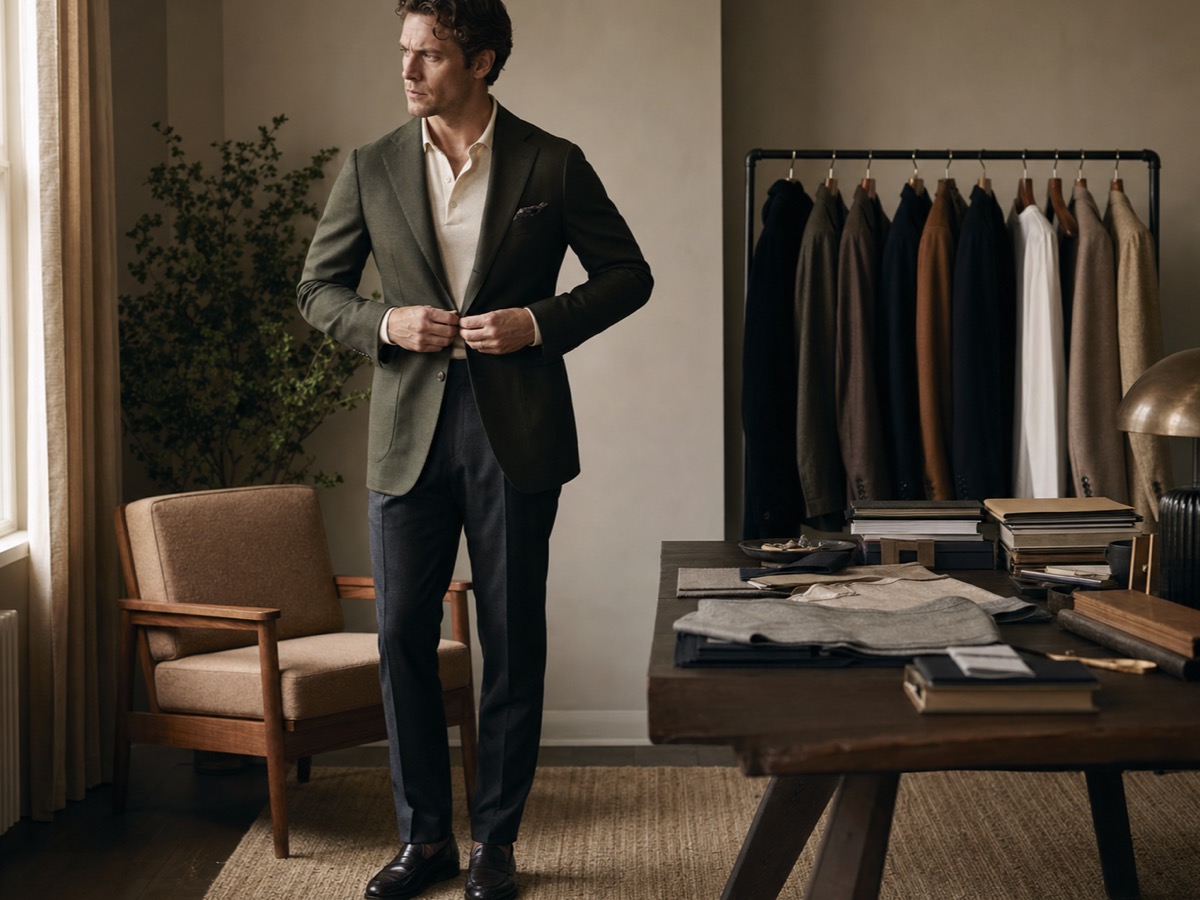
A networking event outfit for men has a very specific job. It should make you look credible enough to start the right conversations, relaxed enough to be approachable, and accurate enough for the room you are entering.
The mistake is treating networking like either a formal interview or a casual drinks night. Most events sit in the middle. You need polish without stiffness, ease without looking underprepared, and enough clarity that people can place you quickly.
For founders, consultants, executives, and senior operators, this matters. The room is not only reading your clothes. It is reading how you judge context.
Start with the event format
Before choosing clothes, identify the kind of networking you are doing. A morning founder breakfast, an industry conference reception, a private investor mixer, and a post-panel drinks event have different levels of formality.
Use the room as your first filter:
- For a professional breakfast or daytime event, use soft tailoring, clean trousers, and a refined shirt or knit.
- For an evening mixer, add more depth with darker colors, suede, wool, or a sharper jacket.
- For a conference reception, dress one step cleaner than your daytime conference outfit.
- For an investor or client-heavy room, choose authority first and personality second.
This is the same logic behind what to wear to a conference as a man. The clothes should support the conversation that is likely to happen, not just photograph well before you leave the house.
The safest formula: jacket, knit or shirt, trousers
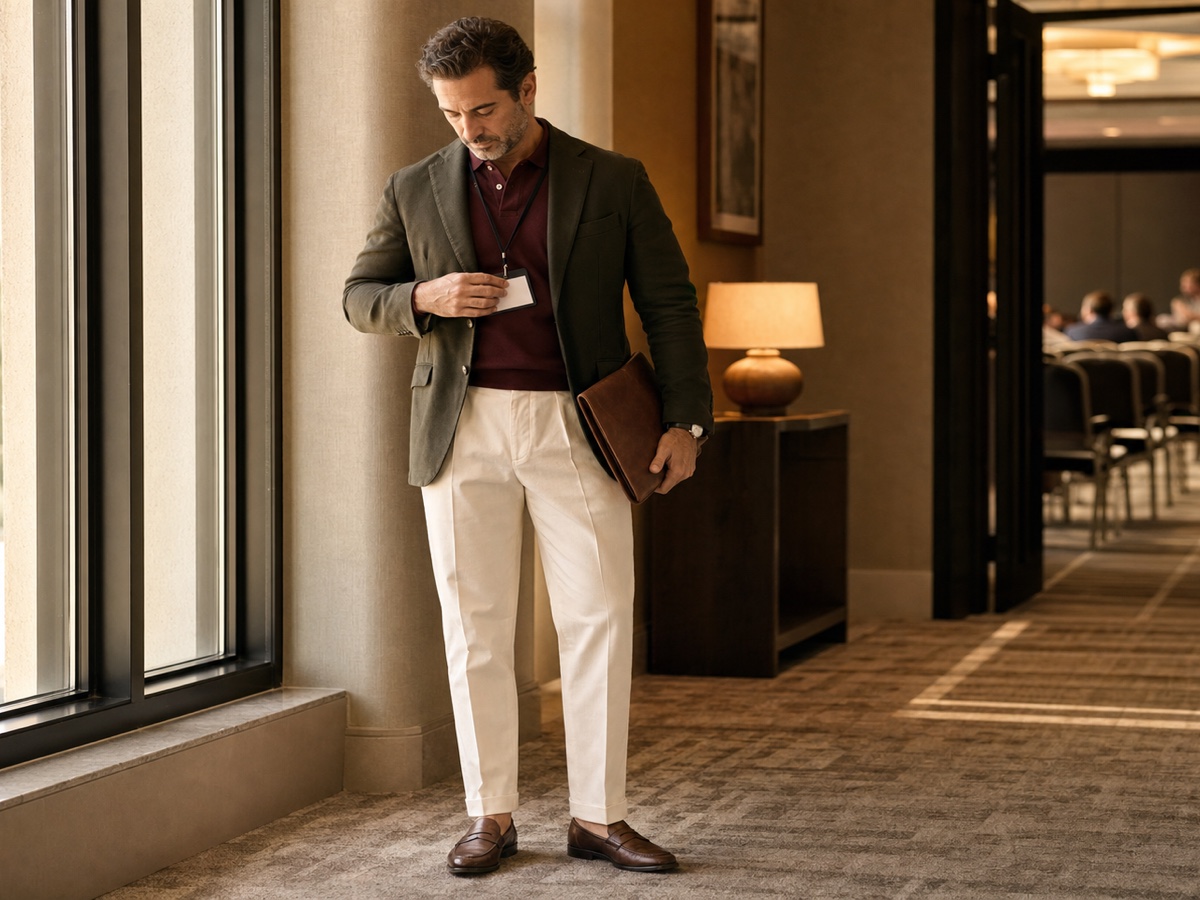
The most reliable networking outfit is a jacket, a good shirt or fine knit, tailored trousers, and clean leather shoes. It sounds simple because it is. The difference is in fit, fabric, and how the pieces relate to each other.
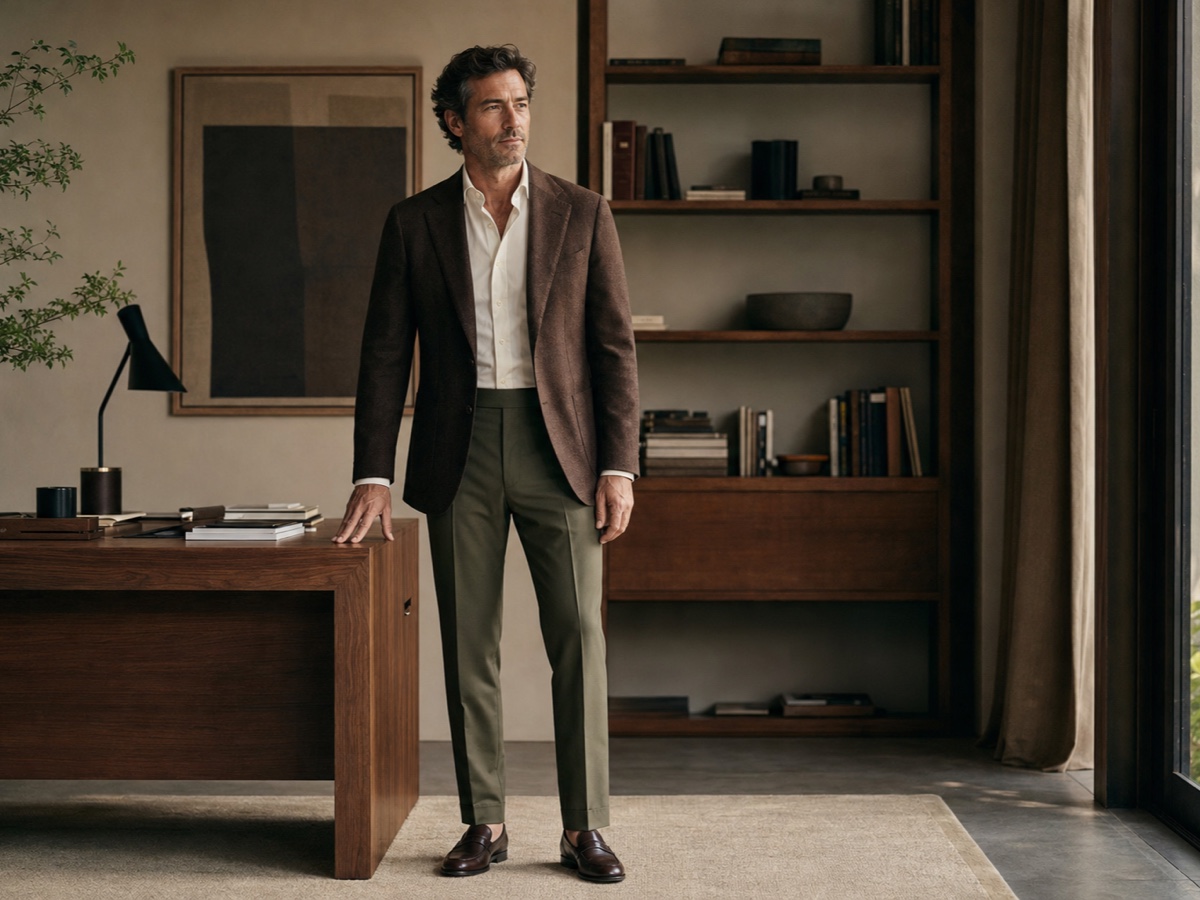
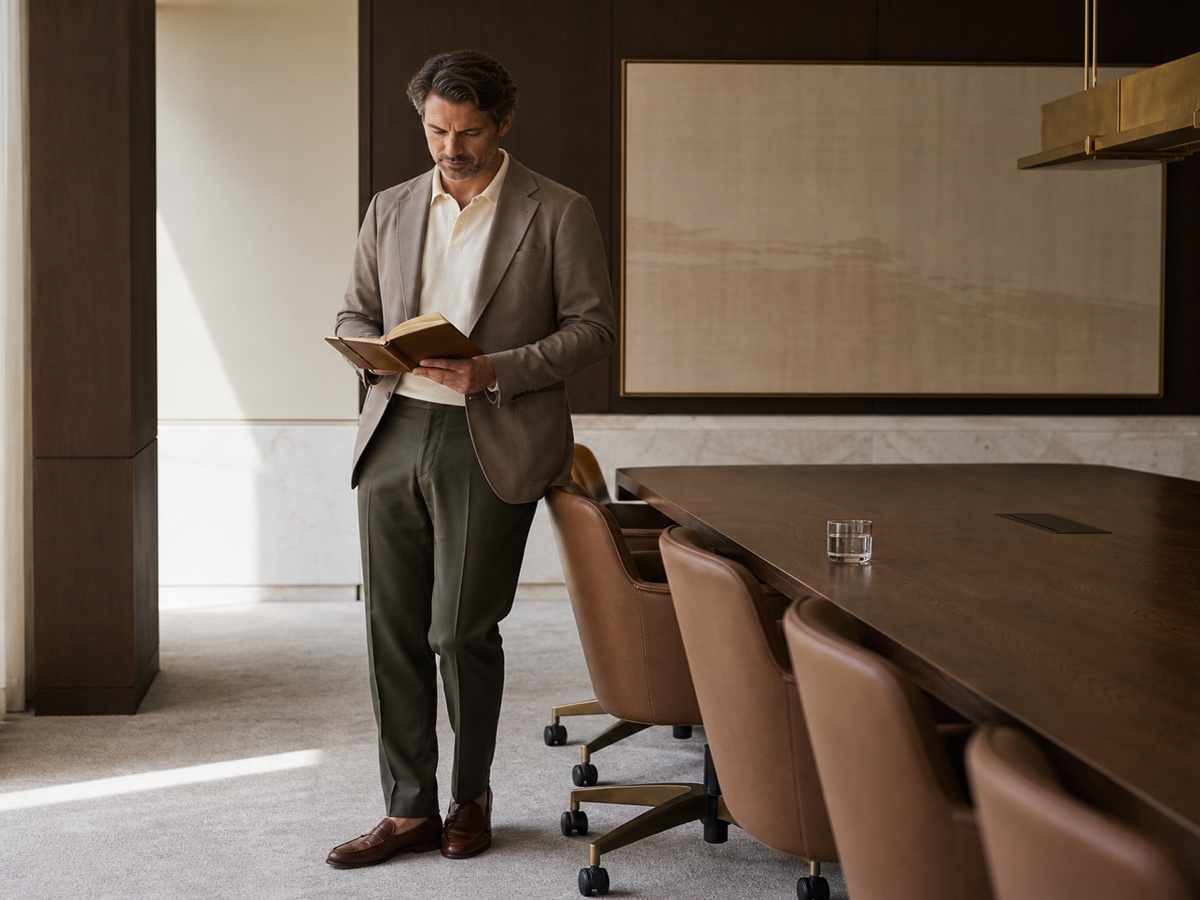
A navy, olive, charcoal, or brown unstructured jacket gives shape without looking ceremonial. Under it, use an open-collar shirt, a fine merino polo, or a light knit. The trousers should be cleaner than jeans but not necessarily suit trousers. Wool, cotton, or a sharp twill all work.
This gives you structure when you enter the room and comfort once you are actually speaking to people. That balance is what most men miss. They either overdress into interview mode or drift into weekend clothes and hope confidence will cover the gap.
What to wear if the event says business casual
Business casual at a networking event should be interpreted as polished separates. Not office leftovers. Not a novelty blazer. Not a shirt that only works tucked in because it is too long to do anything else.
A strong option is a dark soft jacket, pale shirt, mid-grey trousers, and loafers. Another is a textured overshirt or chore jacket, fine knit, tailored trousers, and suede shoes. If the room is more corporate, keep the jacket sharper. If the room is founder-heavy, softer tailoring can look more current.
For more examples of how that middle zone works, see business casual examples for men. The goal is not to memorize outfits. The goal is to understand the level of polish the room expects.
Use color to look calm, not loud
Networking rooms are busy. Bad lighting, name badges, half-finished conversations, standing food, and the constant scanning of the room already create enough visual noise.
Your clothes do not need to compete with that. Deep neutrals work well because they frame the person rather than turning the outfit into a separate topic. Navy, charcoal, olive, espresso, cream, taupe, soft white, and tobacco can all look strong when the fit and texture are right.
If you want interest, use texture before color. Suede loafers, a brushed cotton shirt, a wool trouser, a knitted polo, or a jacket with a quiet weave will read more sophisticated than a loud pocket square or bright statement shirt.
Choose shoes that can stand and speak
Networking means standing, walking, turning, and carrying a drink while trying to remember names. Shoes matter because they affect both comfort and the final impression of the outfit.
Loafers, derbies, refined boots, or very clean minimal sneakers can work depending on the event. The shoes should look maintained and intentional. If they are scratched, collapsed, too sporty, or visibly chosen for comfort alone, the whole outfit drops.
A simple rule: if the shoe would look wrong in a client meeting, it is probably too casual for a high-quality networking room. If it would look wrong at a relaxed dinner, it may be too formal for a founder or creative mixer.
Do not over-accessorize for memorability
Some men try to create a talking point with a loud accessory. A bright watch strap, oversized glasses, a shiny belt buckle, a novelty pocket square, a hat indoors. It can work for a few personalities, but most serious men do not need the outfit to perform that hard.
Use accessories for precision. A good watch, clean belt, subtle pocket square, simple ring, or considered glasses can finish the outfit. They should make you look more resolved, not more decorated.
If you want to be remembered, let the conversation do that. The outfit should make it easier for someone to take you seriously before the conversation begins.
What to avoid at a networking event
The biggest errors are usually not dramatic. They are small signals that make the outfit feel less deliberate.
- A shirt that pulls at the stomach or collapses at the collar
- Jeans that are too faded, skinny, distressed, or soft at the knee
- A blazer that looks like it only comes out for weddings
- Technical sneakers with tailored clothing
- A belt and shoes that fight each other in formality
- Perfume that enters the conversation before you do
- Anything bought in a rush for this one event
Most of these are system problems. If the wardrobe has no clear professional range, every event becomes a fresh puzzle. That is where a wardrobe audit is more useful than another shopping trip.
Three networking outfit examples
Founder breakfast
Olive or navy overshirt, fine cream knit, tailored charcoal trousers, suede loafers. This feels relaxed enough for a morning room but still more considered than a tee and jeans.
Industry conference reception
Unstructured navy jacket, pale blue open-collar shirt, mid-grey wool trousers, dark brown loafers. This is easy to wear after a full day and still reads professional when you meet someone senior.
Investor or client mixer
Charcoal jacket, soft white shirt, dark tailored trousers, black or espresso derbies. Quiet, direct, and useful when you need the first impression to carry authority.
When a networking outfit should become a system
If you attend one event a year, you can solve the outfit once. If you regularly move between conferences, dinners, investor rooms, client meetings, and founder gatherings, you need a repeatable range.
That means two or three jacket options, trousers that work across them, shirts and knits that do not need overthinking, and shoes that cover both relaxed and serious rooms. It also means knowing what not to buy because it only works in your imagination.
This is where a founder wardrobe becomes practical. It is not about looking styled every day. It is about having the right signal ready for the rooms that matter.
When to get help
If every networking event creates the same last-minute question, the problem is not the event. It is the lack of a wardrobe system that understands your work, body, climate, standards, and social calendar.
The Curated Reset is built for men who want that system mapped properly. We define what belongs in your wardrobe, how it should fit, what to stop buying, and how to dress for the rooms you actually move through. If that is the level of clarity you want, you can apply for The Curated Reset.
FAQ
What should a man wear to a networking event?
A man should wear polished separates to most networking events: a jacket, a clean shirt or fine knit, tailored trousers, and maintained leather shoes. The outfit should look professional but easy enough for standing, moving, and conversation.
Can men wear jeans to a networking event?
Men can wear jeans to some casual networking events, but they need to be dark, clean, well-fitted, and paired with stronger pieces. If investors, senior clients, or a formal venue are involved, tailored trousers are usually the better choice.
Is a suit too formal for networking?
A suit can be too formal for relaxed founder or creative networking events, but it is right for conservative business, finance, legal, or high-trust rooms. If in doubt, tailored separates often give a better balance of authority and approachability.
What colors work best for men's networking outfits?
Deep neutrals work best for most men's networking outfits. Navy, charcoal, olive, espresso brown, taupe, cream, and soft white look calm, adult, and easy to combine. Use texture if you want interest without looking loud.
What shoes should men wear to a networking event?
Men should wear loafers, derbies, refined boots, or very clean minimal sneakers depending on the event. The shoes should be maintained, comfortable for standing, and aligned with the rest of the outfit's formality.
Conclusion
The right networking event outfit for men is not complicated. It is a clear professional signal built from fit, context, and restraint.
Start with the room. Choose structure without stiffness. Keep the palette calm. Make sure the shoes hold up. If you keep needing to solve the same event from scratch, build the system instead of buying another one-off piece.