Personal Stylist for Executives: What to Fix
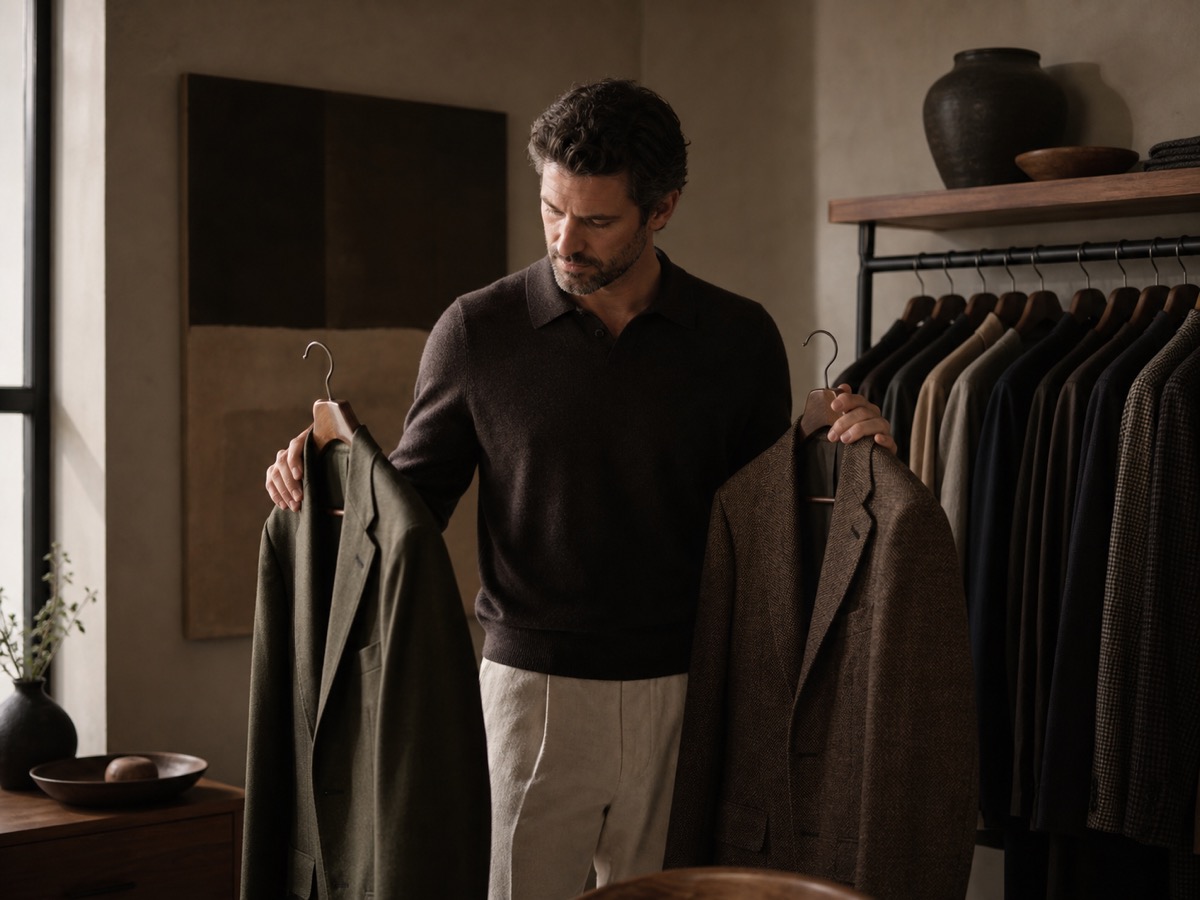
A personal stylist for executives should make your wardrobe easier to use and easier to read. The point is not to collect better outfits. The point is to remove the visual friction that appears when your role has moved faster than your closet.
For a senior man, styling is most useful when it connects clothing decisions to real rooms: leadership meetings, investor calls, client dinners, conferences, board exposure, team offsites, travel days, and the moments where people form an opinion before you explain your work.
What an executive personal stylist should solve
The best work starts with diagnosis. A stylist should be able to tell you why the wardrobe feels wrong, not only what to buy next. Maybe your clothes are too casual for the trust you now ask for. Maybe they are too corporate for the founder-led business you actually run. Maybe the pieces are good, but they belong to different versions of you.
That diagnosis matters because executives rarely have one clothing problem. They have a system problem: too many isolated purchases, too few reliable outfit formulas, inconsistent formality, unclear colors, jackets that almost work, shoes that pull everything down, and no standard for what gets altered, kept, donated, or replaced.
This is why the work should connect to a real wardrobe system for men. A senior wardrobe needs logic. It should help you dress faster on a full week, not create another area of maintenance.
Where ordinary styling falls short for executives
Ordinary personal styling often solves for looking good in a narrow sense. That can help, especially if you have been neglecting clothes for years. The executive version has a harder standard. The outfit must look good, feel natural, photograph well, travel well, and match the authority of the room.
A senior man can look technically stylish and still look wrong. The jacket may be beautiful but too expressive for a conservative board. The sneakers may be expensive but too casual for a client dinner. The suit may be correct on paper but too stiff for a modern founder. The issue is context.
If the advice sounds like a list of nice pieces, it is incomplete. You need decisions about proportion, restraint, ease, visibility, grooming-adjacent details, and what your clothes should communicate when you are not speaking.
The moments when it is worth hiring one
It is worth hiring a personal stylist for executives when the cost of looking slightly off has become higher than the cost of fixing the system. This often happens after a promotion, a funding round, a public speaking season, a new consulting offer, a relocation, a weight change, or a shift into rooms with more senior people.
It is also worth considering when you keep repeating the same outfit because it feels safe. Repetition is not the problem. Unclear repetition is. A founder uniform can work beautifully when it is intentional. It becomes a liability when it is only the least risky thing in the wardrobe.
Search results for this topic are already framed around custom wardrobe systems, personal brand, time-saving, and strategic styling. That is the correct direction, but the practical question is sharper: what exactly should be easier after the work?
What should be easier after the process
After the work, you should know your correct level of formality for different settings. You should know the jacket shapes that support your frame, the trouser line that makes you look current, the shoe styles that hold authority, and the colors that make your face look clear on camera and in person.
You should also have outfit formulas. Not mood boards. Formulas. A client lunch formula. A speaking formula. A travel formula. A boardroom-without-a-suit formula. A dinner formula. A normal workday formula that still looks like the person with judgment.
That is where executive personal style becomes practical. Personal style is not a personality performance. It is the repeatable set of visual decisions that make you look like yourself at the correct level.
What an executive wardrobe audit should include
Before shopping, the current wardrobe should be read carefully. The closet usually shows the pattern before the man can name it.
- Role and rooms: where you actually need the clothes to work, from private workdays to public visibility.
- Fit standards: shoulder line, collar shape, jacket length, trouser rise, hem width, shoe weight, and how everything reads seated.
- Color logic: the small palette that sharpens you and makes outfits easier to repeat.
- Formality levels: what relaxed, client-ready, public, travel, and evening should each mean for you.
- Keep, alter, replace: clear decisions, not vague encouragement to buy better basics.
- Shopping rules: what you are allowed to add and what you should stop buying.
A useful wardrobe audit for men should leave you with a sharper standard and fewer open loops. If half the closet survives but every surviving piece has a clear role, that is progress.
How to choose the right stylist
Look for someone who asks about your calendar before they talk about brands. The clothes have to serve the week you actually live. A stylist who understands executives will ask about travel, client-facing work, public visibility, climate, body changes, comfort, grooming, shopping tolerance, and the level of attention you are willing to give your wardrobe.
Look for evidence of systems thinking. Can they explain how outfits will repeat? Can they name what was wrong with the old wardrobe? Can they create a shopping direction without turning you into a menswear hobbyist? Can they help you look more accurate without making you feel dressed as a character?
Visual identity also extends beyond the closet. If your work requires public content, presentations, or a strong online presence, consistent imagery matters too. This guide to social media graphics design is useful because it treats visuals as a brand-recognition system rather than calendar filler. The same thinking belongs in an executive wardrobe.
What to avoid
Avoid any process that begins with shopping and never returns to diagnosis. Buying more will not fix an unclear standard. It usually makes the closet louder.
Avoid stylists who push a signature aesthetic onto every client. Executives do not need costume. They need accuracy. The work should make you look more clearly like the person people already experience in your best rooms.
Avoid advice that stops at “invest in quality.” Quality is only useful when the piece is right for your body, role, palette, climate, and actual schedule. A beautiful jacket that never leaves the closet is not a solution.
Where The Curated Reset fits
The Curated Reset is for founders, executives, consultants, and serious men who want the clarity of a personal stylist without turning style into another hobby. The process is virtual, application-only, and built around your actual life.
We audit the current wardrobe, identify the mismatch, build your fit and color standards, define outfit formulas, create shopping direction, and turn the wardrobe into a system you can use when the week is full. The work is not about adding drama. It is about making the signal cleaner.
If your wardrobe no longer matches the rooms you are in, apply for The Curated Reset. We will fix the standard before we add more clothes.
FAQ
What does a personal stylist for executives do?
A personal stylist for executives helps leaders build wardrobes that support their role, calendar, body, and visibility. The work can include wardrobe audits, shopping direction, outfit formulas, fit standards, color strategy, and event-specific dressing.
Is a personal stylist worth it for executives?
It is worth it when your wardrobe creates daily friction or no longer matches your seniority. The clearest value is not more clothes. It is faster decisions, better fit, clearer formality, and a more accurate professional signal.
Should executives use a stylist or an image consultant?
Executives should choose the service based on the problem. If you mainly need clothes and outfit help, a stylist can work. If the issue is credibility, visibility, grooming, photography, or public presence, an executive image consultant or a wardrobe system may be stronger.
Can a personal stylist work virtually?
Yes. A virtual process can work well when it includes strong diagnostics, clear photos, body and fit analysis, closet review, shopping links, and structured feedback. It should still produce practical outfit formulas and specific decisions.
What should executives avoid when hiring a stylist?
Avoid vague taste-based styling, one-size-fits-all aesthetics, and shopping before diagnosis. You want a process that understands your rooms, your role, and your tolerance for effort, then turns that into repeatable wardrobe rules.
If you want your wardrobe to support the role you already carry, apply for The Curated Reset.