Executive Personal Style for Men
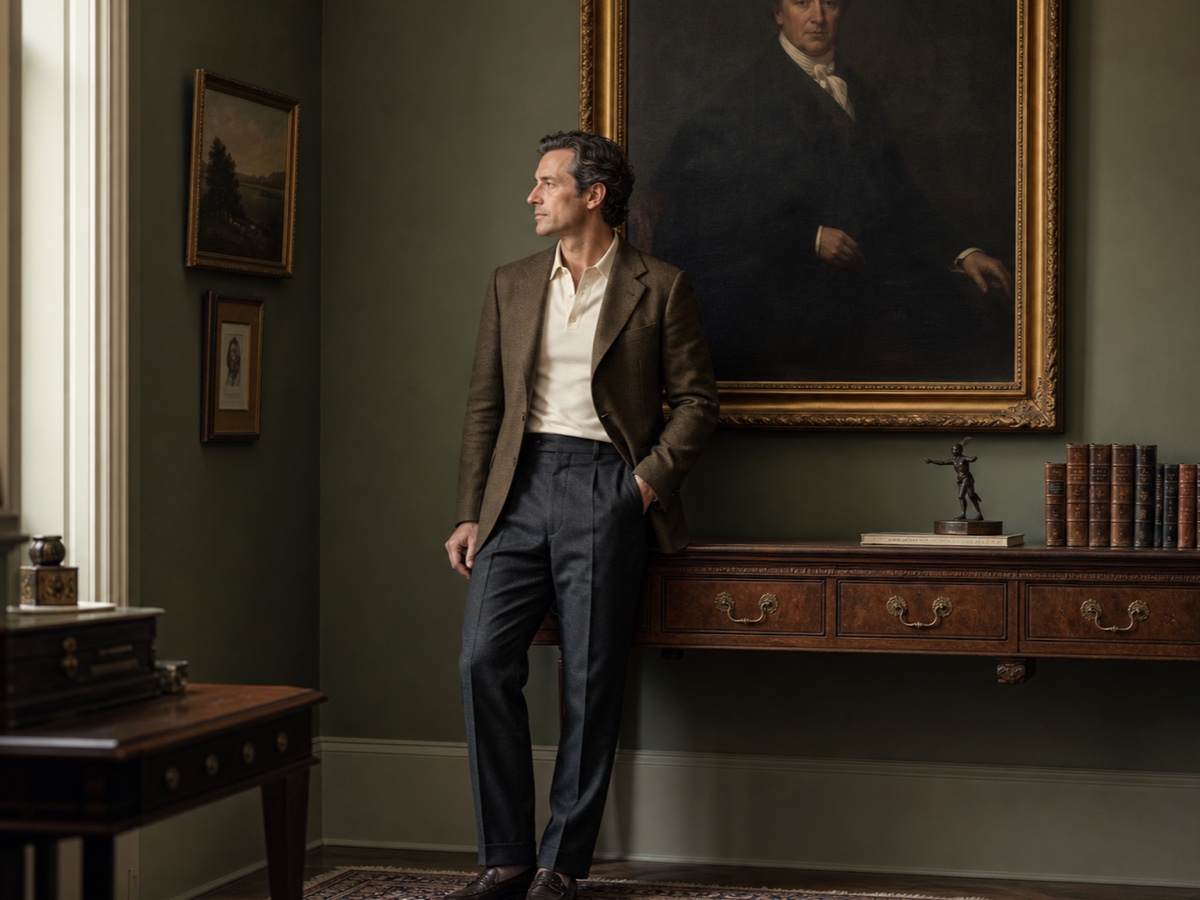
Executive personal style for men is not about dressing louder. It is about making your clothes line up with the level of responsibility people already expect from you.
For founders, executives, consultants, and senior operators, personal style becomes most important when the room has stakes: investor conversations, client dinners, board meetings, panels, hiring calls, and the ordinary Tuesday where your team is watching how you carry yourself.
The point is not to look like a menswear person. The point is to look considered, current, and specific enough that your wardrobe stops creating small moments of doubt.
What executive personal style actually means
Executive personal style is the repeatable visual system behind how a man shows up in serious rooms. It combines fit, color, formality, texture, grooming, and outfit formulas so the clothes support the work instead of distracting from it.
This is different from buying business clothes. A navy suit, white shirt, and brown shoes can be correct and still say very little. A wardrobe can be expensive and still feel oddly anonymous. Personal style starts when your clothes reflect your role, your body, your industry, and your temperament at the same time.
If your current wardrobe is mostly built from emergency purchases, old office rules, and a few nice pieces that never quite become outfits, start with a wardrobe audit. You need to know what your clothes are currently communicating before you decide what to add.
The common mistake: dressing for the title only
Many men try to solve executive style by dressing for the title. They picture a CEO, a founder, a partner, a board member, and then buy the costume attached to that role.
That is why the result often feels stiff. The clothes may be technically appropriate, but they do not look connected to the man wearing them. He looks like he dressed for a LinkedIn photo, not for the way he actually works.
A stronger approach is to dress for the room, the body, and the signal. The same man may need relaxed authority on a strategy call, sharper structure for a board meeting, warmth at a client dinner, and ease during travel. One fixed executive uniform rarely covers all of that.
Define the signals first
Before you buy anything, decide what your wardrobe has to signal. For most TCO clients, the answer is some version of: competent, warm, decisive, current, and calm under pressure.
Those words matter because they change the clothes. Competent usually needs structure. Warm needs texture and color that do not feel severe. Decisive needs cleaner lines and fewer half-casual pieces. Current needs proportion that does not look stuck in 2014. Calm needs fewer competing details.
This is where executive presence becomes practical. Presence is not only posture or speaking style. It is also whether your clothes make people feel they are in capable hands.
Build a formality ladder
Executive personal style works best when you have a formality ladder instead of a pile of unrelated outfits. A ladder gives you a controlled way to move up or down depending on the room.
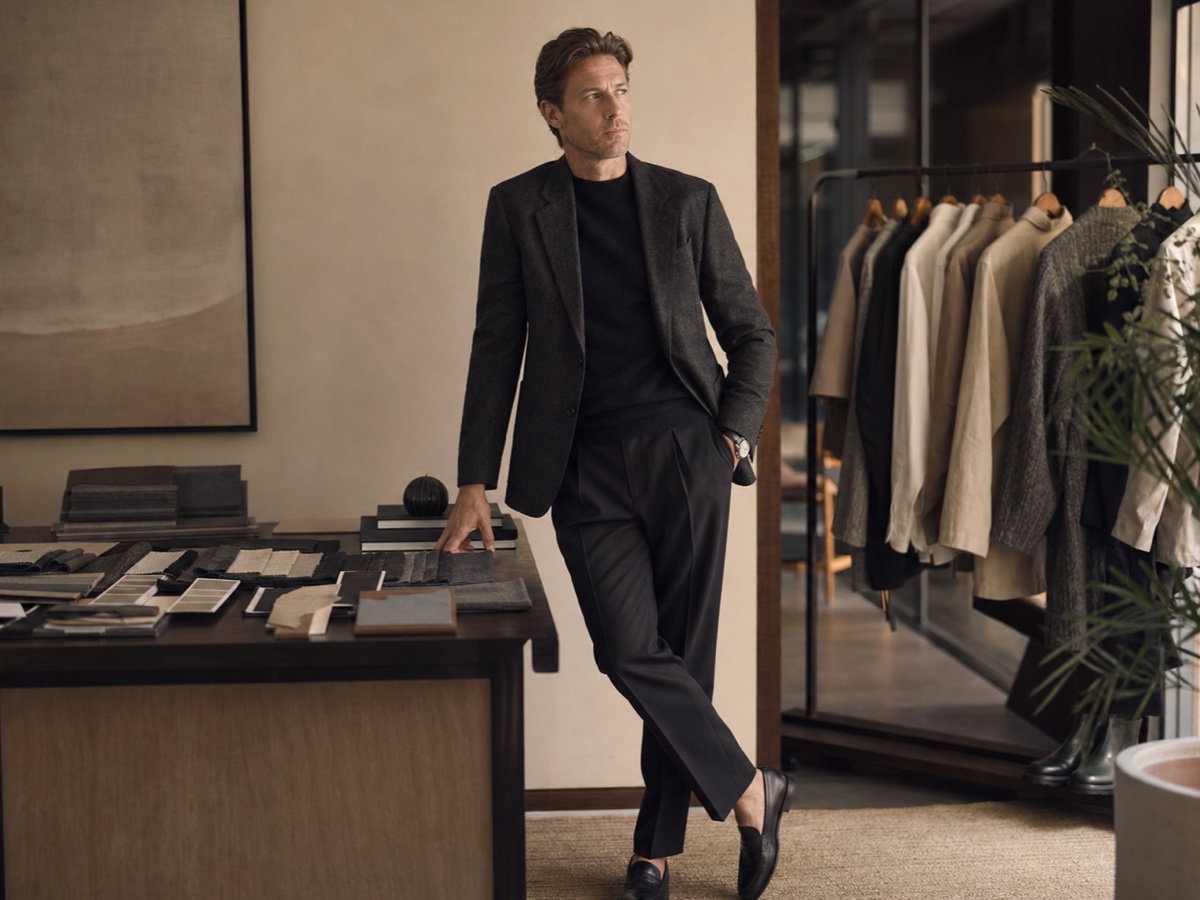
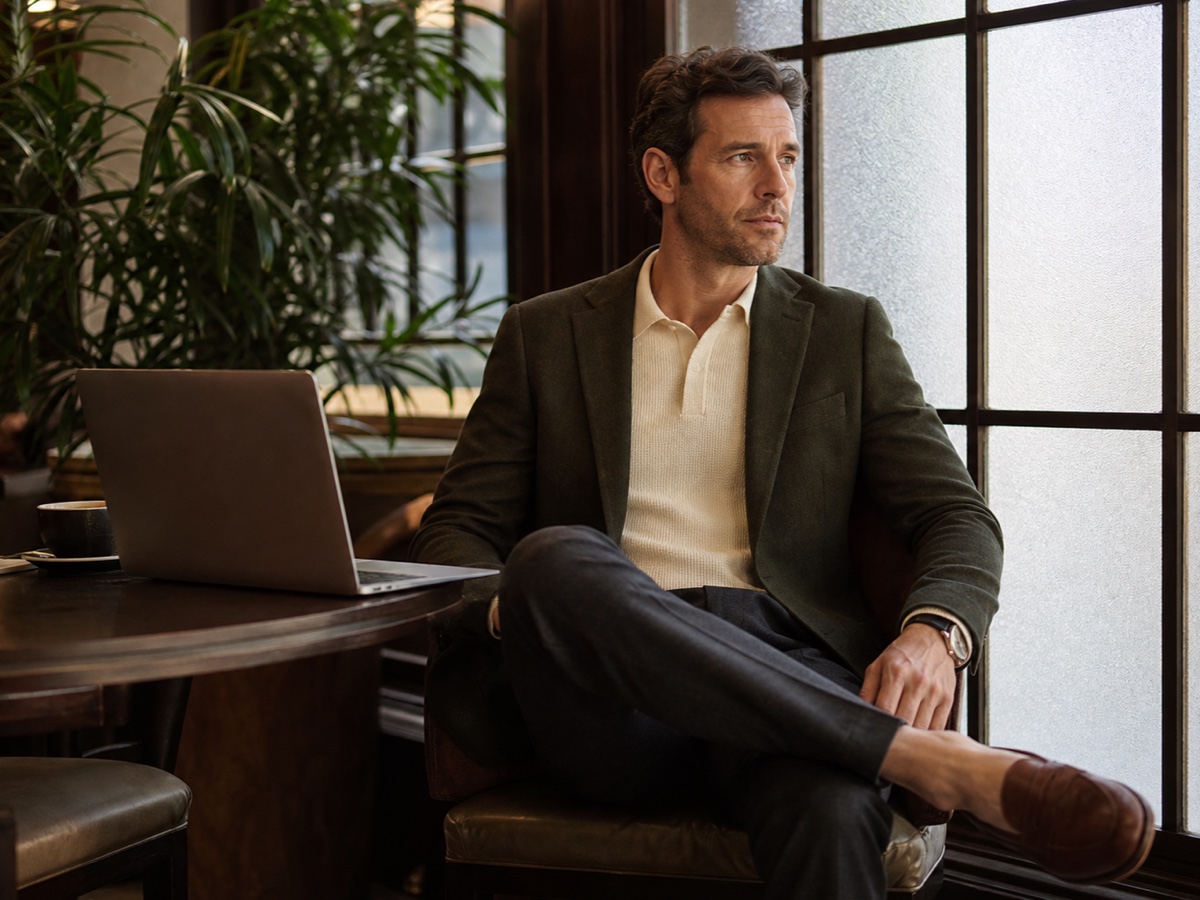
At the relaxed end, you might have an overshirt, substantial knit, tailored trousers, and refined leather sneakers or loafers. In the middle, a soft jacket, knit polo, wool trousers, and suede shoes. At the sharper end, a dark jacket or suit, excellent shirt, clean leather shoes, and a watch or belt that feels intentional rather than decorative.
The ladder prevents two common problems: being overdressed because you only know how to wear a suit, or being underdressed because every modern work outfit collapses into chinos and a knit. If you travel often, connect this ladder to your business travel outfits so the system still works away from home.
Use color as a strategy, not decoration
Color is one of the fastest ways to make an executive wardrobe feel personal without making it loud. Most men default to navy, black, white, and grey because those feel safe. Safe is useful. Too much safe becomes flat.
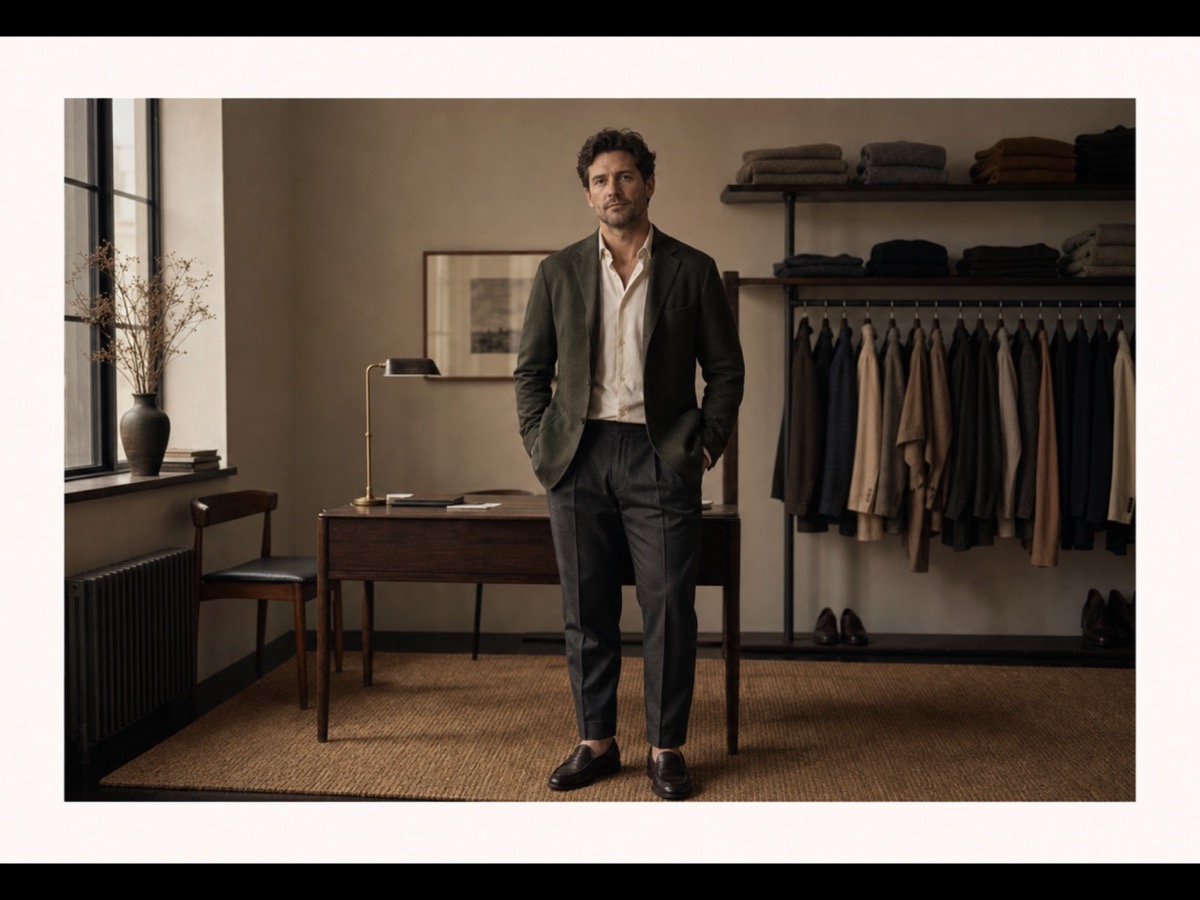
A better palette might include dark olive, espresso, tobacco, warm grey, cream, charcoal, ink blue, soft blue, or deep brown. The exact choices depend on your complexion, contrast, climate, and industry. A founder in a warm creative market can carry different color than a finance partner in London.
The goal is repeatability. You want colors that make your face look better, combine easily, and create enough difference that you do not feel like you are wearing the same outfit every day.
Fit carries more authority than labels
A jacket with a clean shoulder, correct sleeve length, and enough shape will do more for your authority than a famous label. The same is true for trousers that sit properly, shirts that hold their collar, and knitwear that does not cling or collapse.
Executive style often fails in small places: sleeves too long, trousers pooling, jackets too tight across the waist, shoes too casual for the rest of the outfit, or shirts that look tired by lunch. None of these mistakes are dramatic. Together, they make a man look less precise than he is.
If you already own good clothes but they do not look as strong as they should, read how to look better in clothes you already own before replacing everything. Alterations and better outfit formulas often reveal more value than another shopping round.
Make the wardrobe specific to your calendar
The strongest executive wardrobe is built from the calendar backwards. Write down the rooms that repeat: client presentation, investor meeting, board meeting, internal leadership day, conference, dinner, travel, headshot, video calls, and weekend visibility.
Then decide what each room requires. A client presentation may need clarity and approachability. An investor meeting may need restraint and authority. A conference may need memorability without costume. A virtual meeting may need upper-body structure and color that works on camera.
This is why a generic checklist of essentials rarely solves the problem. The right essentials for a man who spends three days a week in airports are different from the right essentials for a consultant who sells in boardrooms. Start with wardrobe essentials for men after 35, then refine them to your actual week.
What to avoid
Avoid clothes that make you feel like you have to perform a personality. The bold jacket you bought because someone said you need a signature piece. The luxury sneaker that does not fit your role. The suit that only works when you stand still. The capsule wardrobe copied from a man with a different body, climate, and career.
Also avoid making everything too subtle. Some men edit so hard that nothing is left. Their wardrobe becomes clean but forgettable. Executive personal style needs enough point of view for people to remember you, and enough restraint for the work to stay central.
When a stylist helps
A good stylist does not simply make you more fashionable. They build the logic behind your wardrobe: what to keep, what to alter, what to stop buying, what your colors and silhouettes are doing, and which outfit formulas repeat across your real rooms.
Inside The Curated Outfit, The Curated Reset is built for men who want that system without turning style into another hobby. The work is application-only because the wardrobe has to be specific: your role, your body, your calendar, your visibility, and the way you want to be read.
FAQ
What is executive personal style for men?
Executive personal style for men is a wardrobe system that makes a man's clothes match his level of responsibility, visibility, and taste. It uses fit, color, formality, texture, and outfit formulas so he looks considered in work rooms without looking over-styled.
How should an executive man dress casually?
An executive man should dress casually with structure. Tailored trousers, refined knitwear, overshirts, soft jackets, leather shoes, and substantial fabrics usually work better than thin T-shirts, hoodies, or overly casual sneakers when the room still has professional weight.
Do founders need a different wardrobe than corporate executives?
Founders often need more range than traditional corporate executives. They may move between team days, investor meetings, product conversations, travel, and public content in the same week. Their wardrobe should feel credible and current without reading as either too corporate or too casual.
How do I find my executive style?
Start by auditing your calendar, body fit issues, best colors, and the rooms where your clothes currently feel weakest. Then build outfit formulas for those rooms instead of shopping from generic inspiration. Executive style becomes clear when it is tied to repeated situations.
Is personal style important for leadership?
Personal style matters for leadership because people read visual cues before they hear the full explanation. Clothes cannot create competence, but they can support or undermine the competence already there. A clear wardrobe reduces friction in how you are perceived.
If your wardrobe is close but not yet coherent, apply for The Curated Reset. We will build the system behind how you show up in the rooms that matter.