Men's Wardrobe Essentials After 35
If you search for wardrobe essentials men, you usually get the same list: white shirt, navy blazer, dark jeans, chinos, sneakers, suit, coat. The list is not wrong. It is just not enough.
A useful wardrobe after 35 is not built from universal basics. It is built from the rooms you actually enter, the body you actually have, the climate you live in, and the level of seriousness your work now carries.
For founders, consultants, executives, and senior operators, the question is not “what should every man own?” It is “which pieces make my week easier, clearer, and more congruent?” That is where the essentials become a system.
The problem with most essentials lists
Most essentials lists are written as if every man has the same job, city, body, taste, and social context. They flatten everyone into a safe average. You end up buying “good basics” that technically work, but do not say much about you.
The other problem is formality. Many men own isolated pieces: one suit for weddings, a few shirts for meetings, expensive sneakers, nice knitwear, random weekend clothes. The issue is not absence. It is that the pieces do not speak to each other.
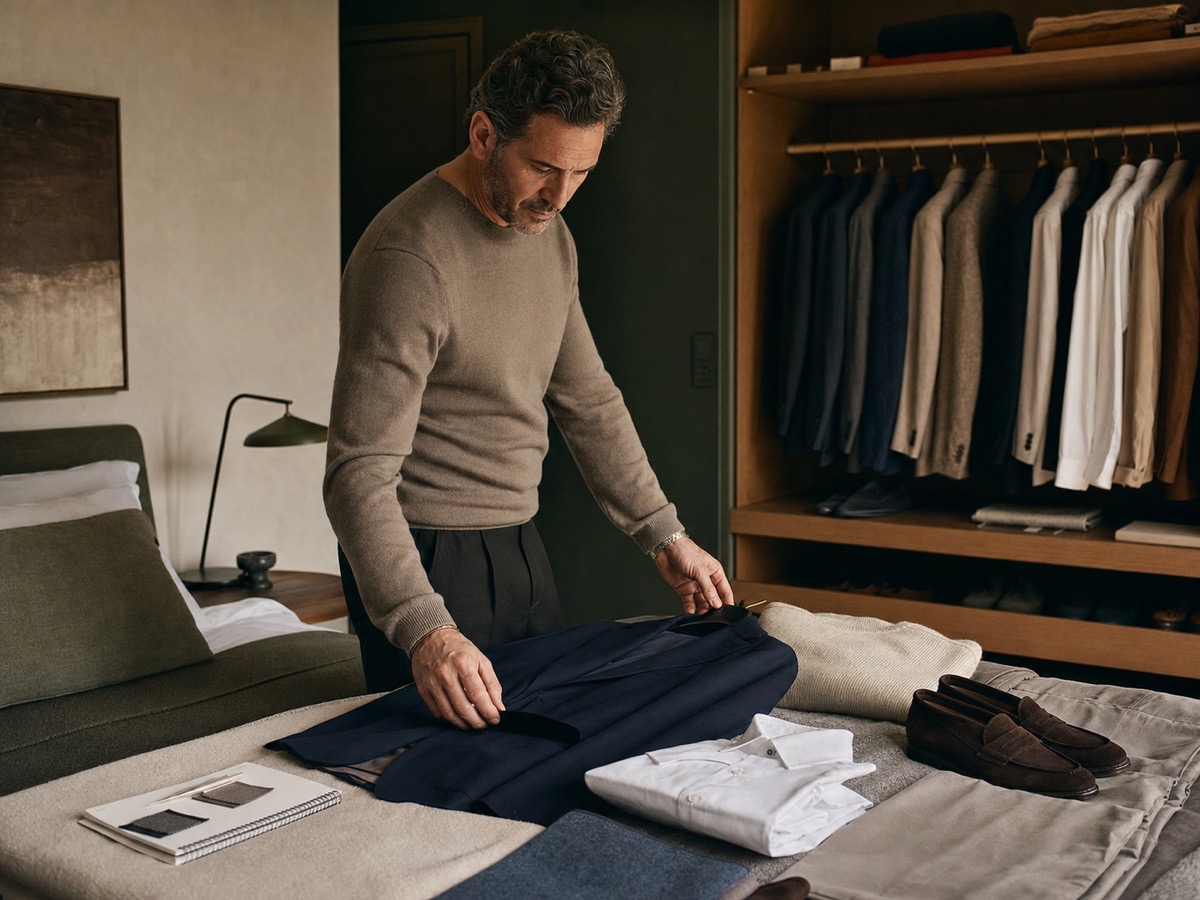
If that sounds familiar, start with a wardrobe audit for men before you buy another staple. The audit shows which pieces have earned their place and which ones are only there because a list told you they should be.
Essential 1: One soft tailored jacket
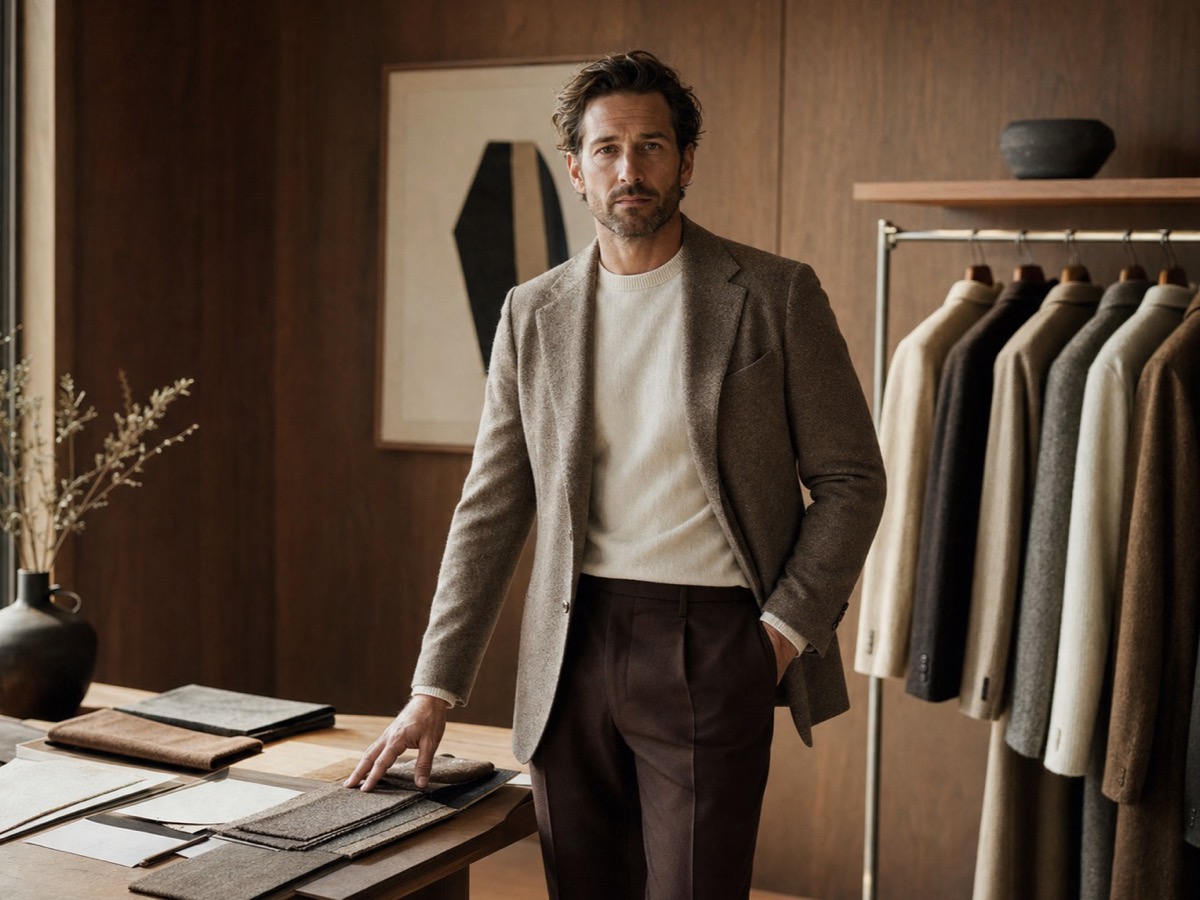
A soft jacket is the most useful professional layer for a serious man who does not want to look corporate all week. It gives shape to your upper body, makes simple pieces look intentional, and works across meetings, dinners, travel days, and photos.
Choose navy, deep brown, olive, taupe, or charcoal depending on your coloring and existing wardrobe. The cloth should be matte. The shoulder should have shape without stiffness. It should look like a jacket you chose, not like a suit jacket separated from its trousers.
This is the piece that turns a knit polo, open-collar shirt, or fine T-shirt into an outfit that can enter a senior room. If you are unsure where that line sits, read the guide to business meeting outfits for men.
Essential 2: Trousers that are not denim
Many men over-rely on jeans because trousers feel either too formal or too corporate. That gap is exactly where a better wardrobe begins.
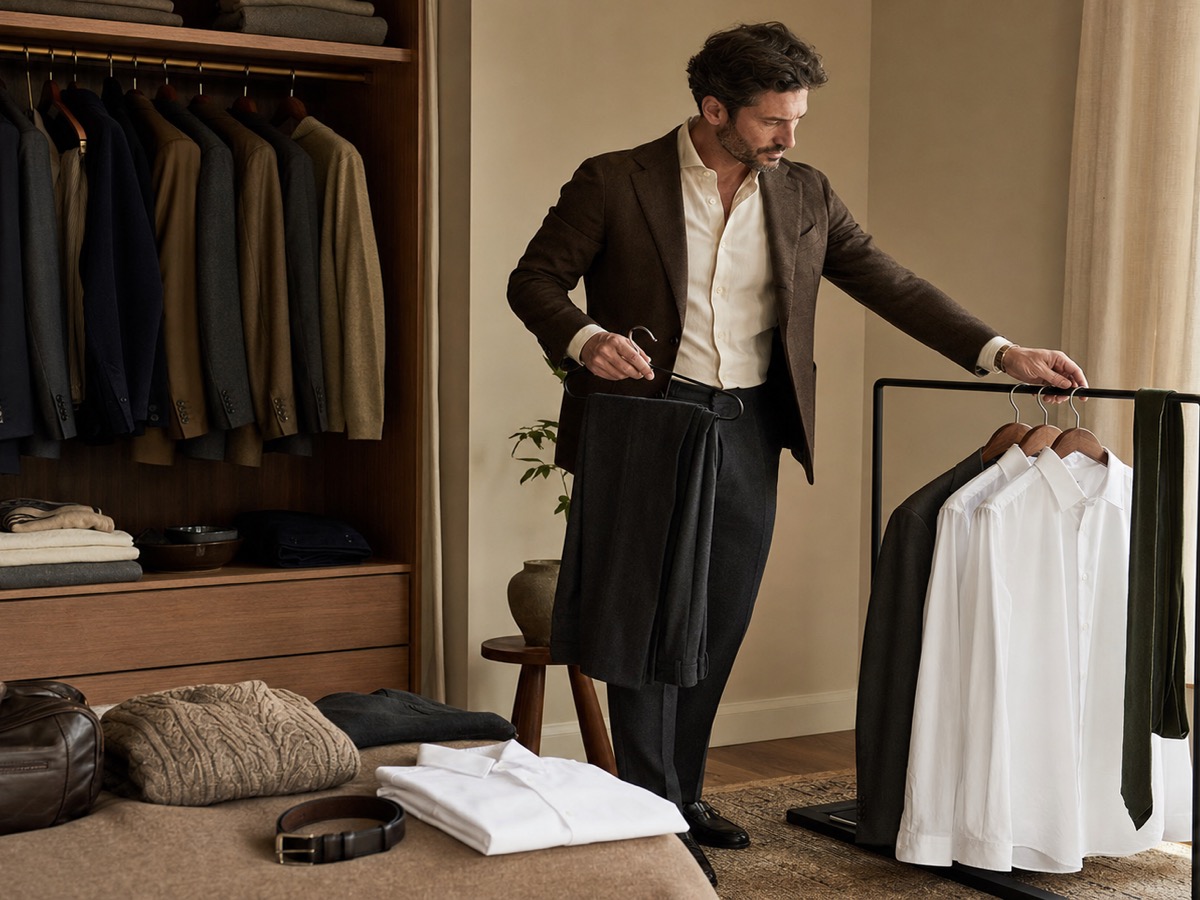
You need at least two pairs of trousers that are clean enough for work but relaxed enough for modern rooms. Think wool, cotton-linen, cavalry twill, brushed cotton, or substantial cotton. The cut should give the leg a clean line without pulling when you sit down.
Good trousers make the rest of your wardrobe look more adult. They also stop every outfit from drifting into casual Friday, which is where many founders accidentally stay for years.
Essential 3: Shirts that work open at the neck
A shirt is only essential if it works the way you actually wear it. If you rarely wear a tie, your shirts need to sit well open at the neck. The collar should have enough structure. The cloth should not shine. The body should not billow when tucked or strain when seated.
For most men, the useful group is small: one white or ecru shirt, one blue or muted stripe, one casual oxford or chambray, and one warmer-toned option if it suits your palette. More than that is optional.
The shirt is often where men reveal that they have bought around fit instead of solving it. If the collar collapses or the body fights your torso, the outfit never quite lands.
Essential 4: Knitwear with enough presence
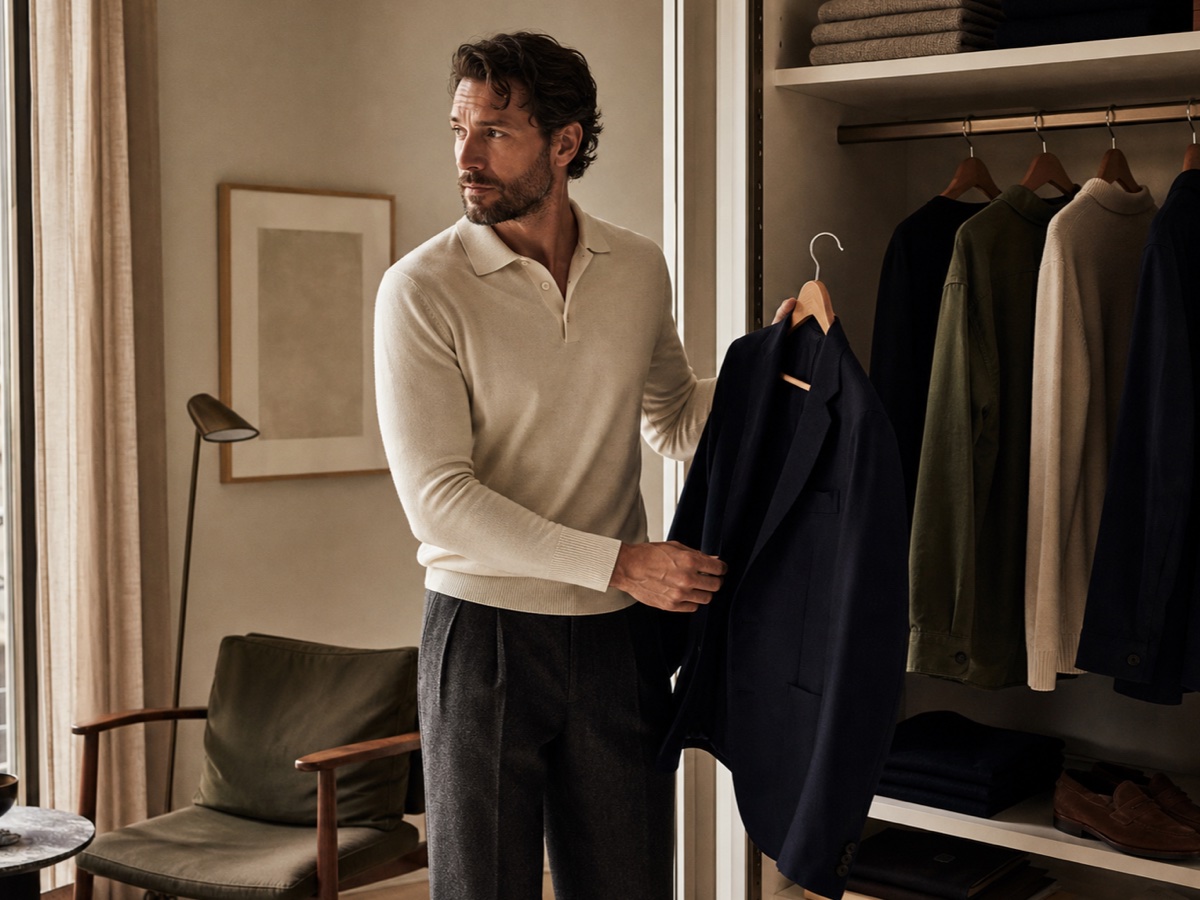
Knitwear is where a wardrobe can become softer without becoming sloppy. A good merino crewneck, knit polo, cardigan, or fine zip knit can carry the middle ground between T-shirt and jacket.
The mistake is buying knitwear that is too thin, too stretchy, or too casual for the role it needs to play. You want enough weight to hold shape and enough refinement to sit under tailoring.
For a senior work week, knitwear should help you look at ease without looking underdressed. That is the line. It is also why a generic capsule wardrobe often fails for men with visible roles.
Essential 5: A casual layer with structure
Not every room needs a blazer. Some need an overshirt, chore jacket, suede blouson, field jacket, or substantial cardigan. The point is the same: your casual clothes still need a frame.
This layer is especially useful for creative offices, travel, workshops, and informal client time. It lets you look current without defaulting to a hoodie or sportswear.
If the category feels vague, this overshirt guide explains why it works: it gives the torso structure while keeping the outfit below blazer formality.
Essential 6: Two levels of shoes
Shoes set the seriousness of an outfit quickly. You need at least two useful levels: one refined leather shoe and one elevated casual shoe.
The refined option can be a loafer, derby, split-toe, Chelsea boot, or clean lace-up. The casual option can be a minimal leather sneaker, suede loafer, driving shoe, or relaxed boot. Both should be cared for. Both should match the rest of the wardrobe.
This is where many outfits fail. The clothes say “senior professional” and the shoes say “weekend errand.” Or the shoes say “formal office” and the rest of the outfit says “founder in a relaxed room.” You need alignment.
Essential 7: One serious coat
A coat is not an afterthought if you live in a colder climate or travel through one. It is often the first thing people see. A good coat can make simple clothing look expensive, calm, and resolved.
For most men, the right answer is a wool overcoat, car coat, trench, or refined weatherproof coat in navy, camel, charcoal, olive, or dark brown. It should fit over tailoring and still look good over knitwear.
If you live somewhere warm, replace the coat with the equivalent outer layer for your climate: a linen overshirt, lightweight suede jacket, or unstructured cotton jacket that gives shape without heat.
Essential 8: A color and material code
This is the part most lists miss. Your essentials need a code. Without one, you buy good things that do not combine easily.
A useful code names your strongest neutrals, your best accent colors, the materials that suit your body and climate, and the level of texture that feels like you. It also names what to stop buying.
This is why finding your personal style as a man is not a mood exercise. It is a decision system. Once the code is clear, shopping becomes much quieter.
What to skip
- Anything you buy only because it appears on every essentials list
- Cheap “versatile” shoes that make every outfit look less precise
- White sneakers if you do not keep them clean or they do not match your rooms
- Dress shirts that need a tie to look finished when you never wear one
- Blazers that are really orphaned suit jackets
- Thin knitwear that clings, twists, or loses shape by lunch
The goal is not to own fewer clothes for the sake of minimalism. It is to own fewer unresolved decisions. A compact wardrobe can still be wrong if every piece is chosen from someone else's life.
Where The Curated Reset fits
The Curated Outfit helps serious men build wardrobes around their actual role, body, taste, and visibility. The Curated Reset is a virtual, application-only wardrobe system for men who want clarity without turning style into a hobby.
Inside the process, essentials are not chosen from a universal checklist. They are chosen from your week: meetings, travel, dinners, boardrooms, climate, body, and the way you want to be read before you speak.
If you want the result, read the client reviews. The repeated pattern is not that men suddenly own more clothes. It is that they know what belongs, what does not, and why.
FAQ
What are the wardrobe essentials for men?
The most useful wardrobe essentials for men are a soft tailored jacket, clean trousers, shirts that work open at the neck, substantial knitwear, a structured casual layer, two levels of shoes, a serious coat or outer layer, and a clear color and material code.
How many clothes should a man own?
A man should own enough clothes to cover his real week without repeating emergency outfits or keeping unused pieces. For many professionals, that means fewer but better pieces across work, travel, dinners, exercise, and home, not a fixed number.
What should a man buy first when rebuilding his wardrobe?
A man rebuilding his wardrobe should buy the piece that solves the biggest repeat problem first. For many senior men, that is trousers that are not jeans, a better jacket, or shirts that finally fit open at the neck. Audit before buying.
Are jeans a wardrobe essential for men?
Jeans can be a wardrobe essential for men, but they are not the answer to every casual outfit. Dark, clean, well-fitting denim is useful. If every outfit depends on jeans, the wardrobe usually needs better trousers and more structured casual layers.
What wardrobe essentials do men over 35 need?
Men over 35 need wardrobe essentials that match their role and visibility: stronger outerwear, better trousers, adult shoes, shirts that fit properly, knitwear with presence, and at least one tailored layer. The wardrobe should support authority without making them look stiff.
If you want a wardrobe built around your actual life instead of another generic essentials list, apply for The Curated Reset.