Best Colors for Men: Build Your Palette
The best colors for men are the colors that make your face look clearer, your wardrobe easier to combine, and your presence more specific. They are not universal. Navy, white, grey, and black can be useful, but they do not solve the whole problem.
For serious men, color is rarely about looking more fashionable. It is about reducing noise. The right palette helps your clothes sit closer to your face, your role, your calendar, and the impression you want to leave in rooms where people make decisions.
This is where many men get stuck. They ask what colors men should wear, then receive a list that could belong to anyone. A better question is: which colors should become your repeated signals?
Start with your face, not the clothing rack
Color works closest to the face first. A jacket, shirt, knit, polo, scarf, or overshirt can either sharpen your features or make you look tired before anyone has heard a word.
Look at the colors you wear near your face on days when people say you look well. The exact shade matters. One man's best navy may be dark and inky. Another man's navy may need softness, a little dustiness, or more blue than black. Both are navy on a product page. They are not the same on a person.
This is why generic advice disappoints. White shirts are not automatically clean. For some men, optical white looks crisp. For others, it is too bright and hard. Cream, ecru, stone, pale blue, or soft grey can do the same job with less strain.
Build around foundational tones
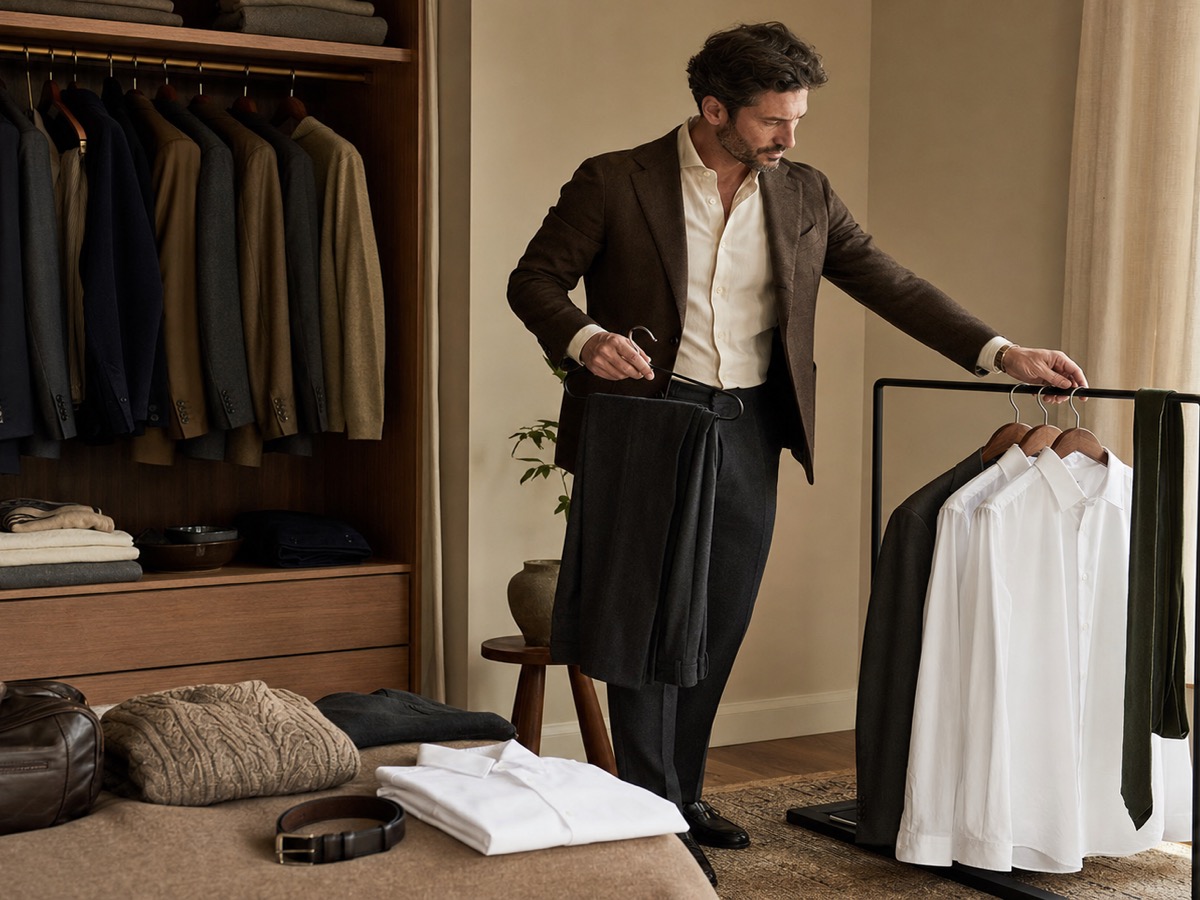
Your foundational tones are the colors you can repeat without thinking. They are the base notes of the wardrobe: the trousers, jackets, knitwear, coats, shoes, belts, and bags that make outfit building feel calm.
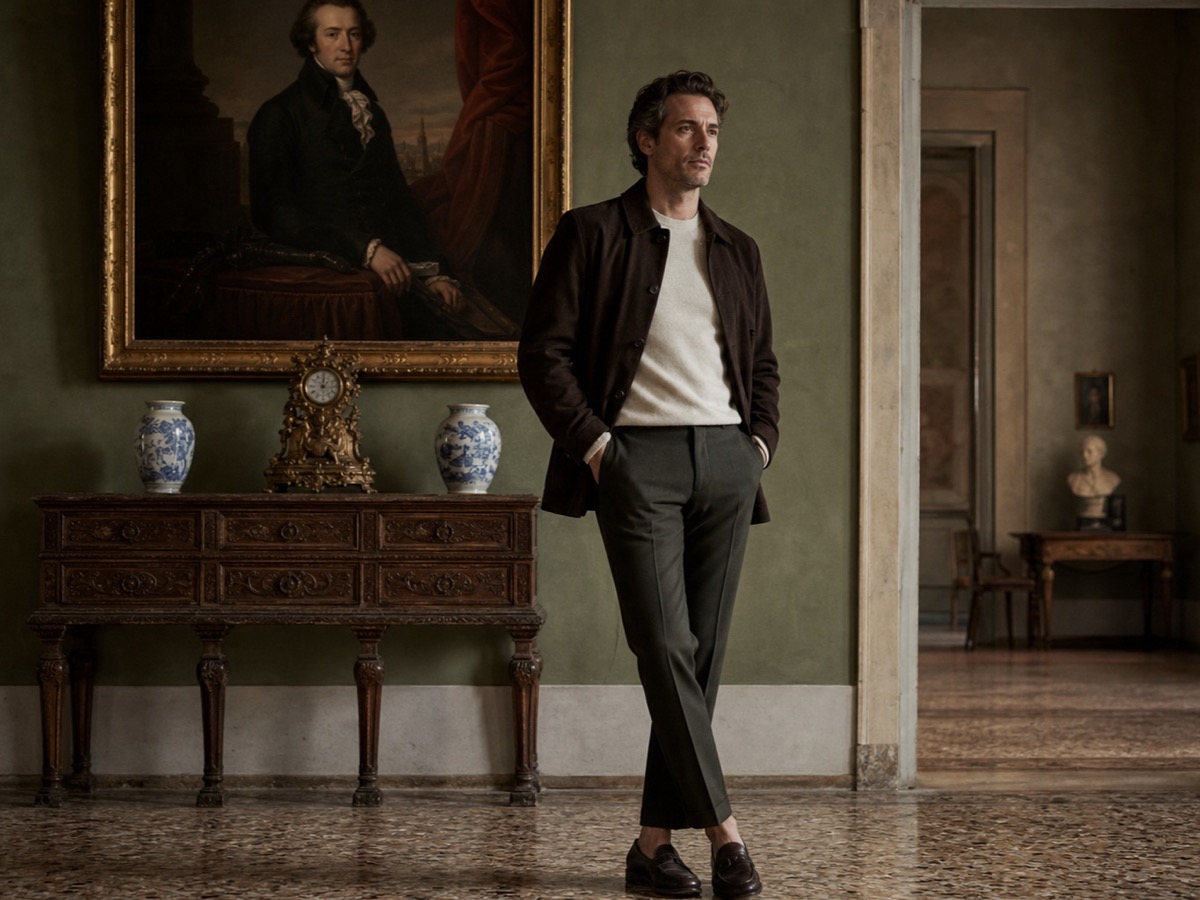
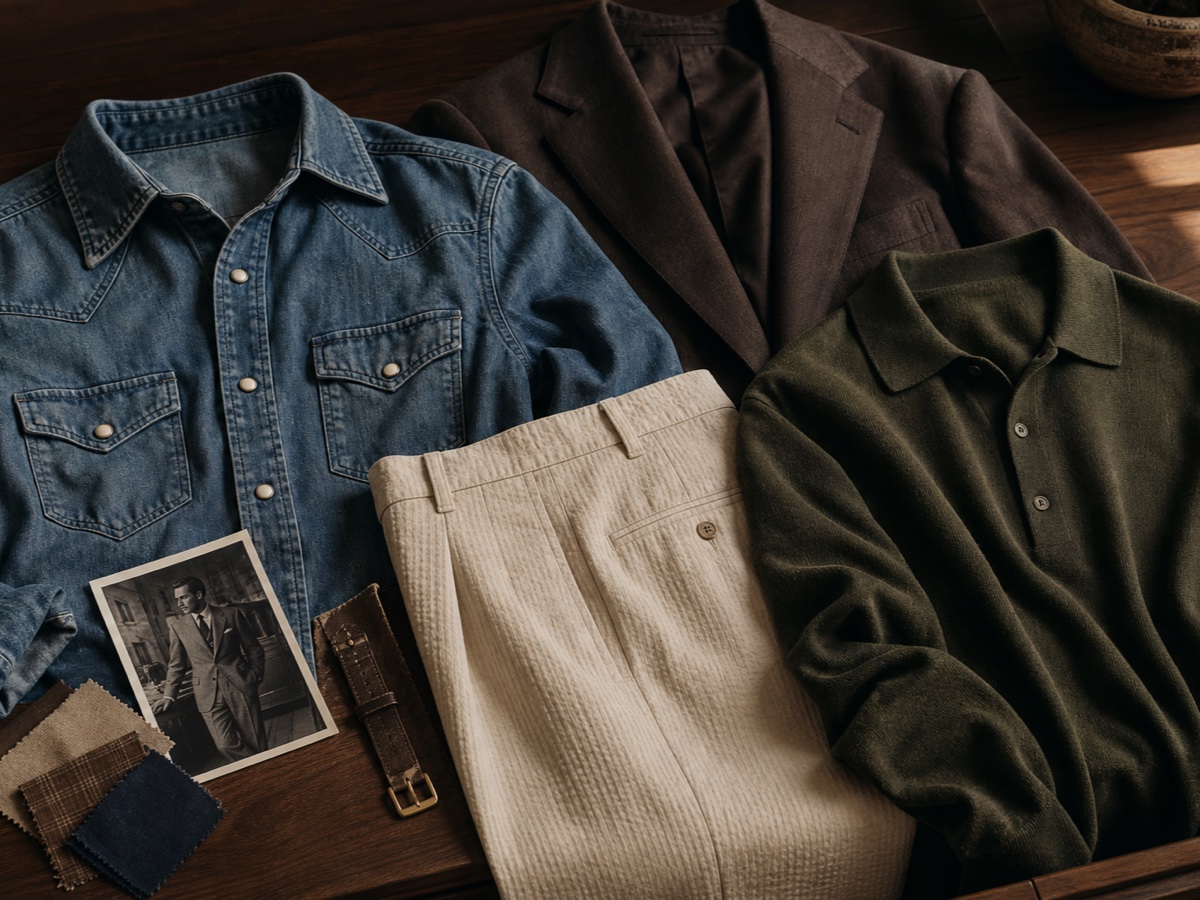
For many men, strong foundations come from a small group: navy, charcoal, mid grey, warm grey, olive, espresso, cream, tobacco, stone, denim blue, and muted brown. The point is not to own all of them. The point is to choose the ones that cooperate with your complexion and with each other.
If you already have too many disconnected items, a wardrobe audit will usually reveal the problem quickly. The clothes may be good separately, but the palette is doing too many jobs at once.
Choose one dark, one light, and one character color
A practical men's wardrobe needs range. Start with one dark anchor, one light support, and one color with personality.
The dark anchor might be navy, charcoal, espresso, forest green, or deep olive. This is the color that gives weight. It works for tailoring, coats, trousers, knitwear, and shoes.
The light support might be cream, pale blue, soft white, stone, oatmeal, or warm grey. This is what keeps the wardrobe from feeling heavy and gives the face more lift.
The character color is where you become less anonymous. It might be tobacco suede, muted burgundy, dusty blue, moss, clay, ink blue, rust, or a particular shade of green. It should still feel wearable, but it gives the wardrobe a point of view.
Use color to support your professional signal
Color changes how clothes are read. Charcoal and white can feel precise. Cream and espresso can feel warm and intelligent. Olive can feel grounded. Navy can feel reliable. Black can feel sharp, creative, or severe depending on fabric and fit.
For a founder, executive, consultant, or advisor, color should support the way people need to understand you. If your work requires calm authority, a palette of navy, muted blue, grey, and soft white may make sense. If your role needs warmth and trust, cream, tobacco, olive, and textured browns may do more work. If your world is design-adjacent, deeper green, black, off-white, and unusual texture may feel more congruent.
This is closely tied to personal branding style. You are not choosing colors because they are flattering in isolation. You are choosing repeated signals that help people place you quickly and accurately.
Do not confuse color with loudness
Many men avoid color because they imagine bright shirts, statement socks, or forced personality. That is not the useful version.
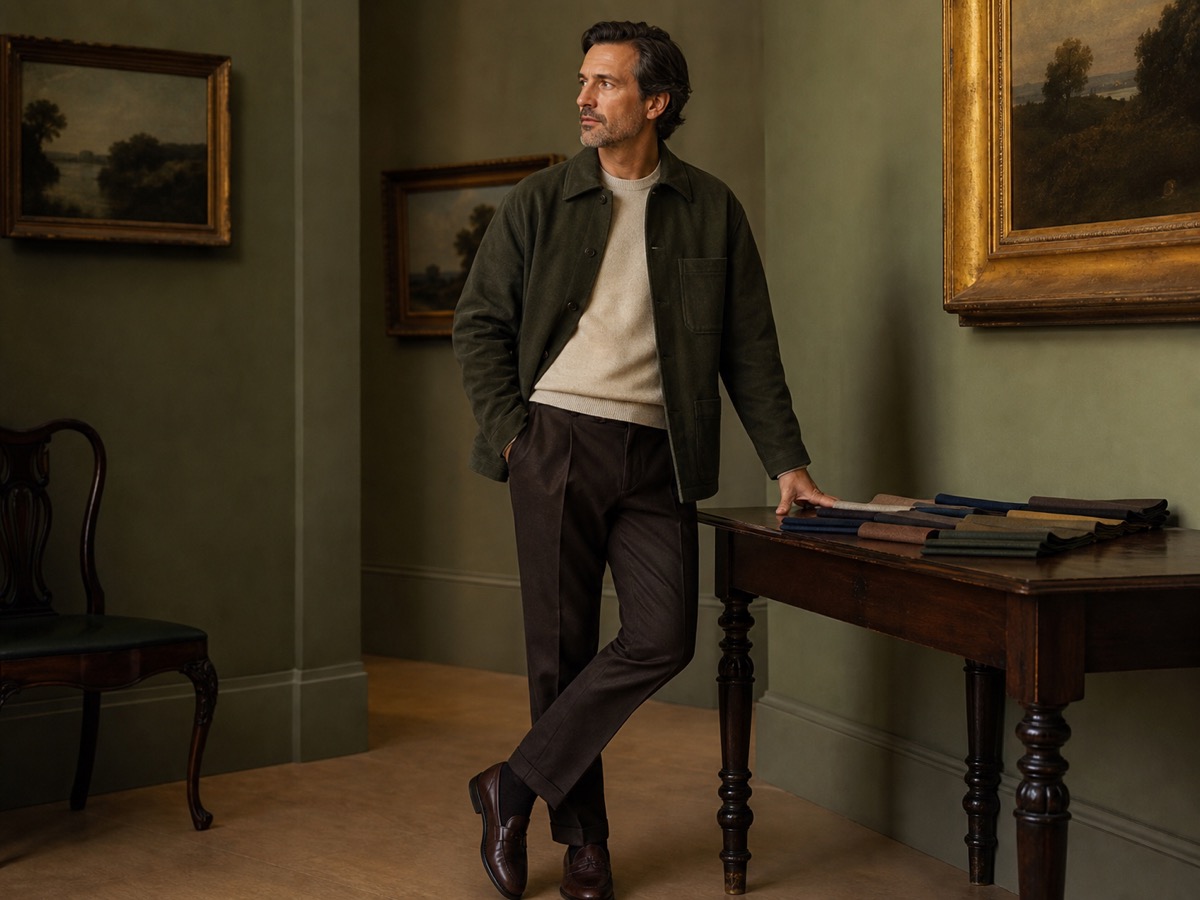
Useful color can be quiet. A washed blue shirt instead of a hard white one. A tobacco suede belt instead of black leather. An olive overshirt over cream knitwear. A deep brown jacket instead of another navy blazer. A muted burgundy knit that adds life without demanding attention.
The best colors for men often feel almost obvious once they are in the wardrobe. They make outfits easier. They make your face look better. They make the closet feel less like a random archive of good purchases.
Keep black under control
Black is useful, but it is not automatically sophisticated. On some men it looks crisp and intentional. On others it drains the face, especially in large amounts near the collar.
If black feels too hard, try charcoal, espresso, deep navy, or dark olive. These colors can give similar seriousness with more depth. They also combine more easily with warm neutrals, suede, denim, and textured tailoring.
This matters because many men buy black when they want to feel safe. Safety is not always clarity. Sometimes black simply hides the lack of a real palette.
Test colors in real outfit situations
Do not judge a color from a swatch alone. Judge it in an outfit, in daylight, near your face, with the trousers and shoes you actually wear.
A color may look beautiful on a hanger and awkward with your existing wardrobe. Another may look boring in the shop and become your best supporting actor because it connects five things you already own.
Use real contexts: a client meeting, a travel day, a dinner, a speaking engagement, a weekend with your family. The color has to survive the week, not just the mirror. If you already work from outfit formulas, connect the palette to those formulas rather than treating color as a separate exercise.
Use a small palette to shop better
A personal palette is a filter. It helps you stop buying nice pieces that do not belong anywhere.
Before adding something new, ask three questions. Does this color work near my face, or should it stay lower on the body? Does it connect with at least three pieces I already own? Does it support the way I want to be read professionally?
If the answer is no, the piece may still be beautiful. It is just not efficient for your wardrobe. Men who want clarity need fewer almost-right purchases and more pieces that support the whole system.
When color needs a system
You can improve your wardrobe color by paying closer attention and editing what does not cooperate. Many men can make progress by choosing better whites, softening harsh contrasts, and repeating two or three colors that already work.
Help becomes useful when the wardrobe has money in it but no rhythm. You own good clothes, but the combinations still feel accidental. You keep buying navy because it is safe. You avoid color because you do not trust your eye. Or you have moved into a more visible role and the old palette feels a little flat.
Inside The Curated Outfit, The Curated Reset turns color into part of the full wardrobe system: what stays, what goes, what gets altered, what gets added, and how each outfit should read across your real week.
FAQ
What are the best colors for men to wear?
The best colors for men depend on complexion, role, climate, and wardrobe use. Navy, charcoal, olive, espresso, cream, stone, muted blue, warm grey, and tobacco often work well because they are serious, flexible, and easier to combine than louder trend colors.
How do I know what colors look good on me as a man?
You know a color works when your face looks clearer, your features look sharper, and the clothes do not pull attention away from you. Test colors near your face in daylight, then compare hard white versus cream, black versus charcoal, and bright navy versus softer navy.
Should men wear black or navy?
Men can wear both black and navy, but navy is often easier for business and everyday wardrobes. Black works best when it suits your complexion, fabric quality, and environment. If black feels harsh, use charcoal, espresso, or deep navy for a softer form of authority.
How many colors should a man's wardrobe have?
A useful men's wardrobe can be built around five to seven core colors: two dark anchors, two or three light supports, and one or two character colors. The goal is not restriction. The goal is enough repetition that outfits combine easily and feel like the same man.
Is color analysis useful for men?
Color analysis can be useful for men if it leads to practical wardrobe decisions. The best version is not a rigid seasonal label. It is a working palette that tells you which colors to wear near your face, which to use as accents, and which to avoid buying again.
If your wardrobe is full of good pieces that do not quite cooperate, apply for The Curated Reset. We will turn your palette, fit, formulas, and shopping list into one system.