What to Wear to a Client Presentation
What to wear to a client presentation depends on the room, the money at stake, and how much authority you need before you speak. The outfit should help the client understand that you are prepared, precise, and still easy to work with.
For men in senior work, the mistake is usually one of two extremes. Either the outfit is too casual for the responsibility of the room, or it becomes so formal that it feels separate from the person presenting.
The strongest client presentation outfit is polished, calm, and specific to the client. It gives structure to your message without pulling attention away from it.
Start with the client, not the dress code
A client presentation is not a generic business meeting. You are asking people to trust your judgment, your taste, your numbers, your process, or your ability to solve a problem they care about. That changes the clothing decision.
Before choosing the outfit, ask three questions. Who is in the room? What decision are they making? What do they need to believe about you before the first slide lands?
A founder presenting to a conservative board needs a different signal from a consultant leading a creative workshop. A first pitch asks for more clarity than a recurring client check-in. A high-fee advisory presentation needs more restraint than an internal update.
This is close to the logic behind business meeting outfits for men, but the presentation layer adds one more requirement: the clothes have to support attention. The client should remember the argument, not the distracting collar, loud shoe, or uncertain level of formality.
The safest client presentation outfit
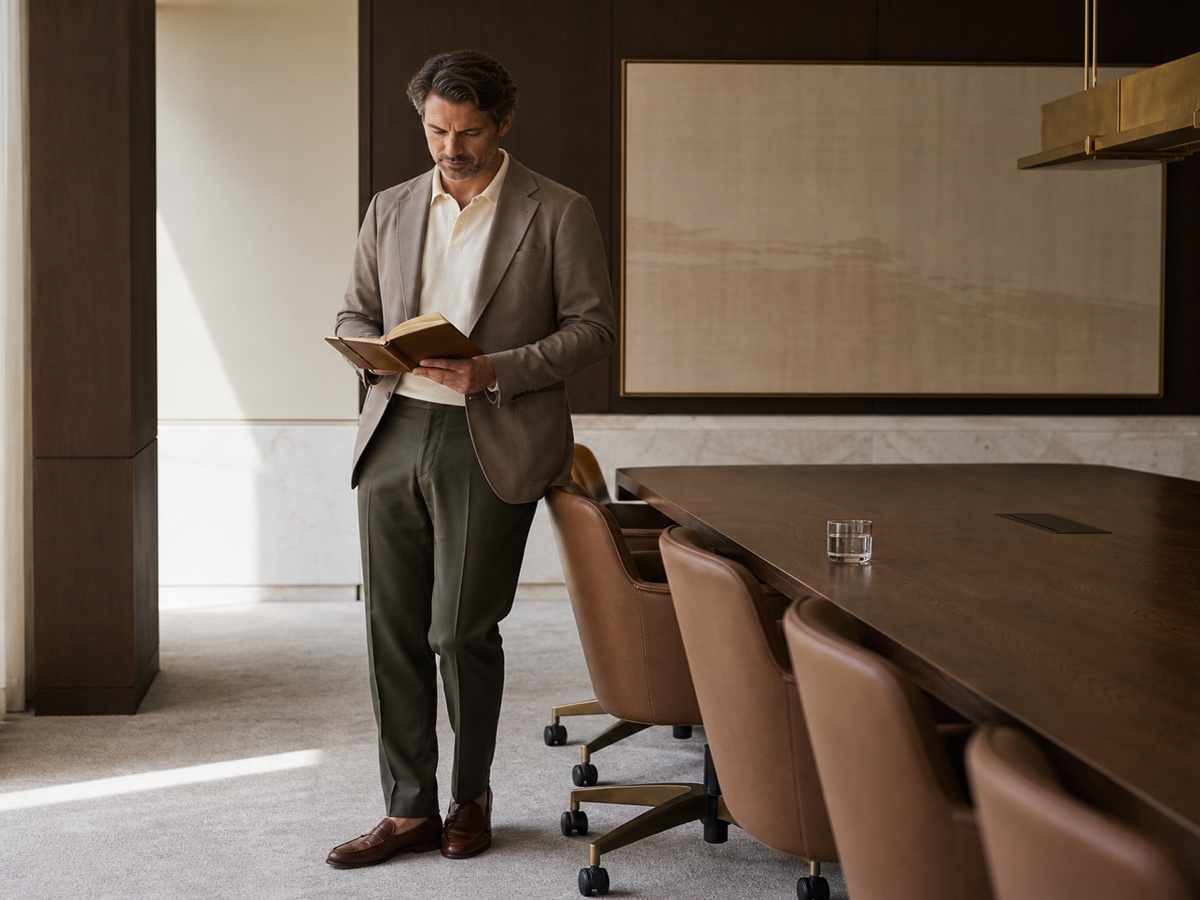
For most men, the safest client presentation outfit is a soft jacket, an open-collar shirt or refined knit, tailored trousers, and clean leather shoes. Navy, charcoal, dark olive, espresso, cream, pale blue, and warm grey usually work because they give enough authority without looking theatrical.
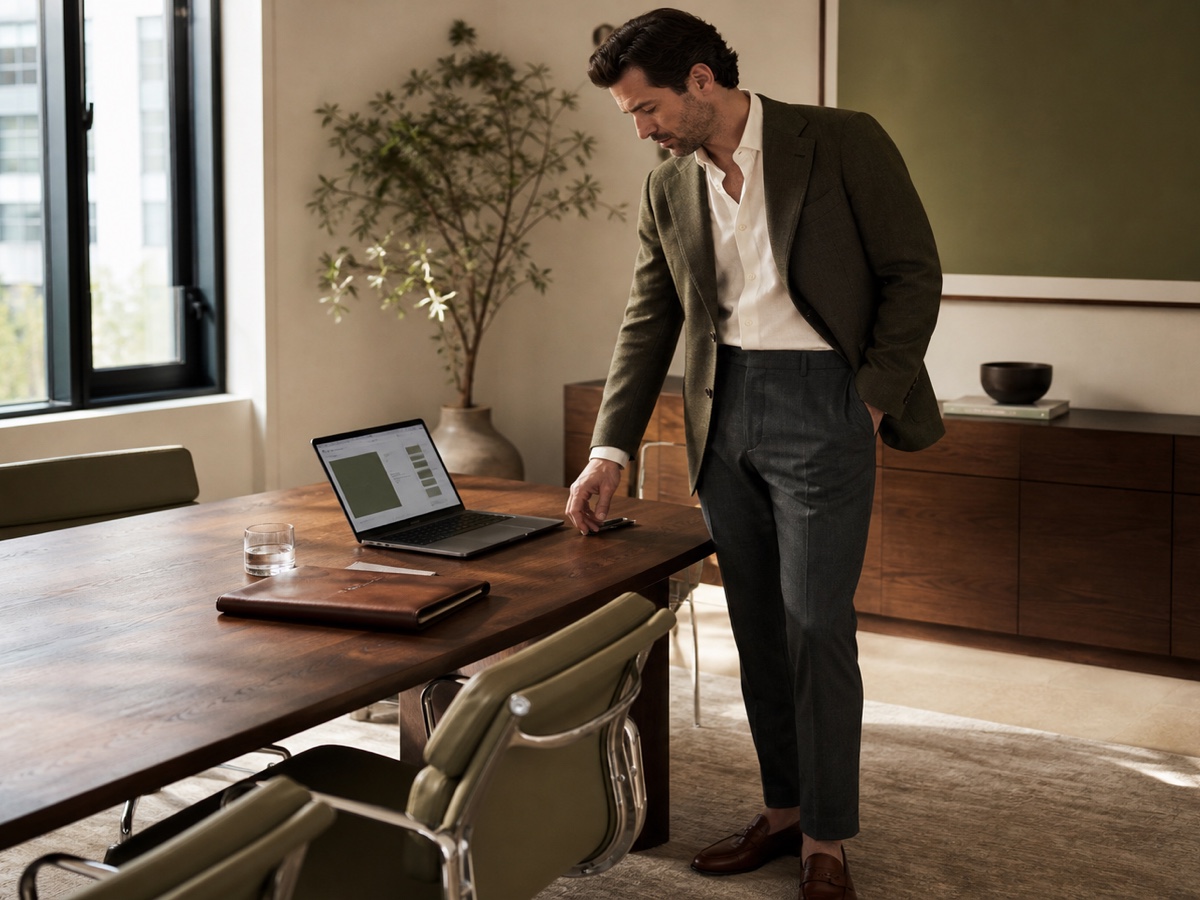
If the room is formal, wear a suit. If the client is founder-led, creative, or modern professional, tailored separates often feel more accurate. A textured navy jacket with grey trousers, an olive jacket with a cream shirt, or a dark brown jacket with charcoal trousers can read senior without looking like a borrowed corporate uniform.
The jacket matters because it frames your shoulders while you stand, sit, point to a screen, and answer questions. It is not only about formality. It gives the body a clear line.
Choose one clear level of formality
Client presentation outfits often fail because the levels fight each other. A sharp jacket with faded jeans, sleek sneakers, and a casual T-shirt can look undecided. A full suit with overly casual grooming can have the same problem from the other direction.
Choose one level and let the pieces agree. If the jacket is tailored, the trousers should have enough structure. If the shirt is open collar, the fabric and fit should still be crisp. If the shoes are loafers, they should be polished and substantial enough for the room.
This is why a wardrobe system is easier than a last-minute outfit. When your clothes already sit in clear levels, you can raise or lower the signal quickly instead of rebuilding the whole look before a meeting.
Dress for the presentation format
Standing presentation
If you will stand at the front of the room, pay attention to the full silhouette. The jacket length, trouser break, shoes, belt, and hem all show. A slightly stronger shoulder line helps, especially if the room is large or the client is senior.
Boardroom presentation
If you will sit around a table, the upper half carries more weight. Collar, jacket lapel, watch, glasses, and shirt texture become visible at close range. Keep the details quiet and choose fabrics that look good under mixed office lighting.
Workshop presentation
If you will move around, write on a board, or lead exercises, choose slightly softer tailoring. A jacket that restricts your arms will make the whole session look stiff. A structured knit, overshirt, or unstructured blazer can work if the client culture allows it.
Virtual client presentation
If the presentation is on camera, treat it like a tighter version of the same decision. The strongest upper half wins. Use the guidance in what to wear to virtual meetings: clean collar, quiet contrast, no tiny patterns, and enough structure around the face.
Use color to keep attention on your message
Client presentations are rarely the right place for high-contrast experimentation. That does not mean everything has to be plain. It means the color story should be controlled enough that people can listen.
Navy, charcoal, dark olive, brown, grey, cream, pale blue, and white are useful because they support different levels of authority. Navy and charcoal feel serious. Olive and brown feel warmer. Cream and pale blue can soften the face. White is sharp, but it can glare under harsh office light or on camera.
If the client brand or industry is conservative, stay close to navy, charcoal, white, and pale blue. If the client works in design, hospitality, tech, or founder-led services, you can add more texture: suede loafers, a knitted polo, a softer jacket, or a darker earth tone.
What to avoid in a client presentation
- Clothes that are technically expensive but visibly uncomfortable.
- Tiny checks, thin stripes, or busy patterns that flicker on screens.
- Casual shoes that make the rest of the outfit feel unfinished.
- A shirt collar that collapses when you sit down.
- Overly expressive accessories that become the talking point.
- New clothes worn for the first time on the day of the presentation.
- An outfit chosen from aspiration rather than the actual client room.
None of these are moral problems. They are small leaks in the signal. In a client presentation, small leaks become larger because the room is already judging clarity, confidence, and fit.
Plan the outfit before the final slide edit
Most men think about clothes after the deck is finished. That is understandable, but it is also why the outfit often feels rushed. If the client presentation matters, decide the clothing level when you decide the presentation strategy.
Try the full outfit at least once. Sit in it. Stand in it. Put the laptop bag or folio next to it. Check the shoes. Check whether the jacket pulls when you reach forward. Check whether the shirt collar still looks clean after ten minutes of sitting.
If you are travelling for the presentation, use the same practical thinking as what to wear to a conference. The outfit has to survive the journey, the hotel room, the taxi, and the room itself.
Build a small client-facing wardrobe system
If your work regularly involves pitches, workshops, advisory calls, and senior client rooms, you should not be solving this from scratch each time. Build a small client-facing wardrobe system.
A useful system might include one dark suit, two soft jackets, three presentation-ready shirts, two refined knits, three tailored trouser options, polished loafers or derbies, one clean belt, and a travel steamer. The exact list changes by climate and industry. The principle does not.
The goal is not to own more. The goal is to know what belongs in each room. Inside The Curated Outfit, this is the work behind The Curated Reset: translating your role, calendar, body, taste, and client reality into outfits you can trust without overthinking.
You can read the client reviews to see what changes when a man stops improvising before visible work and starts dressing from a clear system.
FAQ
What should men wear to a client presentation?
Men should wear a client presentation outfit that looks prepared, clear, and appropriate to the client. A soft jacket, crisp shirt or refined knit, tailored trousers, and polished leather shoes is the safest formula for most senior professional rooms.
Do men need to wear a suit for a client presentation?
Men need to wear a suit for a client presentation when the industry, client seniority, or money at stake is formal. In modern founder-led or advisory rooms, tailored separates can work well if they still look sharp, restrained, and deliberate.
Can men wear business casual to a presentation?
Men can wear business casual to a presentation if it is the polished end of business casual. A jacket, tailored trousers, refined shirt or knit, and serious shoes are safer than chinos, sneakers, and a casual shirt.
What colors are best for client presentations?
Navy, charcoal, dark olive, espresso, grey, cream, white, and pale blue are usually best for client presentations. They create authority and clarity without pulling attention away from the message.
How should men dress for a virtual client presentation?
For a virtual client presentation, men should prioritize the upper half: clean collar, structured shoulder line, quiet contrast, and no distracting patterns. A soft jacket over a shirt or knit polo usually reads well on camera.
If your client-facing wardrobe still feels improvised, apply for The Curated Reset. We will build the system behind the rooms where your appearance now matters.