Consultant Outfits for Men
Consultant outfits men search for usually fall into two weak categories: interview advice or generic business casual. Neither solves the daily problem of being in rooms where you have to look credible, current, and useful before you have said much.
A consultant’s wardrobe has a harder job than an office wardrobe. It has to work with client cultures, travel, workshops, dinners, video calls, airports, and senior rooms that may not share the same dress code. The outfit should give you range without making you look like you are changing character between contexts.
The goal is not to look corporate. The goal is to look accurate. Your clothes should make your role easy to read: prepared, observant, commercially serious, and calm enough for the room.
Start with the client, not the dress code
Consulting dress codes are rarely written clearly. A client may say business casual, but the leadership team may still read a jacket as respect. Another client may be casual on paper, but visibly polished because the room includes investors, lawyers, or board members.
Before you choose an outfit, ask what the day is asking from you. Are you presenting? Facilitating a workshop? Sitting with the C-suite? Traveling between sites? Having dinner afterward? The same navy jacket can be right in one of those rooms and too much in another if the rest of the outfit is wrong.
If you struggle to make those calls from your existing closet, start with a wardrobe audit for men. Most consulting wardrobe problems are not caused by a lack of clothes. They are caused by pieces that sit at different formality levels and do not connect under pressure.
The consultant outfit formula
A reliable consultant outfit usually needs four parts: a controlled layer, a clean base, trousers with a proper line, and shoes that can handle the day.
- Controlled layer: soft blazer, unstructured sport coat, refined overshirt, or knit jacket.
- Clean base: oxford shirt, open-collar shirt, fine knit polo, merino crewneck, or crisp T-shirt for relaxed clients.
- Trousers: wool trousers, tailored cotton trousers, polished chinos, or dark denim only when the client room allows it.
- Shoes: loafers, derbies, suede chukkas, refined boots, or minimal leather sneakers for modern casual clients.
This is close to smart casual for men, but with more precision. Consulting outfits need to travel across other people’s standards. The outfit has to be flexible without becoming vague.
For formal client meetings
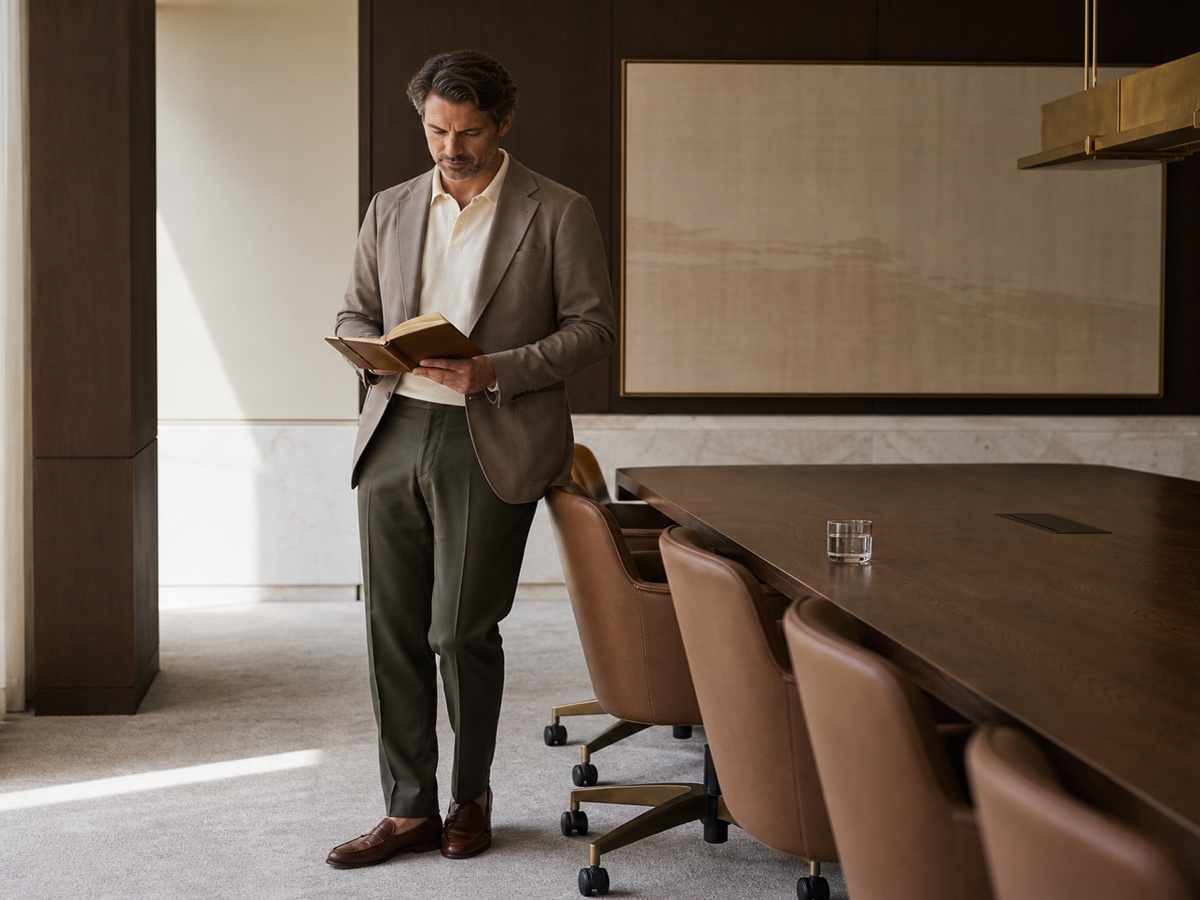
Use a soft suit or separates that behave like a suit. Navy, charcoal, dark brown, or olive can work, depending on the industry. A crisp shirt is still the cleanest base when the room is senior, conservative, or financially high-stakes.
The useful update is in the fit and fabric. A natural shoulder, slightly softer construction, and trousers with room to sit make the outfit look current instead of stiff. Highly shiny shoes, tight suits, and wedding-level tailoring can make a consultant look out of rhythm with a modern client office.
If you are presenting strategy, handling a difficult conversation, or meeting executive leadership for the first time, err one level sharper. You can always remove a tie or relax the collar. You cannot make a weak outfit stronger once you are in the room.
For workshops and working sessions
Workshops ask for authority with movement. You may be standing, writing, facilitating, sitting on the edge of a table, walking between breakout groups, and spending hours in a room that is either too cold or too warm.
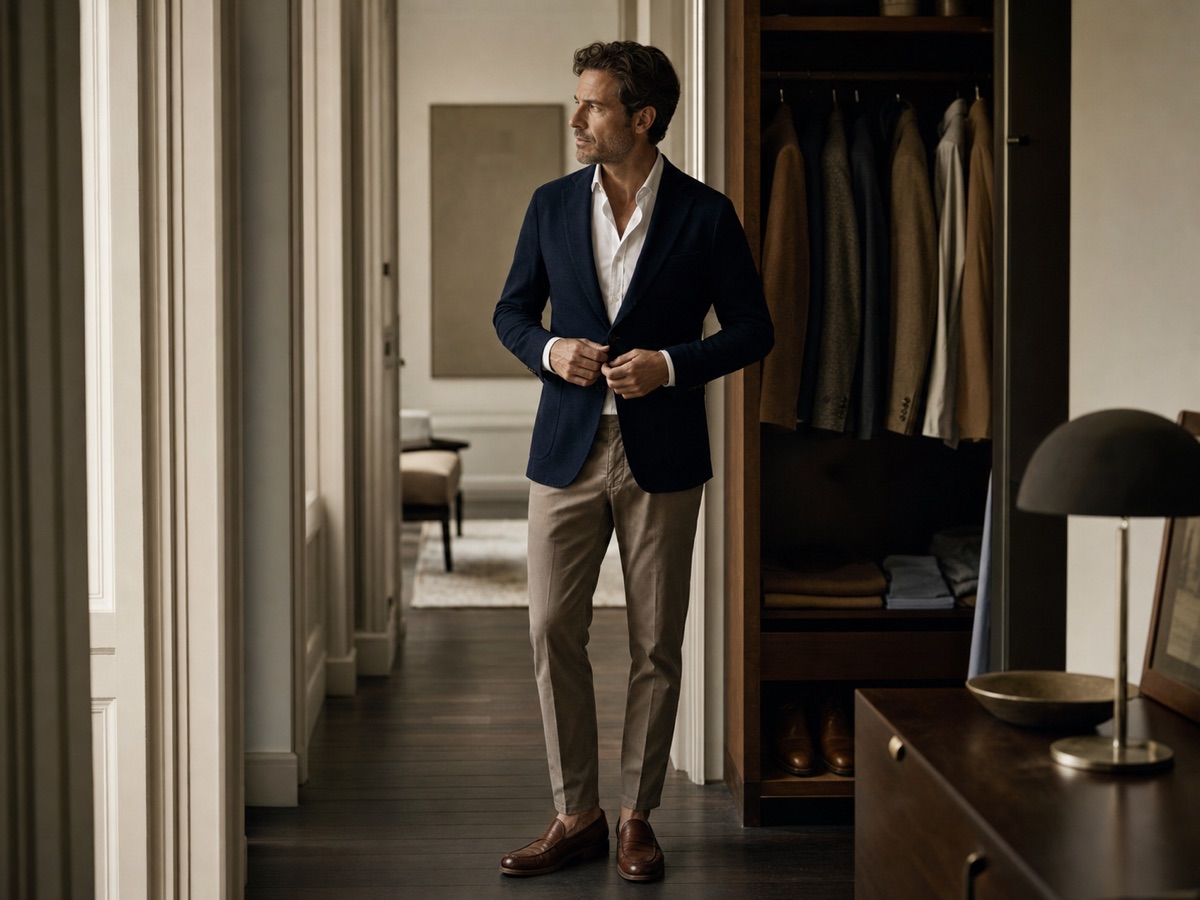
A strong formula is an unstructured jacket or refined overshirt, knit polo or oxford shirt, tailored cotton trousers, and loafers or suede derbies. The layer gives shape. The knit or shirt keeps the outfit approachable. The trousers make it clear this is still a professional room.
Avoid anything you have to keep adjusting. Pulling sleeves, collapsing collars, tight waistbands, and shoes that punish you by lunch all pull attention away from the work. Good consultant style is often quiet because the clothes are doing their job without needing maintenance.
For travel days with client visibility
Consultants often dress badly on travel days because they think the airport is separate from the client day. It rarely is. You may land, go straight to the office, meet someone unexpectedly in the hotel lobby, or join dinner before checking in properly.
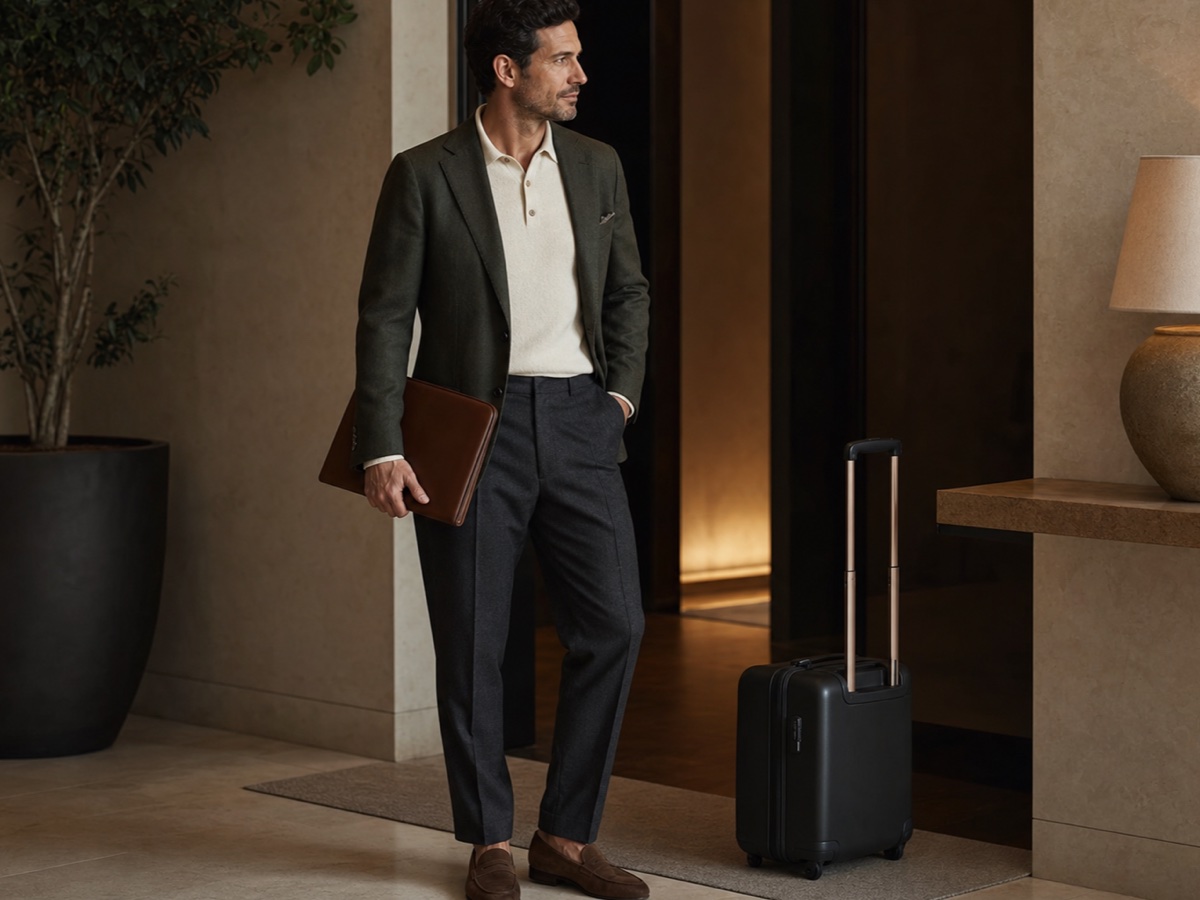
Build travel outfits from pieces that recover well: merino, cotton twill, textured wool, suede, and knitwear with enough substance. A fine knit polo under a soft jacket will usually travel better than a thin dress shirt. A clean trouser with some ease will look better after sitting than a slim stretch chino.
If your week includes frequent trips, use the thinking in a business casual capsule wardrobe. The right capsule gives you repeatable pieces that can survive flights, client rooms, and dinner without making every trip a packing exercise.
What to avoid
Avoid the consultant uniform when it looks copied: tight navy suit, pale shirt, shiny shoes, laptop bag, no point of view. It may be acceptable. It is rarely memorable in the right way.
Avoid the opposite mistake too: dressing so relaxed that the client has to work out your seniority from your words alone. A T-shirt and sneakers can work in some rooms, but only when the fit, fabric, grooming, and outer layer are strong enough to carry the signal.
Also avoid loud personality pieces when the rest of the wardrobe has no system. A bright pocket square, novelty sock, or attention-seeking shoe usually reads as compensation. Texture, proportion, and color harmony are safer and more useful.
Build a small consultant wardrobe system
You do not need a huge wardrobe. You need enough range to move between client rooms without improvising. For many consultants, the core system looks like this:
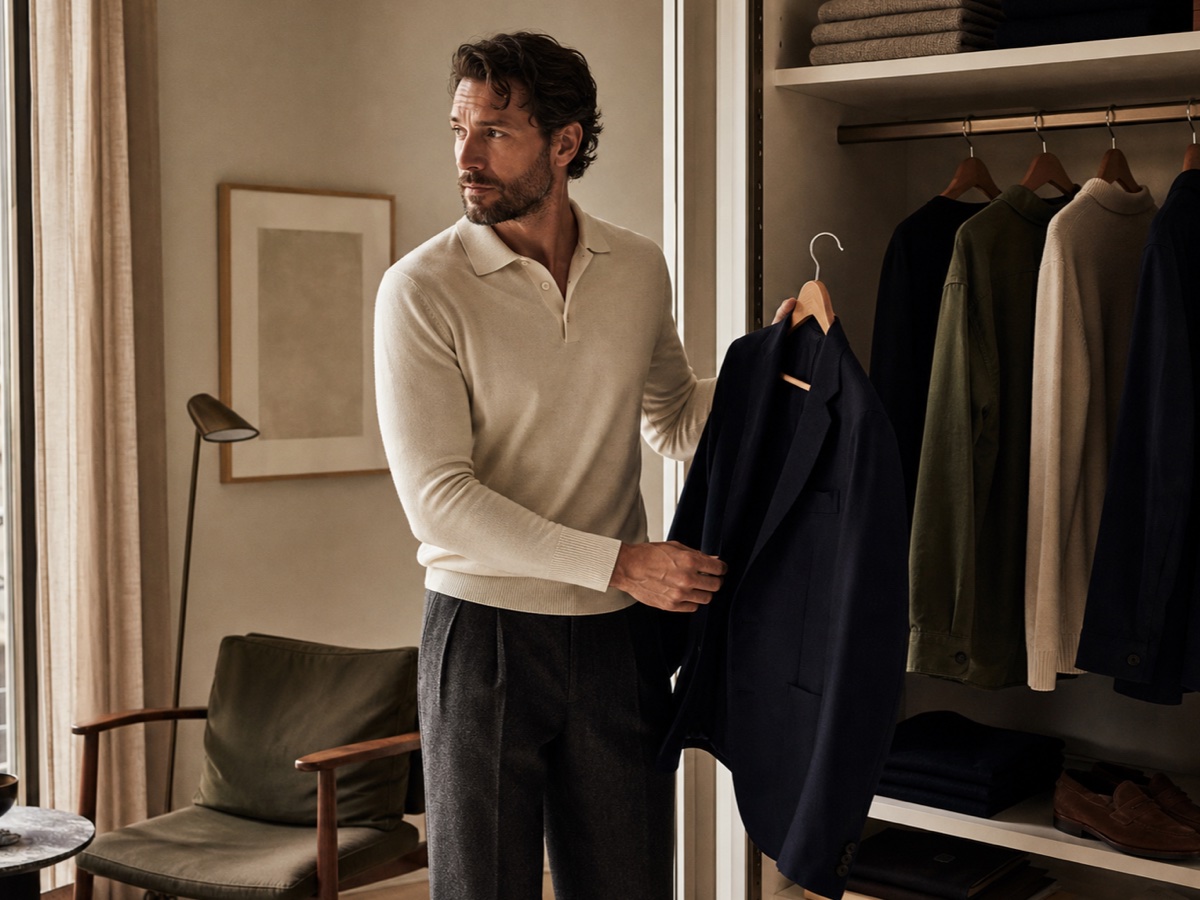
- Two soft jackets, one darker and one warmer or more textured.
- Three shirts or knit polos that sit well under jackets.
- Two smart trousers and one polished chino or five-pocket trouser.
- One pair of loafers or derbies and one more relaxed polished shoe.
- One travel layer that works with every trouser.
- One bag that looks like part of the outfit, not an afterthought.
The system should feel calm. You should know which outfit handles a boardroom, which handles a workshop, which handles travel, and which handles dinner after a long day. That is what removes morning friction.
This is close to brand work in a practical sense. A strong brand design system makes recognition easier because the choices are consistent. A strong wardrobe system does the same for the person in the room.
Where The Curated Reset fits
The Curated Outfit works with founders, executives, consultants, and serious business owners whose wardrobes need to match the rooms they are already in. Consultant dressing is exactly the kind of problem that benefits from a system because the context changes constantly.
Inside The Curated Reset, we look at your actual week: clients, travel, climate, role, body, video calls, dinners, budget, shopping tolerance, and the level of polish your work requires. Then the wardrobe is built around repeatable decisions, not random nice pieces.
If your consulting wardrobe still feels technically fine but quietly unreliable, read the client reviews. The recurring themes are clarity, ease, accuracy, and relief. Those are the signs that the wardrobe is doing more than covering you.
If you want a consultant wardrobe that makes the room easier to enter, apply for The Curated Reset.
FAQ
What should male consultants wear?
Male consultants should wear outfits that match the client room, not just their own office culture. A soft jacket, clean shirt or knit, tailored trouser, and polished shoe is a reliable base. Adjust the formality up or down depending on the industry, seniority, and day.
Can consultants wear business casual?
Consultants can wear business casual when the client environment allows it, but it should still look intentional. Use better trousers, structured layers, refined knitwear, and clean shoes. Business casual fails when it becomes generic office casual with no authority.
Do consultants need to wear suits?
Consultants need suits for formal clients, executive presentations, interviews, and conservative industries. For many modern client settings, soft separates can be more useful than a full suit. The key is matching the room without looking stiff or underprepared.
What shoes are best for consultant outfits?
The best shoes for consultant outfits are loafers, derbies, suede chukkas, refined boots, or minimal leather sneakers for relaxed clients. Choose shoes that can handle standing and travel while still looking clean enough for client visibility.
How many outfits does a consultant need?
A consultant usually needs three to five reliable formulas, not dozens of separate outfits. Build one for formal client meetings, one for workshops, one for travel days, one for dinners, and one for relaxed client offices. The same pieces can repeat when the system is built well.