What to Wear to Virtual Meetings
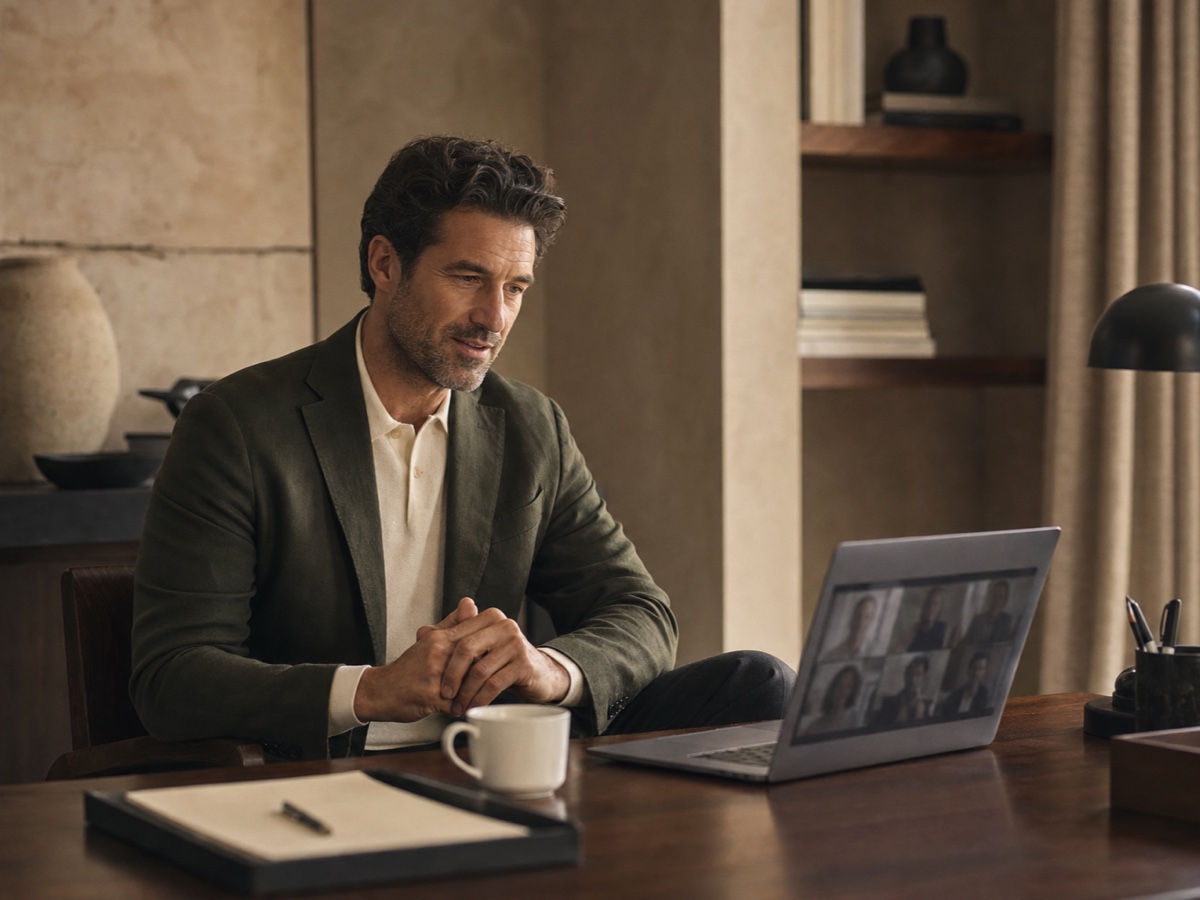
What to wear to a virtual meeting sounds like a small question until your work depends on the screen. The camera compresses your outfit, crops your body, changes color, and turns a weak collar or busy pattern into the main thing people notice.
For serious men, the goal is simple: look clear, credible, and at ease on camera without performing for the camera. A good video-call outfit should make your face easier to read and your role easier to understand.
The strongest answer is usually a structured upper half, quiet color, a clean neckline, and enough comfort that you can think about the conversation instead of the shirt.
Start with the meeting, not the app
A weekly internal call, a board update, a sales conversation, a client workshop, and a recorded podcast do not ask the same thing from your clothes. Zoom, Teams, and Google Meet are only the container. The real dress code comes from who is watching and what they need to trust you with.
If you are speaking to peers, you can be softer. If you are advising a client, interviewing a senior hire, pitching, fundraising, or presenting to a board, the outfit needs more structure. The screen does not remove the social signal. It concentrates it.
This overlaps with business meeting outfits for men, but virtual meetings make the upper third more important than usual. The face, collar, shoulder line, glasses, hair, and background do most of the work.
The safest video-call formula
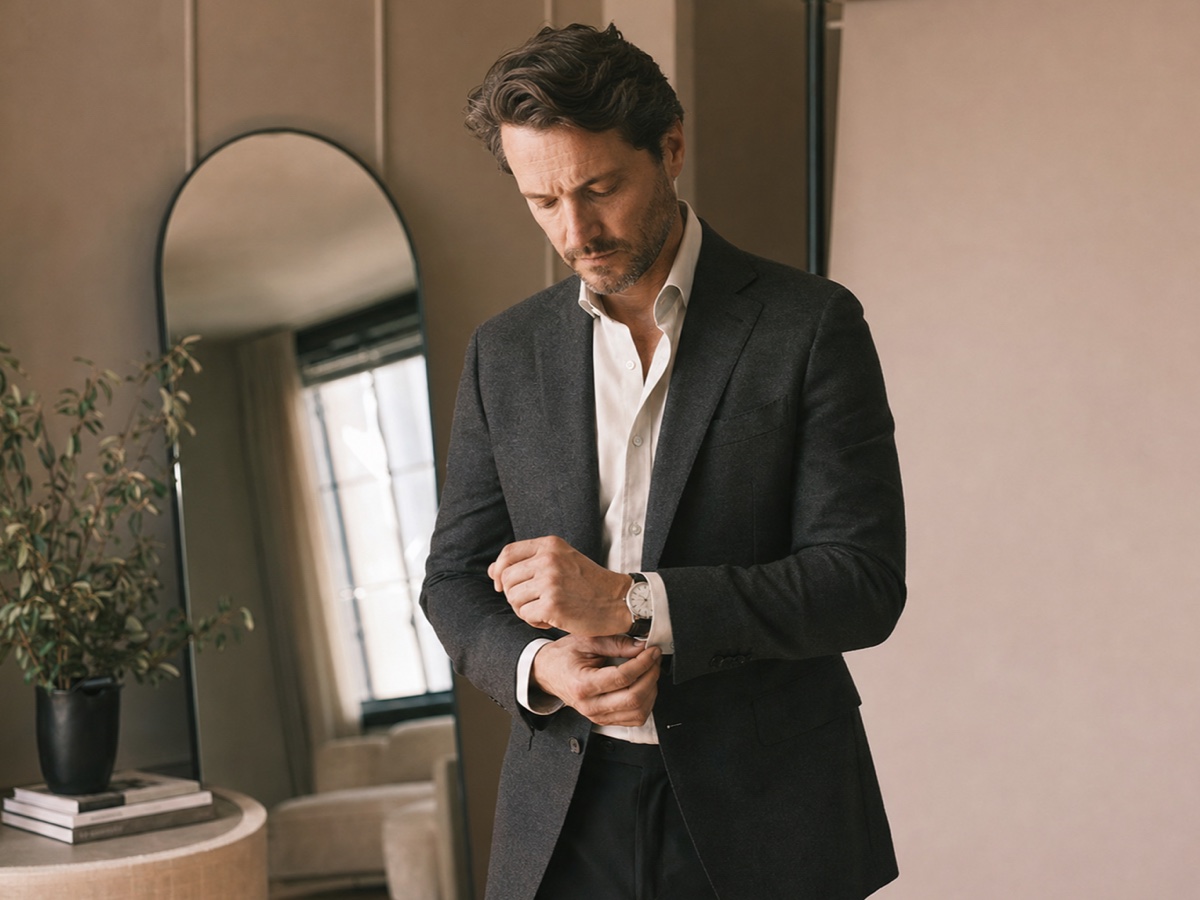
The safest formula is a fine knit polo or open-collar shirt under a soft jacket, with tailored trousers even if most people will not see them. Navy, dark olive, charcoal, espresso, soft grey, cream, and pale blue tend to work well because they give the camera something calm to hold.
The jacket is optional for informal calls, but it is useful when authority matters. It frames the shoulders, adds shape around the face, and makes a simple knit or shirt look intentional rather than unfinished.
If a jacket feels too formal for your work, use an overshirt, chore jacket, cardigan, or structured knit. The point is not formality. The point is a clean frame.
Choose colors that help your face
Many men choose colors in a mirror and then look flat on camera. Video calls change contrast. A white shirt can glare. A black knit can become a dark block. Tiny checks can buzz. Beige against a beige wall can drain the face.
Start with your background. If your room is pale, add a darker upper layer. If your background is dark, avoid disappearing into it. If your lighting is cool, warmer neutrals can stop your skin from looking grey. If the room is warm and dim, clearer contrast around the collar helps.
This is why executive headshot outfits are useful reference points. The camera reads shape, contrast, and neckline before it reads taste.
Fix the collar and neckline first
The collar is the most common failure point on video. A shirt that looks fine standing in a mirror can collapse when you sit. A thin T-shirt can make the call feel too casual. A stretched knit neckline can make the whole outfit look tired.
Good options include an open-collar oxford, a fine knit polo, a merino crewneck with a clean neck, a soft rollneck in cooler weather, or a shirt under a lightweight jacket. Avoid collars that spread awkwardly, curl under, gape, or fight the microphone.
If you wear glasses, check the full composition. Heavy frames, a strong collar, and a dark background can become too much around the face. Light frames, pale clothing, and a pale wall can become too little.
What to wear for different virtual rooms
Client call
Wear a soft jacket or structured knit over a shirt or knit polo. You want approachable competence. A navy jacket, cream knit polo, and grey trousers usually works better than a full suit if the client relationship is advisory or founder-led.
Board or investor update
Wear the strongest version of your normal professional uniform. Dark jacket, clean shirt, quiet trousers, and polished shoes even if they are not visible. The outfit should support seriousness without making the call feel theatrical.
Internal team call
You can reduce the structure, but do not abandon the signal completely if you lead the room. A refined knit, overshirt, or cardigan can feel relaxed while still communicating that you are present.
Podcast, webinar, or recorded call
Treat it like a small speaking engagement. Choose slightly stronger contrast, avoid tiny patterns, test the camera beforehand, and make sure the outfit still reads clearly as a thumbnail. The thinking is close to what to wear for a speaking engagement, only tighter around the upper body.
Do not dress only from the waist up
Yes, the camera sees the upper half first. Still, getting dressed only from the waist up changes how you sit and how you feel. A strong shirt with old joggers underneath often creates a strange split in posture. You may not notice it, but the body usually does.
You do not need formal trousers for every call. You do need trousers that belong to the same life as the upper half. Tailored drawstring trousers, clean wool trousers, dark denim in the right context, or refined chinos can all work.
For founders and consultants who live on calls, a small remote-work uniform is useful: two excellent knits, one camera-friendly shirt, one soft jacket, one structured overshirt, and two trouser options that make the outfit feel complete.
What to avoid on video calls
- Tiny checks, thin stripes, and high-contrast patterns that flicker on screen.
- Very bright white shirts under harsh light.
- Black tops against dark rooms unless the lighting is excellent.
- Logos, slogans, and novelty details near the face.
- Collapsed collars, stretched necklines, and thin fabrics.
- Clothes that make sense for home but not for the authority of the call.
These are not style crimes. They are friction. They make people process the outfit when you need them listening to the point.
Build a small camera-ready capsule
If your week is full of virtual meetings, stop solving the outfit every morning. Build a capsule specifically for the screen. Keep it small enough that you actually use it.
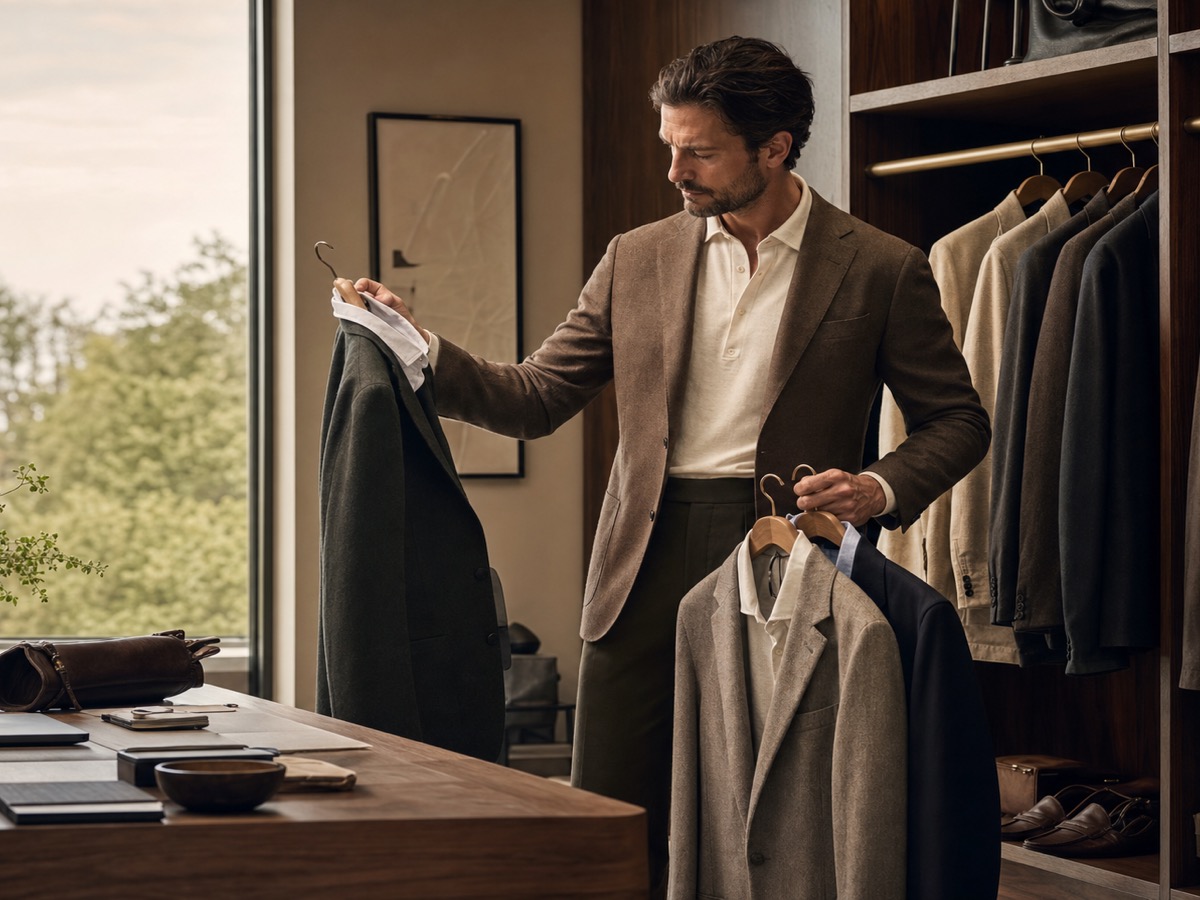
A useful capsule might include a dark soft jacket, a textured overshirt, a cream knit polo, a pale blue shirt, a charcoal merino crewneck, grey trousers, olive or navy trousers, and one pair of shoes that makes the outfit feel finished when you stand up.
This is part of a wider founder wardrobe or executive wardrobe system. The real value is not having more clothes nearby. The value is knowing which pieces work for client trust, leadership visibility, travel, dinners, and the ordinary calls between them.
When the screen exposes a bigger issue
If every important call creates wardrobe doubt, the problem is probably not the call. It is that your wardrobe has no operating logic for your current role.
This happens often when a man has grown into more visible work. The calendar changes first. The closet catches up later. Suddenly there are investor calls, client workshops, hiring conversations, podcasts, conferences, and private dinners, and the old casual-professional mix starts to feel vague.
Inside The Curated Outfit, we build the system behind those moments. The Curated Reset is for men who want their wardrobe to work across camera, room, travel, and role without becoming menswear hobbyists.
You can read the client reviews to see what changes when the wardrobe has a clear logic behind it.
FAQ
What should men wear to a virtual meeting?
Men should wear a clean, structured upper half that frames the face clearly on camera. A fine knit polo, open-collar shirt, soft jacket, or structured overshirt usually works well, especially in navy, charcoal, olive, cream, pale blue, or soft grey.
Should men wear a blazer on Zoom?
Men should wear a blazer on Zoom when the call involves clients, leadership, investors, interviews, or recorded visibility. For informal internal calls, a structured knit or overshirt can give enough polish without feeling too formal.
What colors look best on video calls for men?
Navy, charcoal, olive, soft grey, espresso, cream, and pale blue usually look good on video calls. Choose contrast against your background and avoid colors that either glare under light or make your face disappear.
Can men wear T-shirts for virtual meetings?
Men can wear T-shirts for casual internal virtual meetings if the T-shirt is excellent, fits well, and suits the culture. For client-facing, senior, or advisory calls, a knit polo, shirt, overshirt, or jacket is usually stronger.
How do I look more professional on camera?
To look more professional on camera, improve the collar, add structure around the shoulders, choose quiet contrast, remove distracting patterns, and test the outfit against your actual background. Good lighting helps, but clothing still carries the signal.
If your video-call wardrobe still feels improvised, apply for The Curated Reset. We will build the system behind your visible work.