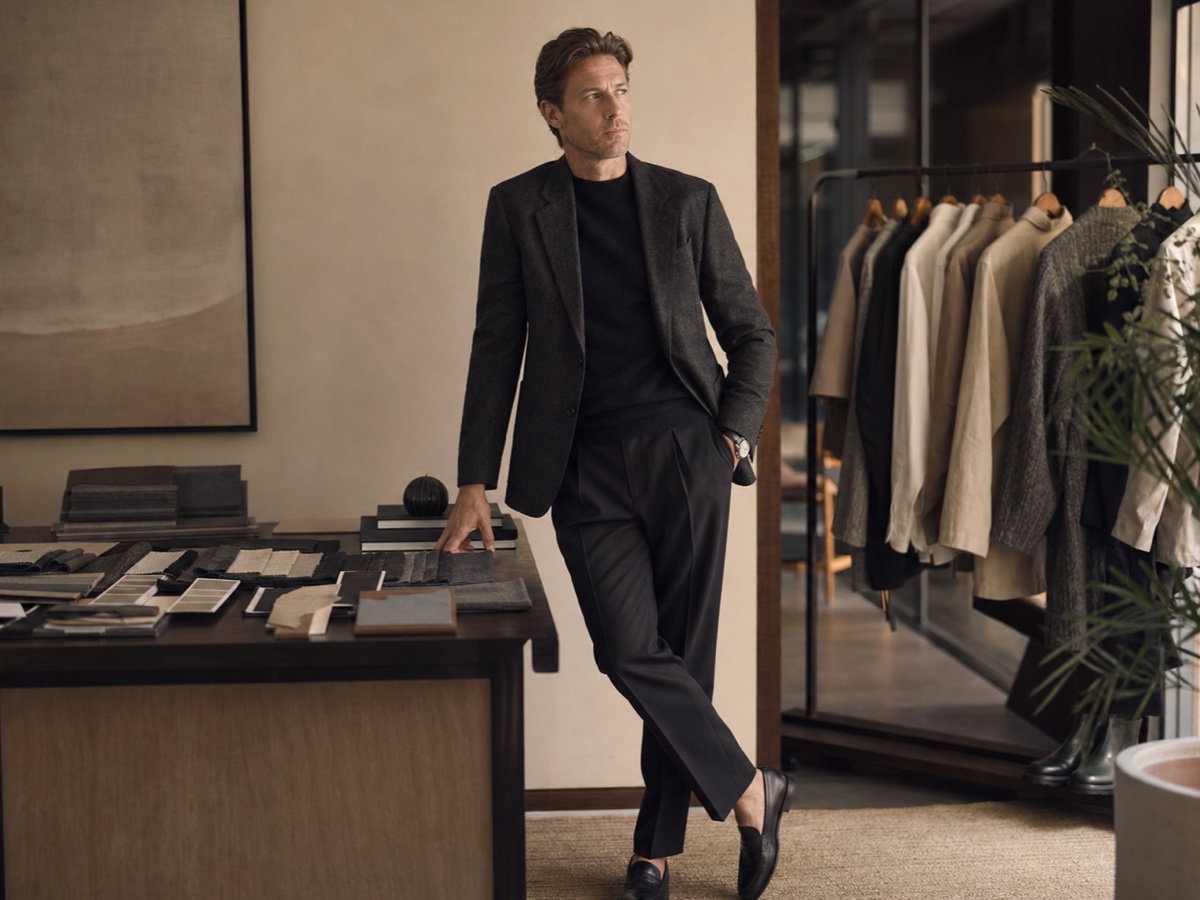
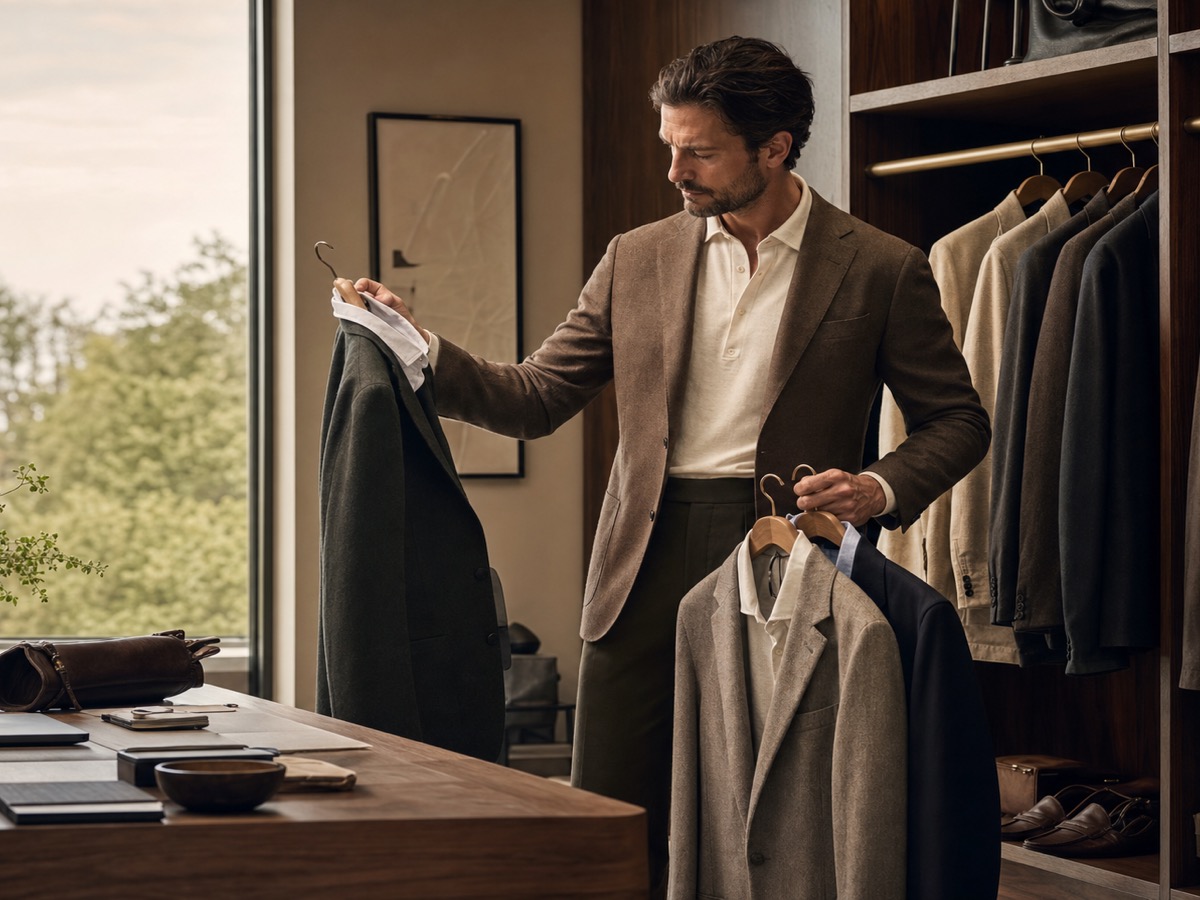
Executive Headshot Outfits for Men
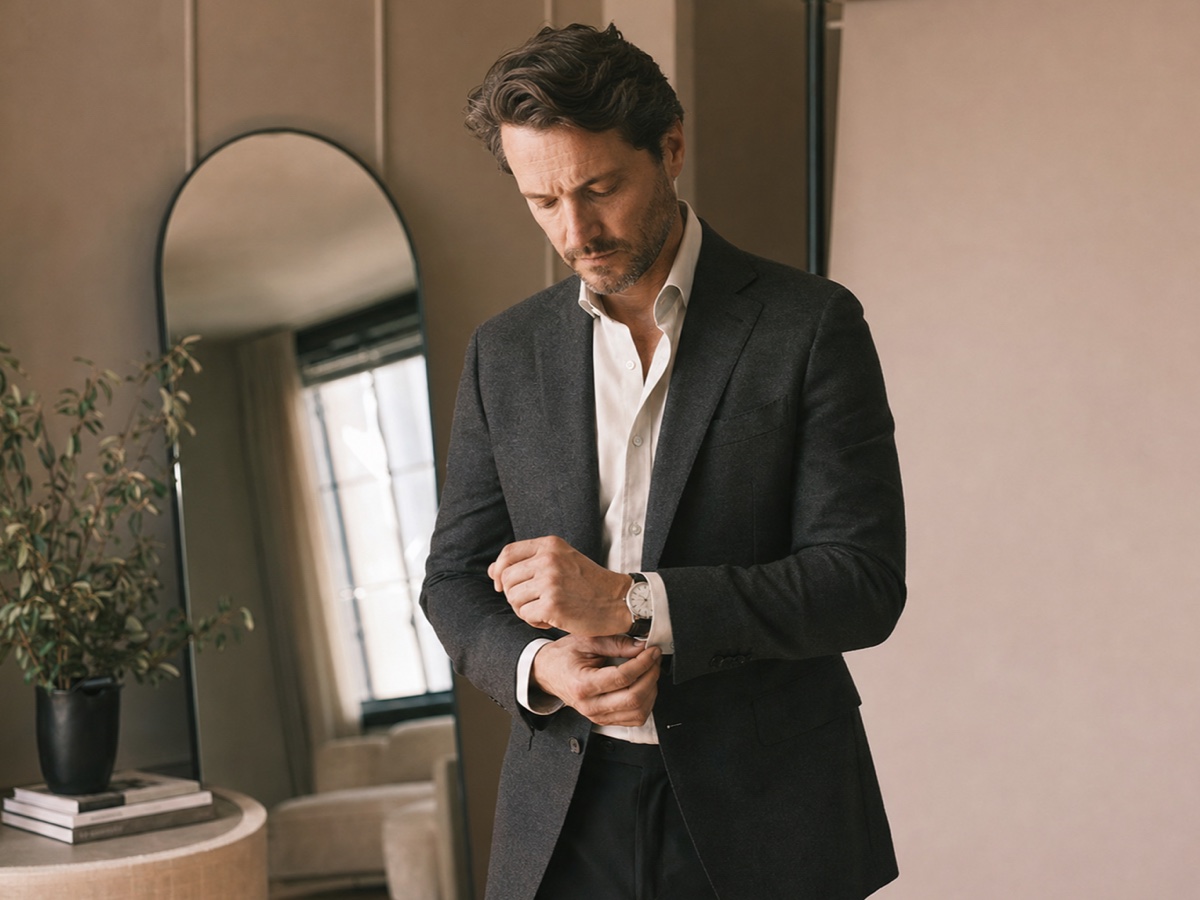
Executive headshot outfits for men are not only about looking polished. They are about controlling the first impression that now appears before a call, a pitch, a board bio, a podcast page, a LinkedIn search, or an investor introduction.
Most headshot advice stops at safe clothing: wear navy, avoid patterns, bring a jacket. That is useful, but incomplete. A serious man needs the image to match the room he wants to be trusted in.
The right outfit should make people feel three things quickly: he has judgment, he knows where he is going, and nothing about his appearance needs managing.
Start with the job of the image
Before choosing a jacket or shirt, decide where the headshot has to work. A founder raising capital, a consultant selling judgment, and an executive joining a public leadership page do not need the exact same signal.
If the image will sit on LinkedIn, your website, investor decks, event pages, and press bios, it has to travel across contexts. That usually means restrained authority rather than maximum personality. The clothes should be specific enough to feel considered and quiet enough not to become the subject.
This is where many men go wrong. They either dress like the most formal version of themselves, which can feel stiff, or the most relaxed version, which can read younger than their role. A good executive headshot sits in the middle: structured, current, and calm.
Choose the level of formality first
There are three useful levels for most executive headshots.
- Formal authority: suit or jacket and tie. Best for law, finance, public company leadership, traditional boards, and formal advisory work.
- Modern executive: soft jacket, open-collar shirt, knit polo, or fine knit. Best for founders, consultants, creative operators, and senior leaders in less formal industries.
- Refined casual: elevated knit, overshirt, clean collarless layer, or structured T-shirt under a jacket. Best only when your actual business context supports it.
The mistake is choosing the level you wish your industry had instead of the level your buyers already understand. If a man sells strategy, capital confidence, or high-stakes expertise, the image has to carry enough structure for the viewer to relax.
That does not always mean a suit. It means the face, neck, shoulders, and upper torso have a clear frame. A jacket often does this faster than any other garment.
The best colors for an executive headshot
For most men, deep neutrals photograph best: charcoal, navy, espresso, olive, tobacco, stone, cream, and soft white. They create contrast around the face without shouting.
Black can work, but it often feels severe on camera unless the lighting and background are handled well. Bright white shirts can look too sharp against the skin, especially under studio light. Off-white, pale blue, soft grey, and muted stripes are often easier.
Think in terms of contrast. If you have strong coloring, you can handle a sharper navy and white combination. If your coloring is softer, charcoal with ecru or navy with a pale blue shirt may look more natural. The goal is not to disappear. The goal is to let the face lead.
Build the outfit around the face
A headshot crops most of the body away, so the collar, lapel, neckline, shoulder line, and glasses matter more than the full outfit. These are the elements people actually see.
A shirt collar should sit cleanly under the jacket and frame the jaw without spreading too wide or collapsing. A knit polo can look excellent if the collar has enough body. A crewneck can work only if the fabric is substantial and the neck opening is right for your face.
If you wear glasses, check them before the shoot. Thick frames can add authority if they suit your face, but overly heavy frames can dominate the image. Clear or very pale frames can vanish under light. This is the same judgment I use when building a broader personal style system for men: the detail is only good if it supports the whole signal.
Fit matters more in headshots than men expect
A camera is unforgiving around the shoulder and collar. A jacket that looks acceptable in the mirror can pull across the chest, lift at the collar, or collapse at the shoulder when you sit or turn slightly.
For headshots, check four points before the shoot:
- The jacket collar sits against the shirt collar without a gap.
- The shoulder line ends where your shoulder ends, not beyond it.
- The shirt collar is clean, pressed, and not too tight around the neck.
- The fabric does not shine, wrinkle heavily, or create visual noise under light.
This is why a wardrobe audit for men is useful before a visibility moment. You do not want to discover under studio lighting that the jacket you thought was your safest option is the one creating tension in the image.
What founders should wear
Founders often need the widest range. The same image may appear in a pitch deck, on a podcast page, in a press article, and on LinkedIn. The safest answer is usually a modern executive outfit: soft tailoring, an open-collar shirt or knit, good shoes even if they are cropped out, and no novelty detail.
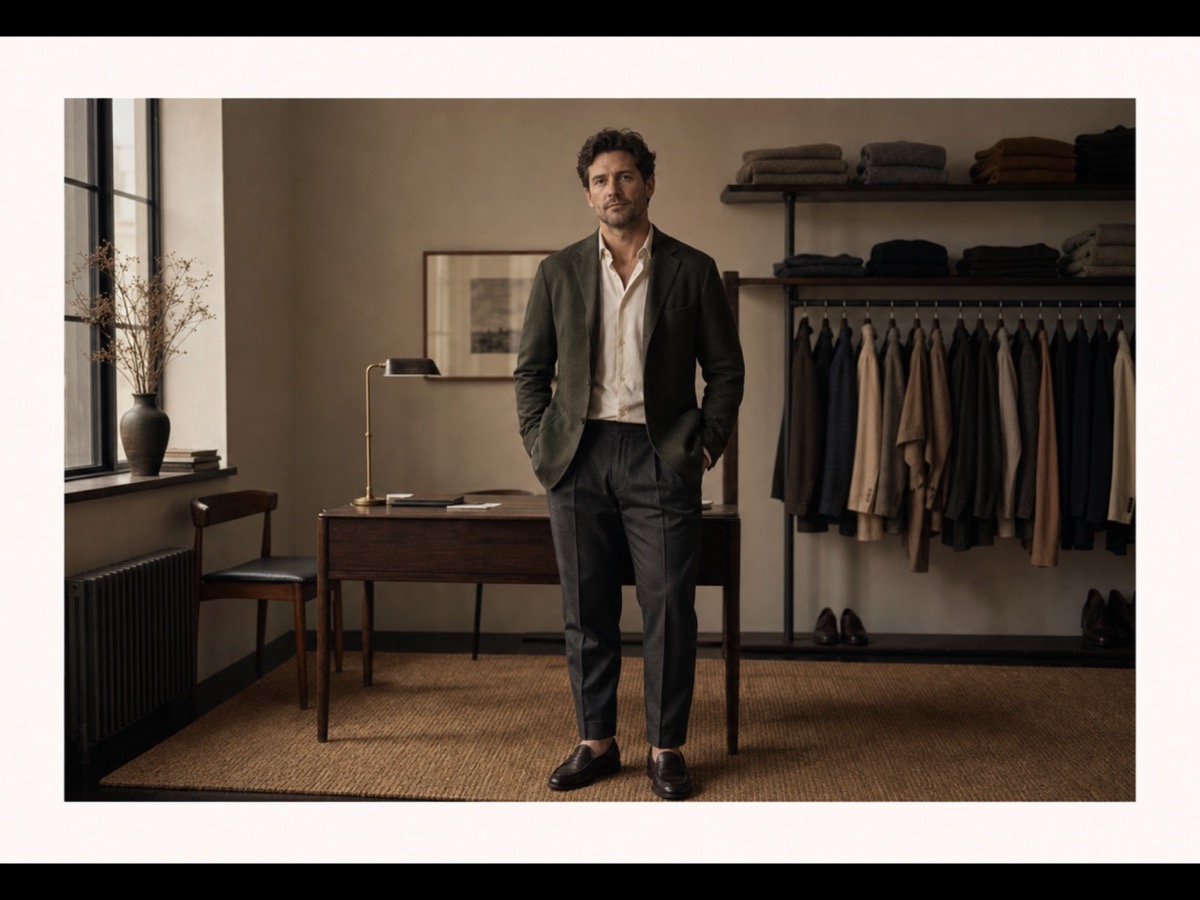
A founder does not need to look corporate if the company is not corporate. He does need to look clear. A charcoal or dark olive jacket with an off-white shirt, a navy knit polo under a textured blazer, or a tobacco suede overshirt over a fine knit can all work if the fit is controlled.
If your company is early-stage and informal, avoid dressing ten years ahead of the room. If your company sells to enterprise buyers, avoid dressing like your internal team on a casual Friday. The image should bridge your culture and your market.
What consultants and advisors should wear
Consultants, advisors, and operators sell trust before they sell the work. Their headshot should suggest steadiness and discernment. A navy jacket, pale blue or ecru shirt, and restrained texture often does the job better than a loud tie or a fashion-forward silhouette.
This is also where personal brand becomes practical. A useful piece on personal branding for entrepreneurs makes the same broader point: professional presence compounds when it is consistent across the places people encounter you. Your headshot is one of those places.
If your work is advisory, the viewer should not have to wonder whether the outfit is an attempt to impress them. The clothes should let your expression, posture, and competence do the heavier work.
What to avoid
Avoid tiny patterns, shiny fabrics, loud checks, novelty pocket squares, stretched shirts, floppy collars, heavy logos, and anything you only bought because the shoot was booked. These choices often read as effort rather than ease.
Also avoid dressing like a different category of man. If your real wardrobe is relaxed and textured, a crisp banker suit may make you look borrowed. If your real work is formal, a black T-shirt and jacket may feel like you are trying to signal founder energy instead of authority.
The headshot should be an edited version of your real style. It should not introduce a new character.
Bring options, not uncertainty
For the shoot, bring two jackets, two shirts or knits, and one alternative layer. Keep the palette tight so the photographer can move quickly. If every option tells a different story, you have not made a wardrobe decision yet.
A strong set might be: charcoal jacket with off-white shirt, navy jacket with pale blue shirt, and a textured knit under the better jacket. Another might be: dark olive soft blazer, cream knit polo, and a brown suede or wool layer for a warmer secondary image.
Steam everything. Try the combinations seated and standing. Take phone photos in window light. The best option is usually the one that makes your face look most present and your body look most relaxed.
When the outfit points to a larger issue
If choosing a headshot outfit becomes stressful, the problem may not be the shoot. The shoot may simply expose a wardrobe that no longer matches your role.
That is common. Men often call a stylist before a public moment because the friction has become visible. A new title, a bigger company, more speaking, new clients, investor attention, or a higher price point can make the old wardrobe feel slightly behind.
Inside The Curated Outfit, we treat moments like this as a signal. The Curated Reset is built for men who do not want random outfits for isolated events. They want a wardrobe system that holds up across the calendar: headshots, meetings, dinners, travel, stages, and normal Tuesdays.
You can also read the client reviews if you want to see how that clarity feels after the wardrobe is built.
FAQ
What should men wear for executive headshots?
Men should wear structured, well-fitting clothing that frames the face and matches their professional context. For most founders and executives, a dark jacket with an open-collar shirt, fine knit, or restrained tie works better than either full casual wear or overly formal clothing.
Should men wear a tie in a professional headshot?
Men should wear a tie only if it fits their industry, role, and normal level of formality. A tie can help in law, finance, board roles, and traditional executive contexts. For many founders and consultants, an open collar with a strong jacket feels more current.
What colors photograph best for men's headshots?
Charcoal, navy, deep olive, espresso, soft white, pale blue, and muted neutrals usually photograph well for men. They create enough contrast around the face without pulling attention away from expression, posture, and presence.
Can men wear a T-shirt for a business headshot?
Men can wear a T-shirt for a business headshot only when the business context supports it and the shirt is excellent. It should be substantial, clean, well fitted, and usually paired with a jacket or overshirt. Thin casual T-shirts rarely carry enough authority.
How many outfits should men bring to a headshot session?
Bring two to three tightly related options. That is enough to give the photographer range without creating confusion. The options should vary formality slightly while still belonging to the same professional image.
If your headshot is revealing a larger mismatch between your wardrobe and your role, apply for The Curated Reset. We will build the system behind the image.