How to Dress in Your 40s as a Man
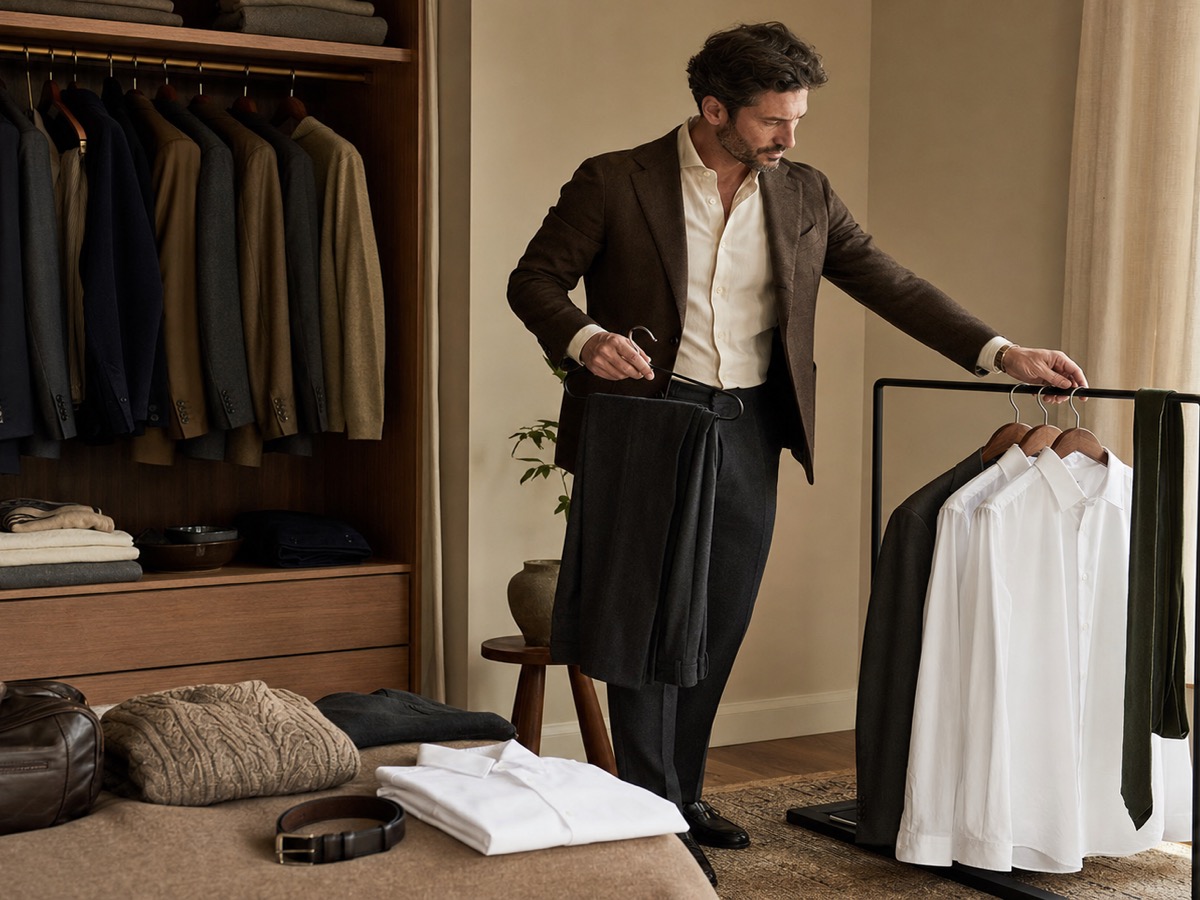
If you searched "how to dress in your 40s male," you are probably not looking for a costume. You are looking for the point where clothes feel grown up without feeling dull, current without looking like you are trying to keep up with men half your age.
That is the right instinct. The useful wardrobe in your 40s is rarely louder. It is more accurate. Better fit, better fabric, fewer weak links, and a clearer relationship between your clothes and the rooms you actually enter.
For the men I work with, this decade often comes with more responsibility, more visibility, and less patience for morning friction. The wardrobe has to carry that reality calmly.
Stop dressing from an old professional chapter
The biggest issue in a man's 40s is usually lag. His clothes still belong to the version of him that was building the career, proving the business, or optimizing for speed. The role has moved. The wardrobe has not.
This can look like startup clothes in investor rooms, corporate clothes in creative rooms, weekend clothes that feel disconnected from the rest of life, or a closet full of nice items with no reliable formulas.
Before you buy anything, ask a simple question: do these clothes explain my current role accurately? If the answer is no, the work starts with context, not shopping.
Build around your current rooms
A strong wardrobe in your 40s should be mapped around real rooms: client meetings, board conversations, dinners, flights, conferences, school events, dates, weekends, and private workdays. The goal is not to dress formally all the time. The goal is to stop looking underprepared in the rooms that now matter.
Most men need three reliable levels. First, a clean working-day formula that looks considered without effort. Second, a client or leadership formula with more structure. Third, a high-visibility formula for stages, investors, important dinners, and photography.
If your week already includes serious rooms, read the founder wardrobe guide. The same logic applies: your clothes should match the level at which you are operating now.
Upgrade fit before you upgrade personality
Men often assume they need a new style when the real issue is fit. In your 40s, fit has to become quieter and more precise. Too tight reads like you are chasing youth. Too loose reads unfinished. Too trendy reads temporary.
Start with shoulders, trouser line, sleeve length, collar shape, and shoe proportion. A jacket should frame you without pulling. Trousers should fall cleanly without puddling or clinging. Shirts should sit properly at the neck and chest if you wear them open on camera.
This is why a wardrobe audit for men is often more useful than another shopping trip. You need to see which pieces actually work on your body now, not which pieces used to feel good enough.
Use fewer, better materials
Fabric becomes more important in your 40s because weak cloth starts to show. Thin jersey, shiny stretch blends, collapsing collars, tired denim, and flimsy knits can make a good outfit feel accidental.
Look for cotton with structure, merino knitwear, wool trousers, linen with enough weight, suede, matte leather, brushed cotton, and jackets with texture. These materials have depth without needing loud design.
You do not need everything to be expensive. You do need the visible pieces to hold their shape. A simple outfit in better cloth often looks more current than a complicated outfit built from weak basics.
Choose grown-up casual, not formal by default
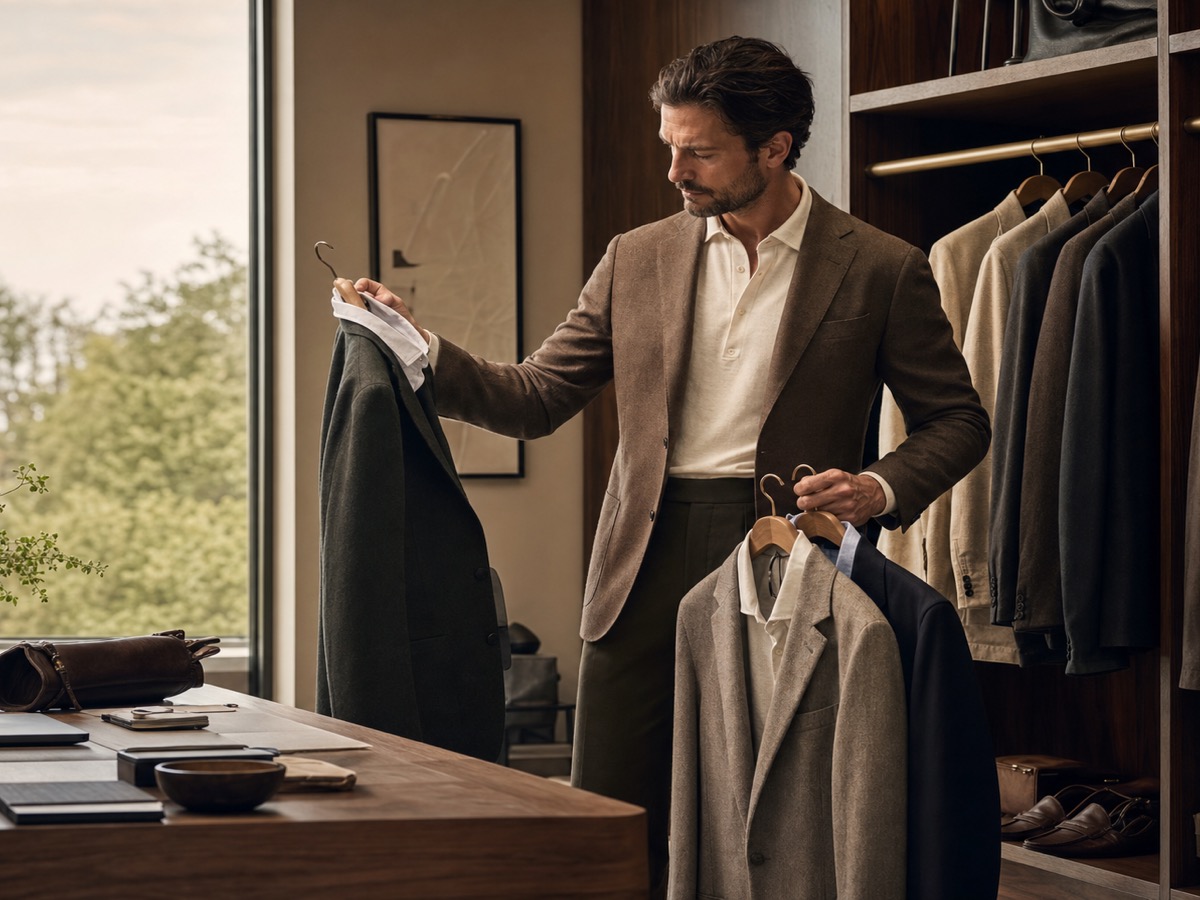
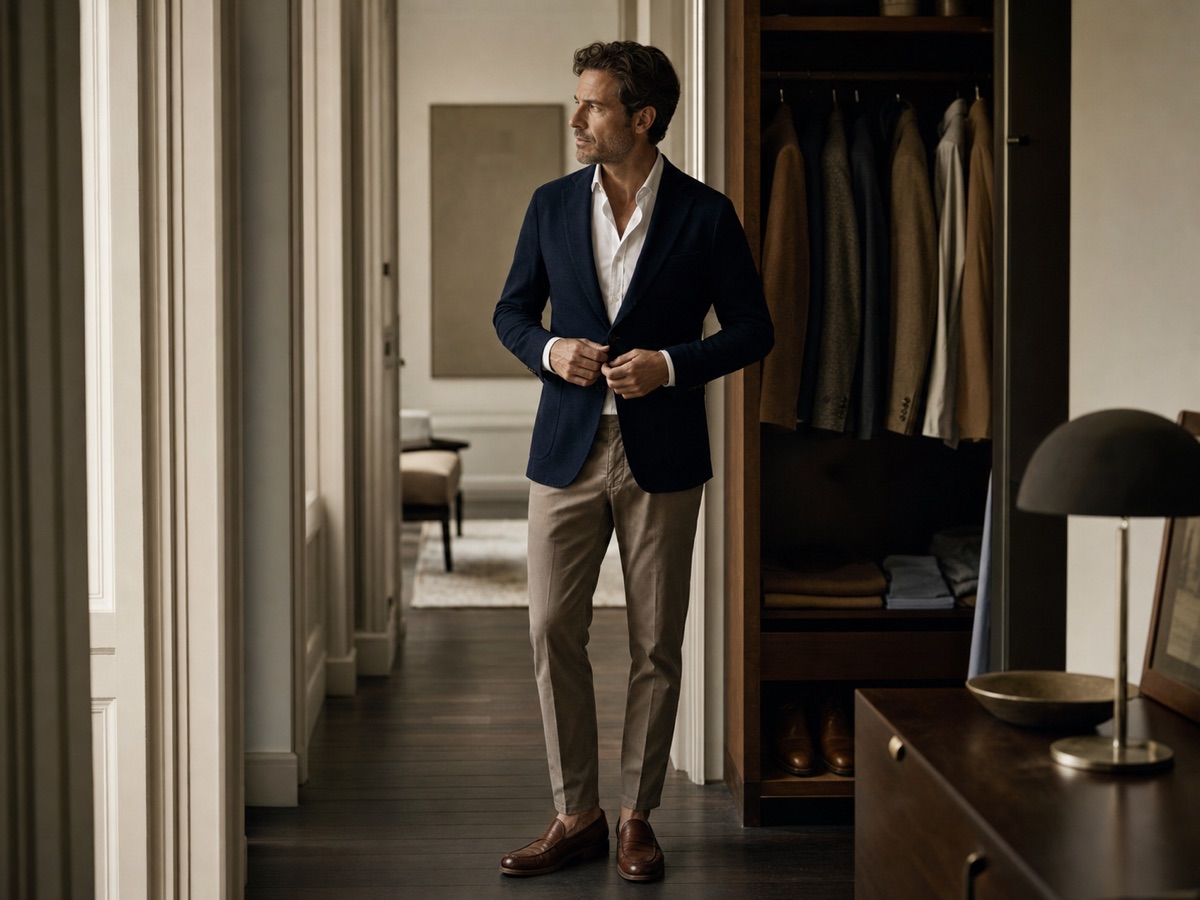
The mistake is thinking the only alternative to youthful casual is corporate formality. Most men in their 40s need the middle: soft jackets, refined overshirts, knit polos, substantial cardigans, clean trousers, loafers, suede derbies, minimal leather sneakers, and outerwear with shape.
This is where modern authority lives. You can look serious without a stiff suit. You can look relaxed without drifting into old jeans and tired trainers.
If your dress code is vague, use smart casual for men as the base. The useful version is not a random mix of business and weekend clothing. It is a controlled bridge between ease and precision.
Create two repeatable outfit formulas
Do not try to reinvent your wardrobe every morning. Build formulas you can repeat with small variations.
Formula one: working day authority
Use a knit polo or open-collar shirt, clean trousers, a structured overshirt or soft jacket, and serious shoes. Keep the palette restrained: navy, olive, taupe, charcoal, tobacco, cream, muted blue, or deep green.
Formula two: high-visibility clarity
Use your best jacket, cleanest shirt or knit, sharpest trousers, and most polished shoes. Reduce the number of design details. Let fit, color, and proportion do the work.
The benefit of formulas is practical. You can adjust for climate, travel, or formality without starting from nothing. This is how a wardrobe becomes a system instead of a pile of options.
Edit the pieces that age the whole outfit
Some items pull an otherwise good wardrobe down. They may be comfortable, familiar, or expensive enough that you avoid questioning them. Question them anyway.
- Jeans with heavy fading, contrast stitching, or a dated slim shape
- Sneakers that are technically clean but visually tired
- Shirts with soft collars that collapse under a jacket
- Belts that do not match the level of the shoes
- Thin knitwear that clings or loses shape
- Old outerwear that makes every arrival look less considered
- Logo-heavy casual pieces that belong to a different version of your life
Removing the weak links can make the wardrobe feel sharper before you add anything new.
Make your home wardrobe environment work too
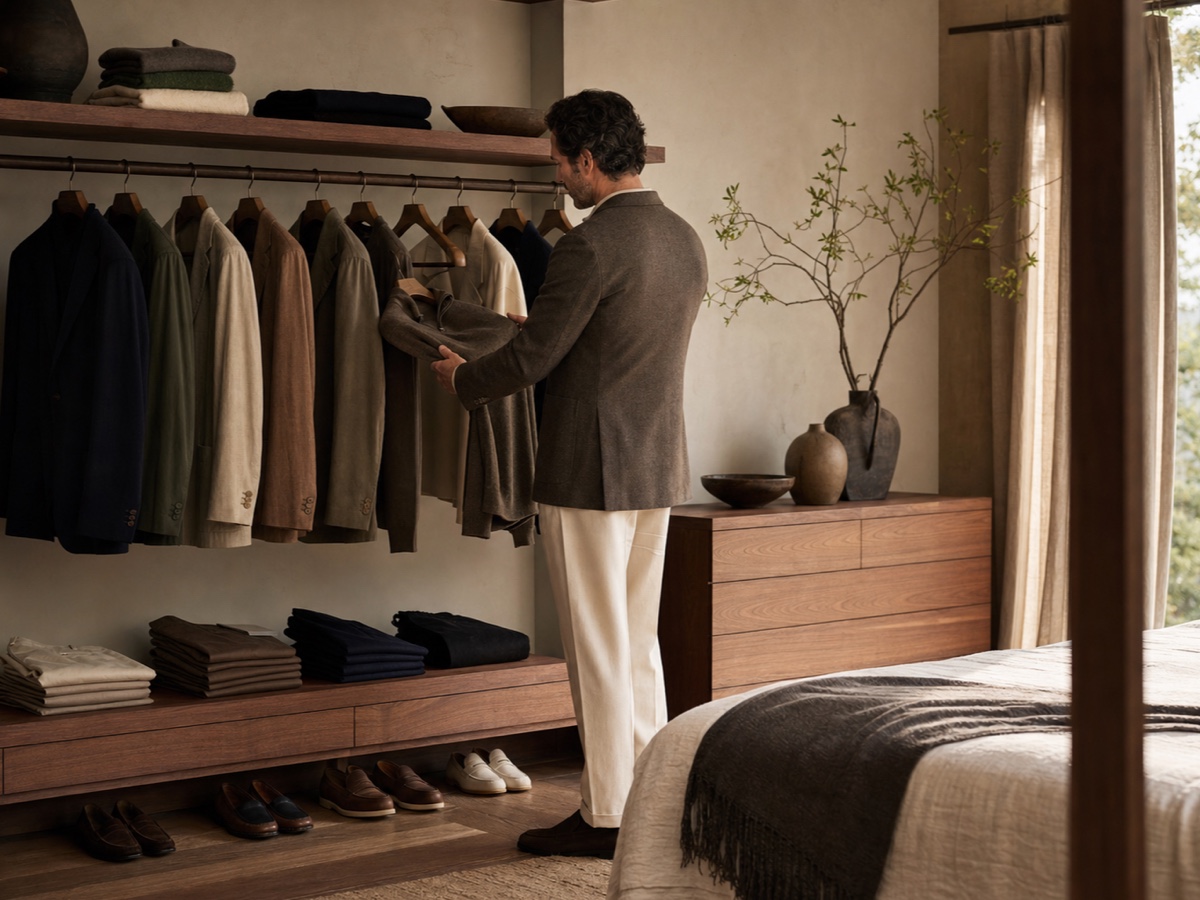
Getting dressed is easier when the wardrobe is visible, edited, and calm. You do not need a cinematic dressing room. You do need the clothes you actually wear to be easy to see, grouped by use, and protected from the noise of everything else.
A warm, ordered wardrobe space changes the morning decision. Even small details, from walnut storage to lighting and scent, can make the ritual feel less transactional. I found this guide to fragrance oil pairings for walnut furniture useful as a reminder that the environment around the wardrobe also shapes the habit.
The point is not luxury for its own sake. The point is removing friction so the right outfit is easier to choose.
Where The Curated Reset fits
The Curated Outfit helps serious men build wardrobes around their actual body, role, taste, climate, and visibility. For men in their 40s, the work is often about correcting the gap between who they are now and what their clothes still suggest.
The Curated Reset is an application-only virtual wardrobe system. We audit what you own, define the role your wardrobe needs to play, build formulas, clarify fit and color, and create a shopping direction that reduces noise.
If your clothes still belong to an earlier chapter of your life, apply for The Curated Reset. The goal is a wardrobe that makes your current level easy to read.
FAQ
How should a man dress in his 40s?
A man in his 40s should dress with better fit, stronger materials, calmer colors, and more accurate formality. The wardrobe should match his current role, body, and rooms. Soft tailoring, refined knitwear, clean trousers, serious shoes, and better outerwear usually create the strongest base.
Can men in their 40s wear sneakers?
Men in their 40s can wear sneakers if the sneakers are clean, minimal, and proportionate to the outfit. Avoid tired trainers, loud logos, and overly athletic shapes with tailored clothing. Leather or suede sneakers work best when the trousers and top half are already structured.
What should men stop wearing after 40?
Men do not need a banned list after 40, but many should retire clothes that look dated, overly tight, overly branded, or visually tired. The real question is whether the item still supports the life and role you have now. If it weakens the whole outfit, edit it out.
How can a man in his 40s look modern?
A man in his 40s can look modern by improving proportion, fabric, and color rather than chasing trends. Choose cleaner lines, softer tailoring, textured neutrals, good shoes, and repeatable formulas. Modern style in this decade should feel current, calm, and specific to the man wearing it.
Do men in their 40s need a capsule wardrobe?
Men in their 40s need a wardrobe system more than a generic capsule wardrobe. A capsule helps only when it reflects the man's real work, climate, body, travel, and visibility. The useful version is a small set of formulas that covers the actual week.