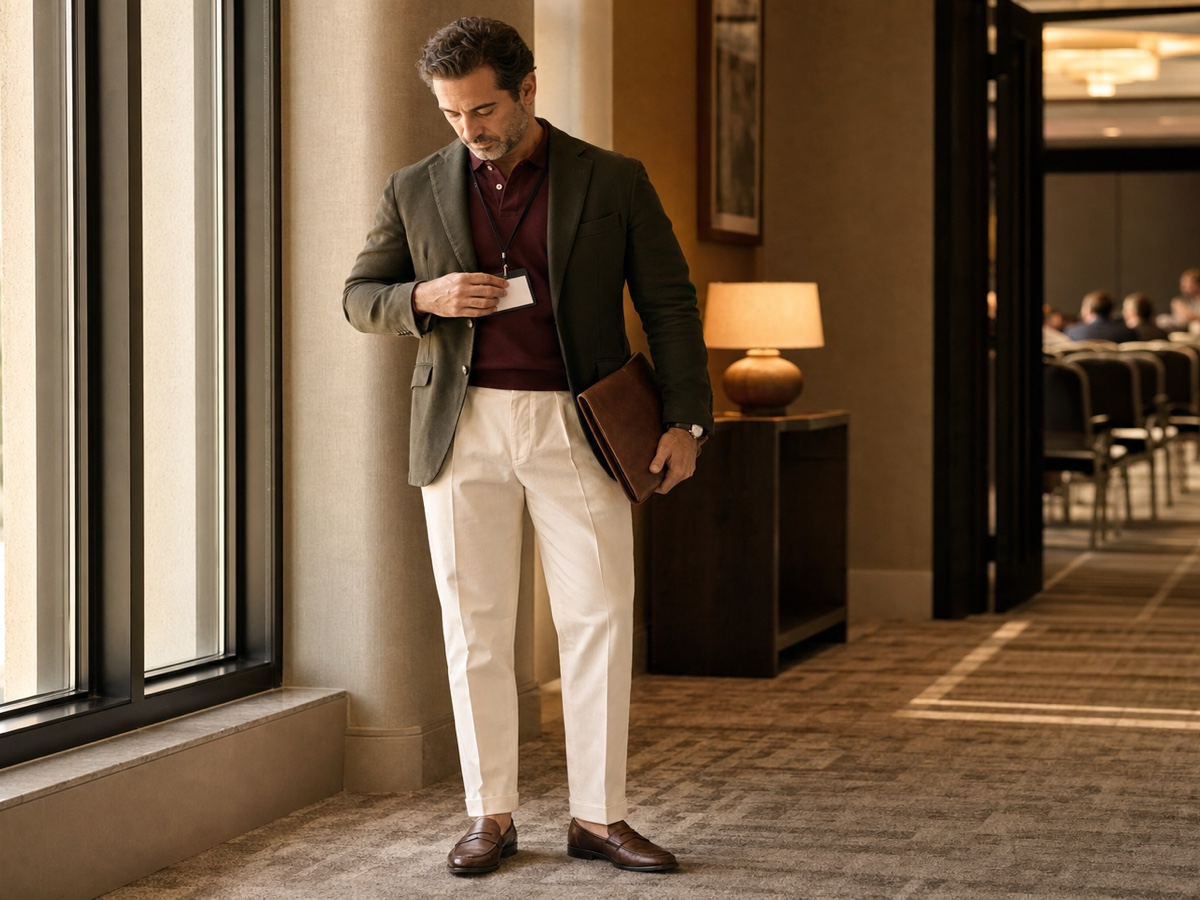
Keynote Speaker Outfit for Men
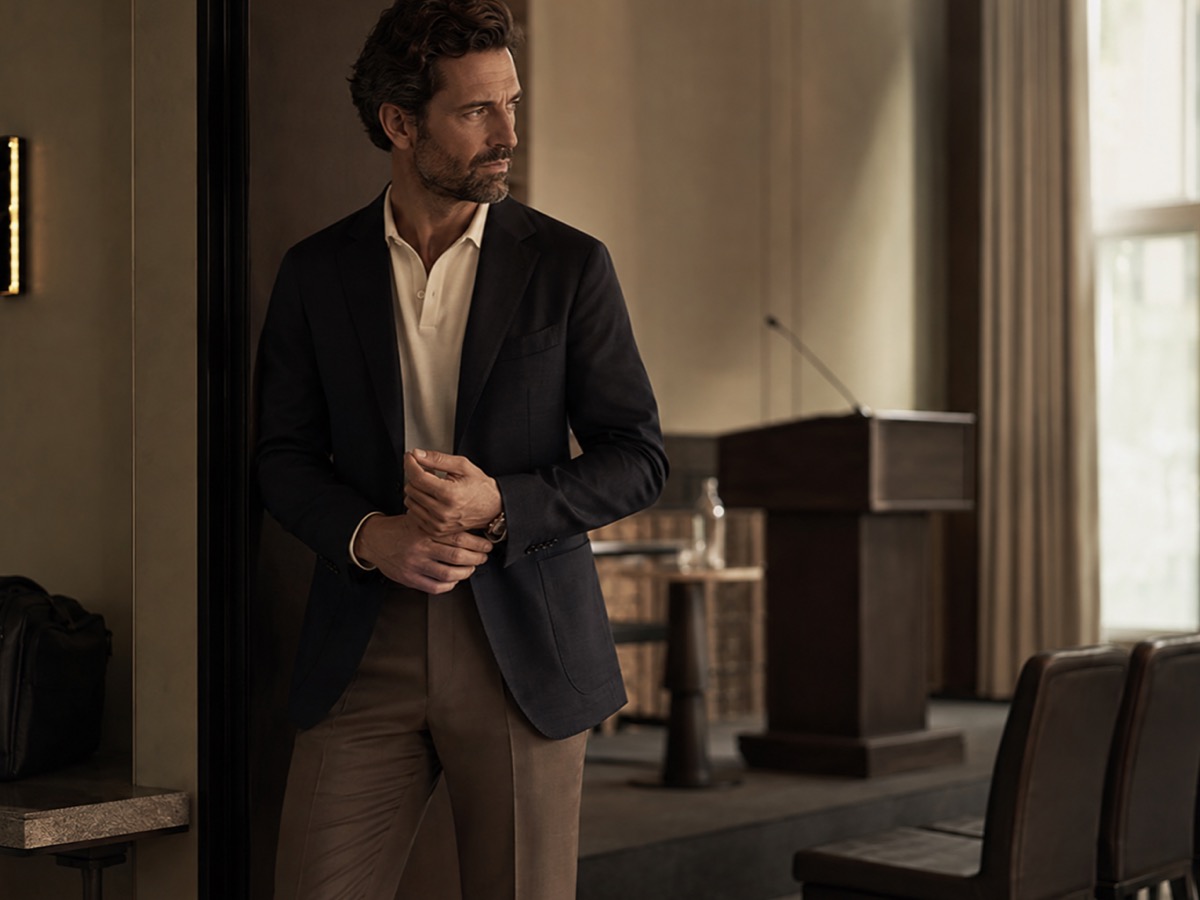
A keynote speaker outfit has to work at several distances. People at the back see your silhouette. The screen shows your upper body. Photographs may reduce the whole appearance to a thumbnail beside your name.
I would start with clothes that give your shoulders a clear line, frame your face, and let you move naturally. The outfit should belong to you and to the event. You have enough to think about without checking your collar during the introduction.
Find out what the room actually looks like
“Conference attire” tells you very little. A finance conference, founder summit, academic stage, luxury event, and internal leadership day can all use that label while expecting different clothes.
Look at previous event photographs and ask the organizer about the audience, backdrop, lighting, filming, and the day's schedule. Find out whether you will stand, walk, sit for a conversation, or do all three. A dress code becomes useful once you understand those conditions.
The starting point I use for conference outfits for men applies here: look one level more considered than the audience while staying connected to the room. In a formal industry, that may mean a suit. In a founder-led setting, a soft tailored jacket may be more accurate.
The most reliable keynote outfit
A jacket is a useful base because it frames the shoulders and gives the upper body a stable outline. Choose one that holds its shape without restricting your gestures.
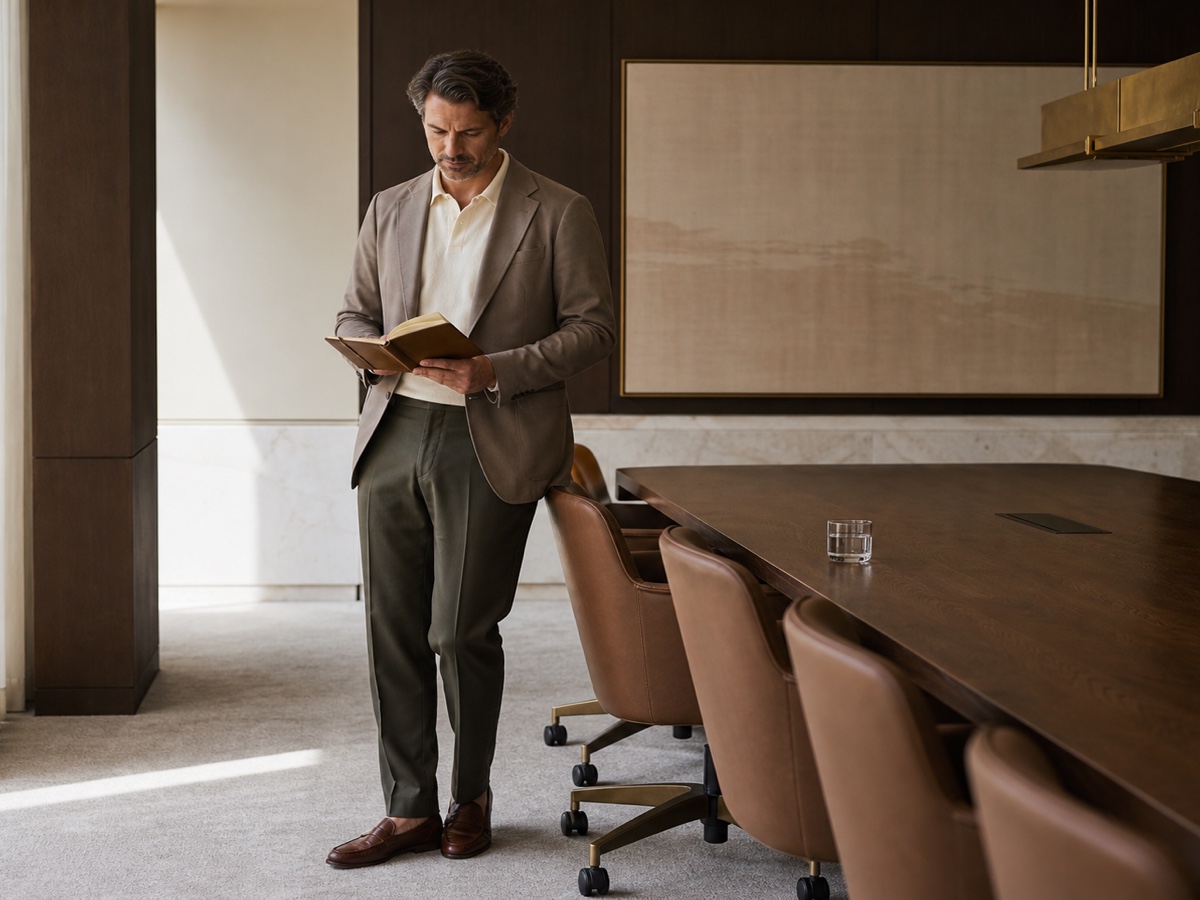
Try deep navy, charcoal, espresso, or olive with a cream, soft blue, ecru, or pale gray shirt or fine-gauge knit. Add tailored trousers that remain composed while standing and sitting, then dark loafers, derbies, or sleek boots. Keep accessories quiet and familiar.
A charcoal jacket with an ecru shirt, a navy jacket with soft blue, or an espresso jacket with pale gray trousers can give the outfit definition without making it busy. These are starting combinations to test against your coloring and the stage, rather than rules that suit every man.
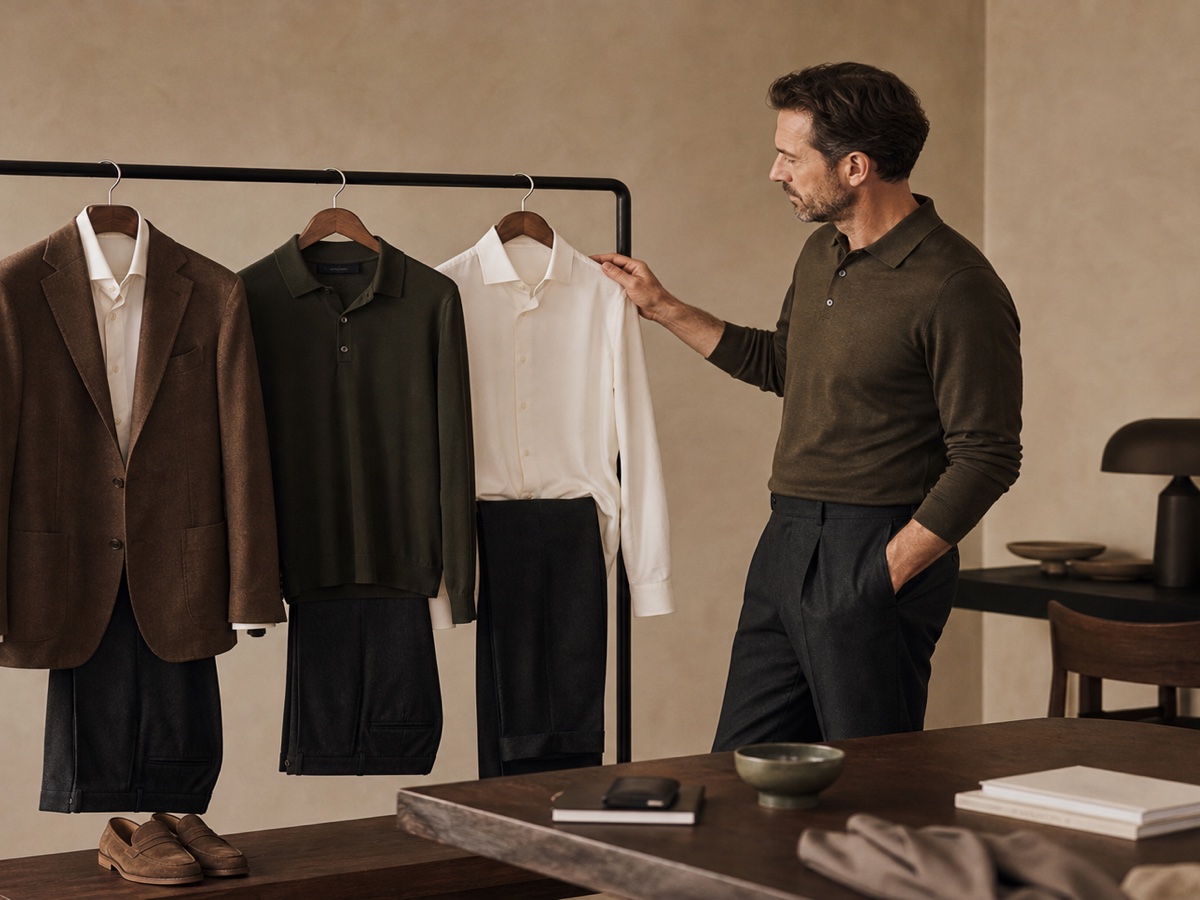
A keynote outfit should sit within your broader wardrobe system. You are sharpening the clothes for visibility, rather than inventing a different public version of yourself.
Suit or separates?
Wear a suit when the event is formal, conservative, institutional, finance-heavy, government-adjacent, or explicitly expects the speaker to dress that way. Navy, charcoal, deep brown, and quiet textures are practical options. Check the fit through the shoulders and trousers before adding accessories.
A tie can be useful when it belongs to the event. If you leave it off, the shirt collar still needs to sit cleanly. A shiny blue suit and a loud tie may be more distracting than a softer combination in matte cloth.
For founder, technology, creative, consulting, and modern leadership stages, separates often give you more range. Try a navy jacket with taupe trousers, a charcoal jacket with cream knitwear, an olive jacket with dark gray trousers, or an espresso jacket with pale blue shirting.
The thinking is close to executive casual attire: clear structure with enough ease for the setting. Check that the pieces look connected, rather than like the top half of one outfit and the bottom half of another.
Test for distance, lighting, and recording
Stage conditions change how clothes appear. Tiny checks can create interference on video. Shiny cloth can reflect light. A very dark outfit may lose its shape against a black curtain, while a pale shirt may look washed out under strong lighting.
Aim for enough contrast to separate your face and upper body from the background. Very harsh contrast can also be distracting, so test rather than assuming more is better. Take a short video and look at a still image in a small size. Can you still see the shoulder line, collar, and face clearly?
If the talk will be recorded, think of it as an executive headshot with movement. The neckline, lapels, eyewear, and collar may appear repeatedly in future clips. Check how they sit beside the slides, event graphics, and your existing profile photograph.
Lalit Bahel's guide to social media graphics design offers related background on visual consistency in brand materials. It is design context, rather than evidence that a particular outfit improves speaking performance. The older Forbes article on what a speaker should wear is another perspective on clothes supporting communication.
Rehearse in the actual outfit
Standing still in front of a mirror misses most of the job. Walk, turn toward an imaginary screen, hold a clicker, raise your arms, and sit down. Button and unbutton the jacket. Check whether the shirt pulls, the collar shifts, the trouser rise cuts in, or the jacket bunches at the back.
Look for watches that flash, a belt that catches attention, socks that disappear when you sit, and shoes that feel unstable. You want to discover those details before the green room.
The same practical test supports executive presence. You need enough physical ease to pay attention to the people in front of you.
Other speaking engagements: panels, podcasts, webinars, and smaller rooms
A keynote is only one kind of speaking engagement. These settings deserve their own adjustments.
Panels and fireside chats
Seated photographs make jacket pulling, trouser rise, sock coverage, and shoe condition more visible. Check the outfit with your legs both crossed and uncrossed. Shirts should stay closed at the waist and the jacket should not fight your posture.
A textured navy jacket, pale blue or cream shirt, charcoal trousers, and dark loafers or derbies is a useful panel combination. Another is a dark olive jacket, fine knit polo, mid-gray trousers, and brown suede shoes. Try the seated test before choosing between them.
Video podcasts and webinars
The upper third carries more of the visual work. Avoid letting a white shirt disappear into a white wall or a dark shirt merge with a dark room. Busy collars and large accessories can compete with microphones and the framing around your face.
A knit polo under a jacket or an open-collar shirt with a textured blazer can work well. An elevated overshirt is another option in a casual recording setting if it has sufficient structure. Do a ten-second camera test in the actual setup, rather than relying only on the mirror.
Private dinners and smaller speaking rooms
You are seen up close and may spend more time talking informally than presenting. Soften the tailoring if the setting allows it, keep the shoes and collar resolved, and choose clothes you can sit and eat in comfortably. Your outfit still needs to fit the level of responsibility attached to your role.
Plan for the day around the talk
A keynote may come with sponsor meetings, breakfast, photographs, a panel, dinner, and an airport transfer. Check that the shirt or knit works on its own if you remove the jacket afterward.
Choose fabrics that recover well, plan how you will steam the clothes, and pack a backup shirt when traveling. My guide to business travel outfits covers the same need to dress for a sequence of rooms.
If you speak regularly, build two or three reliable combinations: a formal suit option, a modern executive separates option, and a more relaxed structured option. Connect them to your founder wardrobe, rather than building a separate event closet.
Frequently asked questions
Can I wear sneakers for a keynote?
Only if the event culture supports them and the rest of the outfit is resolved. Clean, minimal sneakers may work in technology or creative settings. Loafers, derbies, and sleek boots are easier starting points when the expectations are uncertain.
Which colors work best on stage?
Navy, charcoal, espresso, olive, cream, soft blue, and pale gray give you useful combinations. The right choice depends on your coloring, lighting, and backdrop. Test patterns and contrast on camera.
Do I need a different outfit for the panel afterward?
Usually you can plan one outfit for both. Rehearse seated as well as standing, and check the trousers, socks, collar, and jacket before deciding.
Build the wardrobe behind your public work
Inside The Curated Outfit, I map your role, rooms, body, colors, formality levels, and outfit formulas. The Curated Reset gives speaking engagements a place in a wardrobe that also works for ordinary weeks.
Read the client reviews, or apply for The Curated Reset if your public calendar has outgrown the clothes you keep improvising with.

Rinske Fris, founder of The Curated Outfit. 11 years in menswear as a personal shopper, menswear buyer and men's stylist.