What to Wear for a Speaking Engagement
What to wear for a speaking engagement is a different question from what to wear to a normal meeting. On a stage, panel, webinar, podcast recording, or conference agenda, your clothes have to work from a distance and up close. They need to support your authority without making the audience study the outfit.
For serious men, the goal is not to look dressed up for attention. The goal is to look clear, credible, and visually easy to understand before you say anything.
The safest answer is usually structured, quiet clothing with enough contrast around the face and enough ease in the body to let you move, sit, gesture, and be photographed without looking managed.
Start with the room
A speaking engagement can mean a keynote, a fireside chat, a private founder dinner, a webinar, a podcast video, or a conference panel. Each room has a different visual contract.
If the audience is formal, your clothes should be at least as polished as the front row. If the room is founder-led or creative, you can soften the tailoring, but the outfit still needs intent. The mistake is dressing for your internal comfort when the job is external trust.
This is the same principle behind dressing for executive presence: the clothes should match the level of responsibility people are assigning to you.
The strongest default outfit
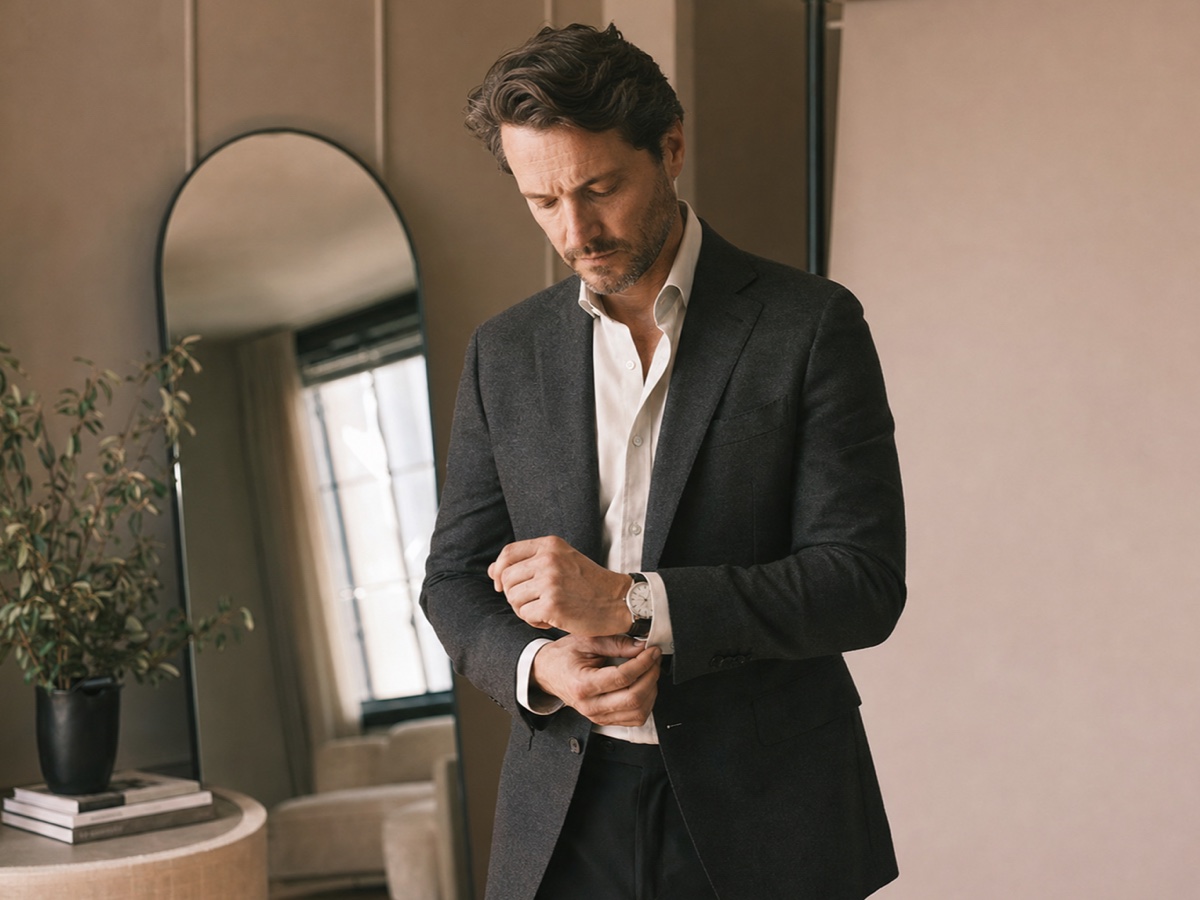
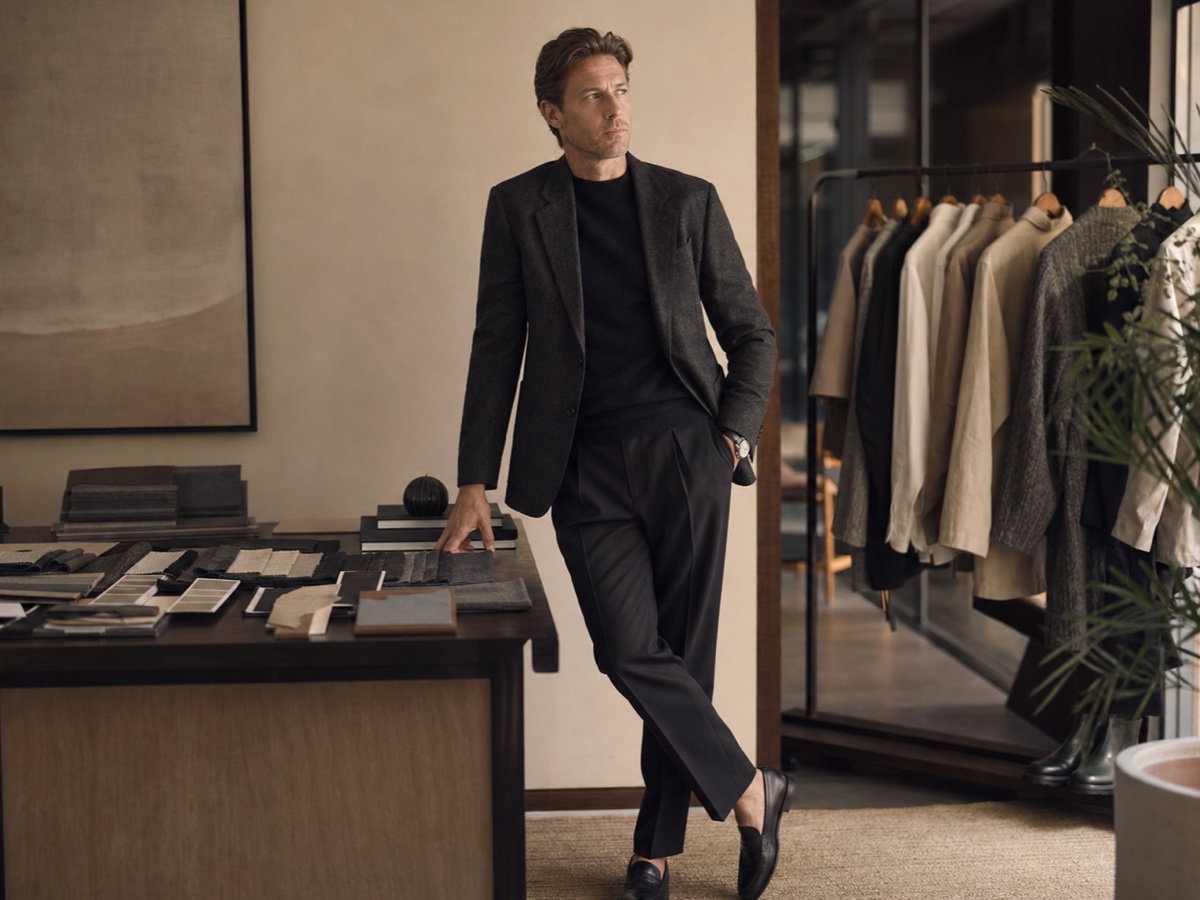
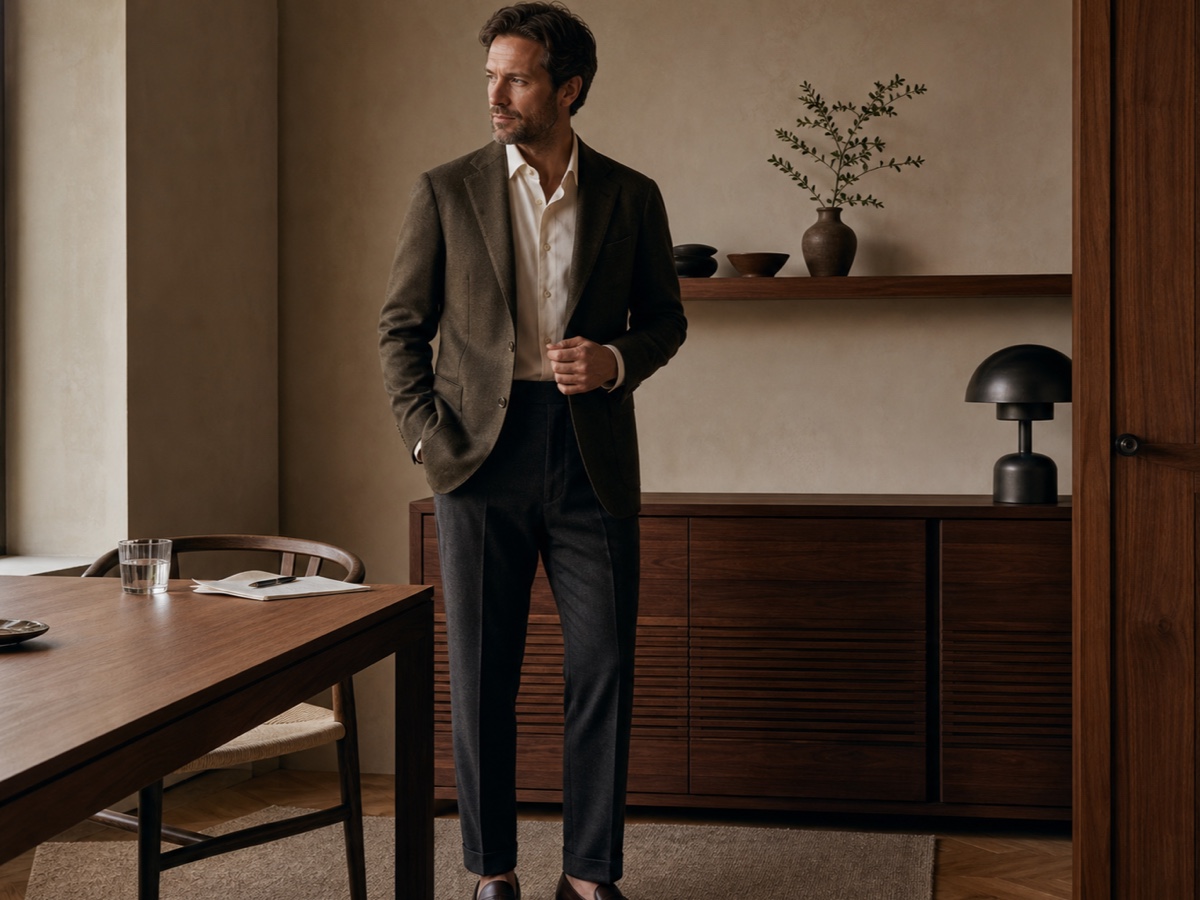
For most men, the strongest speaking outfit is a dark jacket or tailored overshirt, an open-collar shirt or fine knit, tailored trousers, and restrained shoes. Navy, charcoal, dark olive, espresso, and deep brown are usually easier than black under stage light.
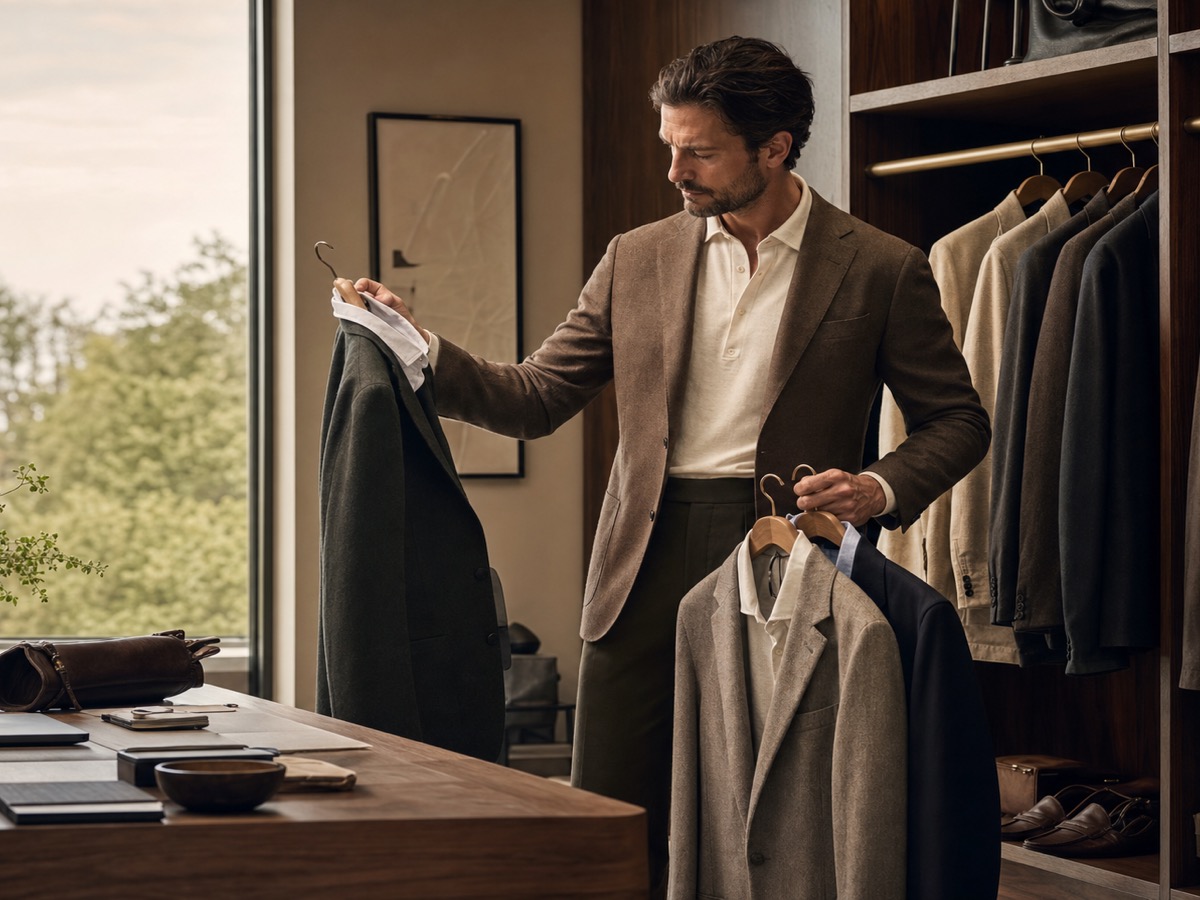
The jacket matters because it creates a frame. It gives the shoulders shape, anchors the upper body, and reads well in photos. A soft blazer often works better than a hard business suit if the event is modern, advisory, founder-led, or creative.
If you are speaking in a very formal industry, wear the suit. If you are speaking to founders, executives, consultants, or private clients, a soft tailored jacket with an excellent shirt often feels more congruent.
Dress for distance and camera
On stage, small details disappear and high contrast details become louder. Tiny checks can flicker on video. Shiny cloth can catch light badly. Thin shirts can collapse when you sit. Loud sneakers can become the only thing people notice in full-body photos.
Think in larger visual blocks: a clean shoulder line, a stable collar, one grounded color story, and shoes that belong to the level of the room. The outfit should still look good when reduced to a thumbnail beside your name on an event page.
If the engagement will be filmed, treat it like an executive headshot with movement. The face still leads. The collar, lapel, neckline, and glasses still do more work than men expect.
What to wear for a panel
For a panel, you are usually seated, photographed from the waist up, and placed beside other people. This makes posture, trouser rise, jacket length, and sock/shoe choices more visible than usual.
A good panel outfit: textured navy jacket, pale blue or cream shirt, charcoal trousers, dark loafers or derbies. Another: dark olive jacket, fine knit polo, mid-grey trousers, brown suede shoes. Both give shape without shouting.
Avoid jackets that pull when seated, trousers that expose too much leg, and shirts that gape at the waist. If you cross your legs, the outfit still has to hold.
What to wear for a keynote
A keynote usually needs the most clarity. People are looking at you from farther away, the lighting is stronger, and the photographs may circulate later. Choose cleaner lines and slightly stronger contrast than you would for a small dinner.
A dark suit without a tie can work well if the room is senior but not corporate. A soft jacket and knit can work if your authority comes from expertise rather than hierarchy. If you use a pocket square, keep it quiet. If you wear a watch, make sure it does not flash under light.
The outfit should make the audience feel that you belong at the front of the room. It should not look like you borrowed someone else's idea of a speaker.
What to wear for a podcast or webinar
For video podcasts and webinars, the upper third does most of the work. Wear color near the face that gives you definition against the background. Avoid white walls with white shirts, black shirts against dark rooms, and busy collars under microphones.
A knit polo under a jacket is often excellent. So is an open-collar shirt with a textured blazer. If the podcast is casual, an elevated overshirt can work, but only if the fabric has enough structure.
Do a ten-second camera test before deciding. The mirror tells you how the outfit feels. The camera tells you whether the audience can read it.
What to avoid
- Brand logos that become uninvited talking points.
- Thin shirts that wrinkle or gape when seated.
- Tiny patterns that behave badly on camera.
- Overly bright shoes, watches, or belts that pull the eye downward.
- A suit that is technically formal but emotionally stiff.
- Trying to look younger than the room instead of accurate to your role.
None of these are moral mistakes. They are signal mistakes. They ask the audience to process your clothes at the exact moment you want them processing your thinking.
Build a repeatable speaker uniform
If you speak often, stop treating every event as a new styling problem. Build two or three speaker uniforms that cover your recurring rooms.
One might be formal: navy suit, pale blue shirt, dark brown shoes. One might be modern executive: olive or charcoal jacket, cream shirt, grey trousers. One might be relaxed authority: textured overshirt, fine knit, tailored trousers, clean loafers.
This is where a broader founder wardrobe or executive wardrobe system becomes useful. The point is not having more outfits. The point is knowing which signal to use without rebuilding your identity every time you are introduced.
When this points to a bigger issue
If one speaking engagement creates a wardrobe crisis, the event may simply be exposing a gap that was already there. Your public role has moved faster than your clothes.
That happens often with founders, consultants, and executives who now appear on stages, podcasts, investor calls, client dinners, and leadership pages. The wardrobe that was fine in private starts to feel slightly behind in public.
Inside The Curated Outfit, we build the system behind these moments. The Curated Reset is for men who do not want isolated event outfits. They want a wardrobe that works across visibility, authority, travel, meetings, and ordinary weeks.
You can read the client reviews to see what that kind of clarity looks like after the wardrobe is built.
FAQ
What should a man wear for a speaking engagement?
A man should wear structured, well-fitting clothing that matches the room and frames his face clearly. For most professional speaking engagements, a dark jacket, open-collar shirt or fine knit, tailored trousers, and restrained shoes is the safest modern formula.
Should men wear a suit when speaking on stage?
Men should wear a suit when the audience, industry, or event formality expects it. In founder, advisory, creative, or modern executive rooms, soft tailoring without a tie can feel more current while still carrying authority.
What colors are best for men on stage?
Navy, charcoal, dark olive, espresso, deep brown, cream, pale blue, and muted grey usually work well on stage. These colors create clarity without distracting from the speaker's face, posture, and message.
What should men avoid wearing for video speaking?
Men should avoid tiny patterns, shiny fabrics, heavy logos, stretched shirts, and very high-contrast combinations that fight the camera. The outfit should be easy to read on screen and should not create visual noise around the face.
How many speaker outfits should a man own?
Most men who speak regularly need two or three reliable speaker outfits, not a large event wardrobe. Build one formal option, one modern executive option, and one relaxed authority option, then adjust shirt, knit, and shoe choices by room.
If your next public moment is revealing that your wardrobe no longer matches your role, apply for The Curated Reset. We will build the system behind the appearance.