New Leadership Role? Fix the Wardrobe
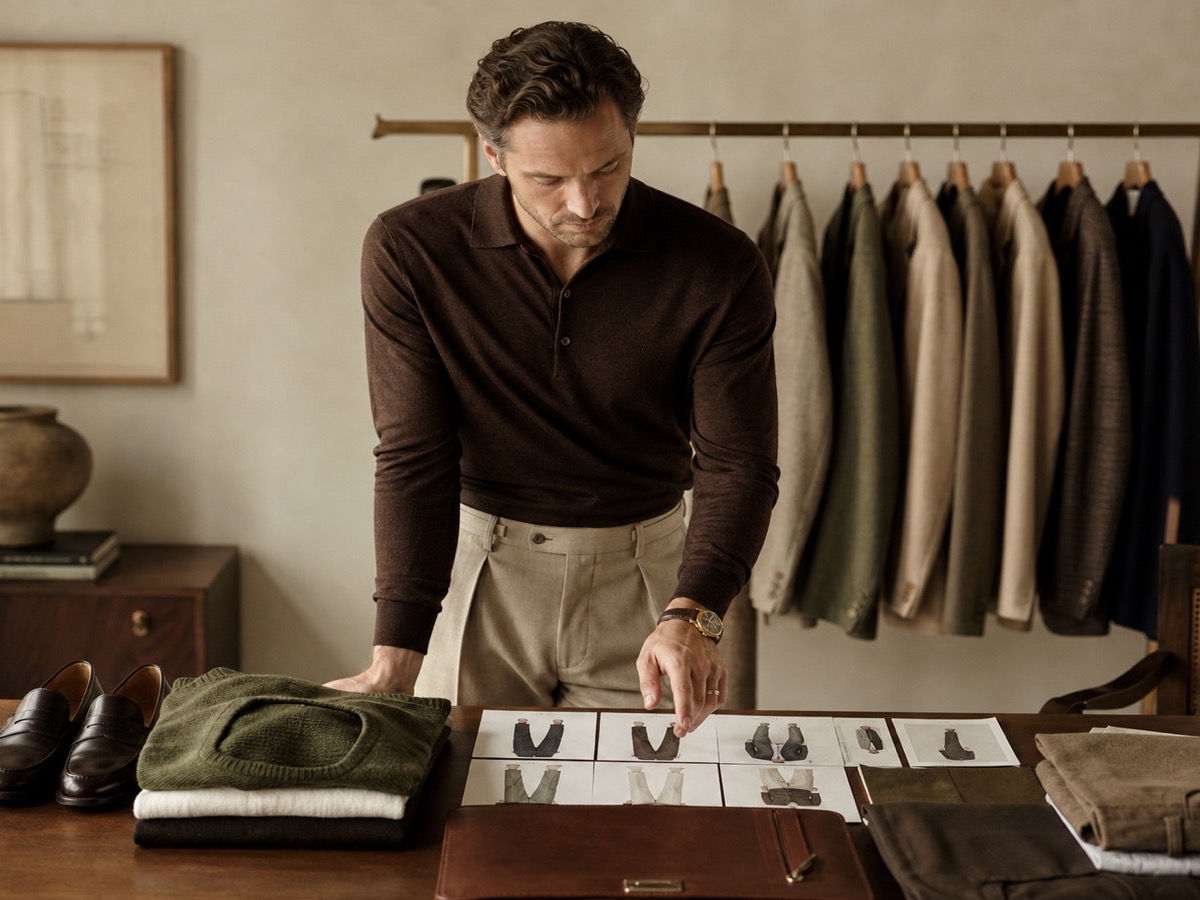
A new leadership role changes the way people read you before it changes the way they talk to you. The meetings are sharper, the audience is wider, and the clothes that felt perfectly fine six months ago can suddenly look slightly behind the room.
This is where many men make the wrong fix. They buy one better blazer, one expensive pair of shoes, or a new watch. The better move is to adjust the wardrobe system around the role you now carry.
Start with the rooms, not the clothes
Before you buy anything, list the rooms your new role has added. Board meetings, investor updates, senior client rooms, team all-hands, offsites, dinners, conferences, interviews, and video calls all ask for a slightly different signal.
The point is not to dress formally everywhere. It is to stop using one default outfit for every context. A founder who looks credible in a product review may look too casual at a capital meeting. A consultant who looks correct in a suit may look stiff at a creative client dinner.
Good leadership style starts with context. Your wardrobe should help people understand the level of responsibility you hold without making the clothes the main topic.
Fix the formality gap first
Most wardrobe problems after a promotion are formality problems. The clothes are not bad. They are simply calibrated for the previous version of the work.
Look for three levels you can repeat:
- Internal authority: knitwear, tailored trousers, structured overshirts, clean shoes, and clothes that look considered without feeling performative.
- Client or investor clarity: jackets with proper shoulder structure, better shirts, sharper shoes, and colors that make your face look clear.
- Public visibility: the version that photographs well, works on camera, and still feels like you when the room gets bigger.
This is why a wardrobe system for men matters more than a single “executive outfit.” You need levels, not costumes.
Audit what now looks too junior
A new role often exposes the pieces you have outgrown. The soft blazer that collapses at the shoulder. The sneakers that were fine for the old team culture. The shirts that look tired on video. The trousers that make every outfit feel casual, even when the top half is good.
Do not audit by asking, “Do I like this?” Ask, “Does this still make sense for the role?” That question is less emotional and more accurate.
Start with jackets, shoes, glasses, bags, outerwear, and anything worn near the face. These are the pieces people register first. If they are dated, too relaxed, too corporate, or slightly careless, the rest of the outfit has to work harder than it should.
Build a sharper fit standard
Leadership dressing is rarely about louder clothing. It is about precision. Shoulder line, trouser break, sleeve length, collar shape, and shoe weight do more for a man’s authority than most statement pieces.
The fit standard should be strict enough that you can reject decent clothes quickly. If a jacket softens your frame too much, it goes. If trousers pool or pull, they need tailoring or replacement. If a shirt collar collapses under a jacket, it is not supporting the outfit.
If this feels hard to see alone, a wardrobe audit will usually reveal the pattern. Men often own enough clothes. They lack a standard for what earns a place in the new role.
Use color to make the face clearer
Color is not decoration. It changes how healthy, sharp, tired, soft, or severe a man looks. In leadership rooms, the face matters because people are reading judgment, calm, and credibility.
Many men default to navy, black, white, and grey because they feel safe. Those colors may work, but they can also flatten the face or make the wardrobe feel anonymous. Espresso, olive, cream, tobacco, charcoal, soft blue, and muted burgundy often give more control without looking showy.
A practical palette should make dressing easier. Once you know your best neutrals, your best contrast level, and the colors that photograph well, the wardrobe stops being a series of separate choices. It becomes a repeatable visual language.
Separate ease from carelessness
Senior men often want to avoid looking overdressed. That instinct is good. The mistake is assuming ease means softness everywhere.
Ease can come from texture, open collars, knitwear, relaxed tailoring, suede, softer shoes, and fabrics that move. Carelessness comes from poor fit, tired shoes, thin fabrics, random layers, and clothes that look chosen by habit rather than by judgment.
The goal is controlled ease. You can look relaxed and still look precise. You can look approachable and still look senior. You can look creative without looking like you are auditioning for a different life.
Update your camera wardrobe
If the new role comes with more calls, podcasts, webinars, recorded updates, or press, your camera wardrobe needs its own standard. The camera flattens texture, exaggerates poor contrast, and makes tired collars look worse.
Keep a small set of camera-safe formulas: one strong knit, one open-collar shirt that holds its shape, one soft jacket, one color near the face that makes you look awake, and one background-aware outfit that does not blend into your room.
This overlaps with executive headshot outfits. The same principle applies: your clothes should make your face and role easier to read, not compete with them.
Do not copy another leader’s uniform
Copying another man’s uniform is tempting because it removes decisions. The problem is that his uniform belongs to his body, company, context, taste, climate, and stage of visibility.
Your version has to be specific. A private equity partner, a design founder, a technical CEO, a fractional CFO, and a management consultant may all need authority. They do not need the same clothes.
Founder circles and peer groups can be useful for seeing how other serious operators think about visibility, decision-making, and work context. For example, this overview of online mastermind groups for founders is a reminder that senior rooms are shaped by the people in them. Your wardrobe should be designed for your actual rooms, not a generic executive archetype.
What to buy first
If the audit shows real gaps, buy in the order that changes the most outfits.
- One well-fitting jacket that is not too corporate for your work.
- Two trousers that sit cleanly and work with jackets, knitwear, and shirts.
- One pair of serious shoes that does not make casual outfits sloppy.
- Two camera-safe tops near your best colors.
- One better bag or portfolio if your current one weakens the whole signal.
Do not start with personality pieces. Start with the pieces that raise the floor. Once the baseline is stronger, personality becomes easier to place.
Where The Curated Reset fits
The Curated Reset is built for this exact moment: the man whose role has changed, whose wardrobe is not broken, but whose visual signal needs to become more accurate.
We look at your work, body, calendar, taste, climate, visibility, and current closet. Then we build the standards: fit, color, formality levels, outfit formulas, shopping direction, and rules you can repeat when the week is full.
If your new role has made your wardrobe feel slightly behind, apply for The Curated Reset. We will make the system match the responsibility.
FAQ
How should men dress for a new leadership role?
Men should dress for a new leadership role by matching the wardrobe to the new rooms: internal leadership, client or investor settings, public visibility, and camera moments. The first fix is usually formality, fit, and consistency, not louder clothes.
Do I need a new wardrobe after a promotion?
You may not need a completely new wardrobe after a promotion. You probably need a stricter audit, better tailoring, sharper shoes, clearer outfit levels, and a few pieces that make the existing wardrobe read more senior.
What makes an outfit look more executive?
An outfit looks more executive when the fit is precise, the materials hold their shape, the shoes are clean and intentional, and the formality level matches the room. It does not need to be flashy or overly formal.
Can a leader dress casually and still look credible?
Yes. A leader can dress casually and still look credible when the casual pieces have structure, good fabric, clean proportion, and deliberate color. Casual becomes a problem when it looks accidental, tired, or too close to weekend clothing.
What is the biggest wardrobe mistake men make after a promotion?
The biggest mistake is keeping the old default while expecting it to carry a new level of visibility. The clothes may still be good, but they need recalibration around the role, the rooms, and the signal the man now needs to send.
If you want your clothes to support the role you are already in, apply for The Curated Reset.