What to Wear to a Work Retreat
What to wear to a work retreat is difficult because the room is professional, but the setting often pretends it is casual. You may be in a hotel lobby, a workshop room, a country house, a resort, a strategy dinner, or walking between all of them with the same small bag.
The safest answer is not to dress down completely. The safest answer is to soften your work uniform so it can handle movement, travel, meals, and unstructured conversations while still making your role clear.
For founders, executives, and consultants, a retreat outfit should communicate ease without erasing authority. You are not going to the office. You are also not disappearing into weekend clothes.
Start with the purpose of the retreat
A company offsite, leadership retreat, client strategy day, founder weekend, and investor away day do not ask the same thing from your clothes. The word retreat makes everything sound relaxed, but the real dress code comes from who is there and what decisions are being made.
If you are leading the room, dress a little more intentionally than the average attendee. If you are facilitating, advising, fundraising, or meeting clients, keep more structure in the outfit. If the retreat is mostly internal, you can soften the layers but should still look composed.
This is close to business meeting dressing, but less polished and more mobile. The outfit has to survive travel, sitting, walking, meals, and the strange informality that happens when work leaves the office.
The best default formula
The best default formula is a structured knit or soft jacket, a good shirt or knit polo, tailored trousers, and refined casual shoes. It gives you enough shape for authority and enough ease for a less formal setting.
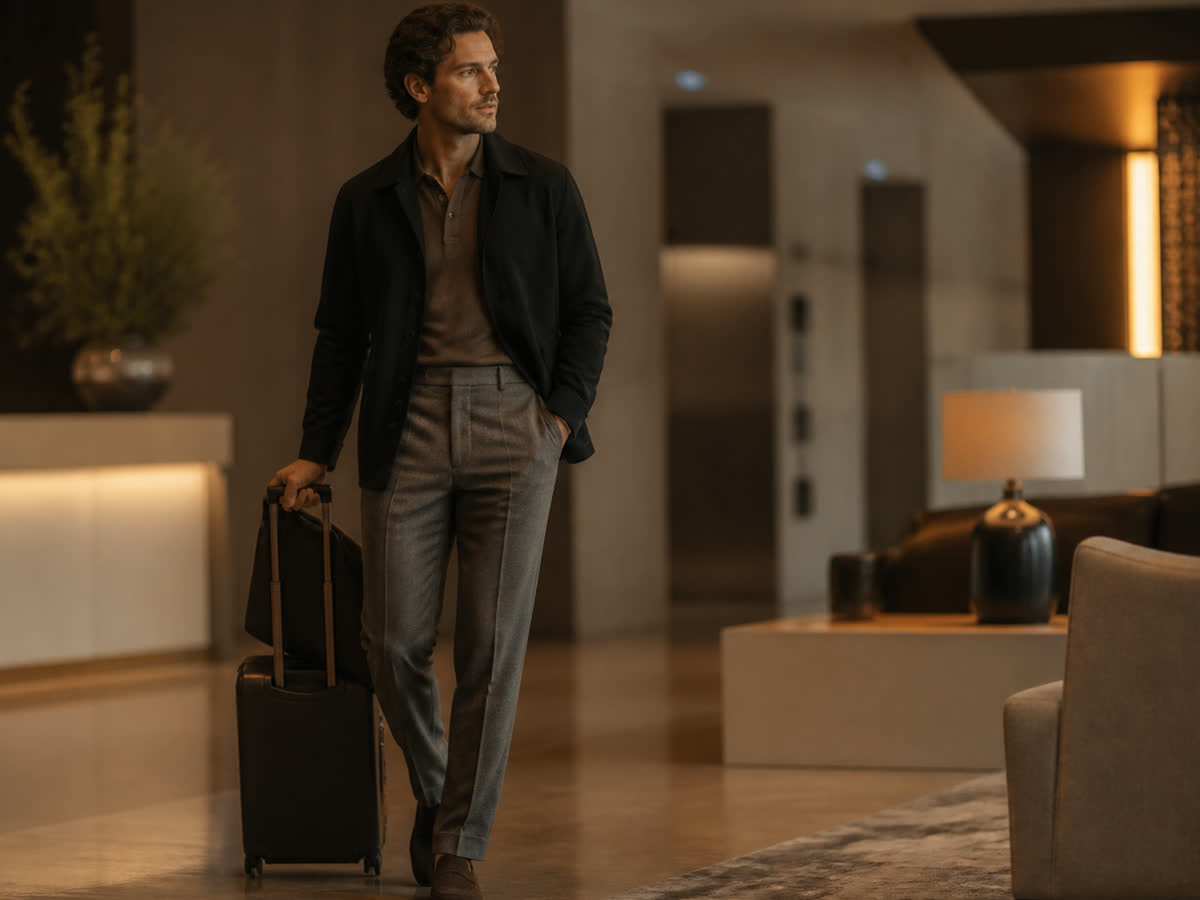
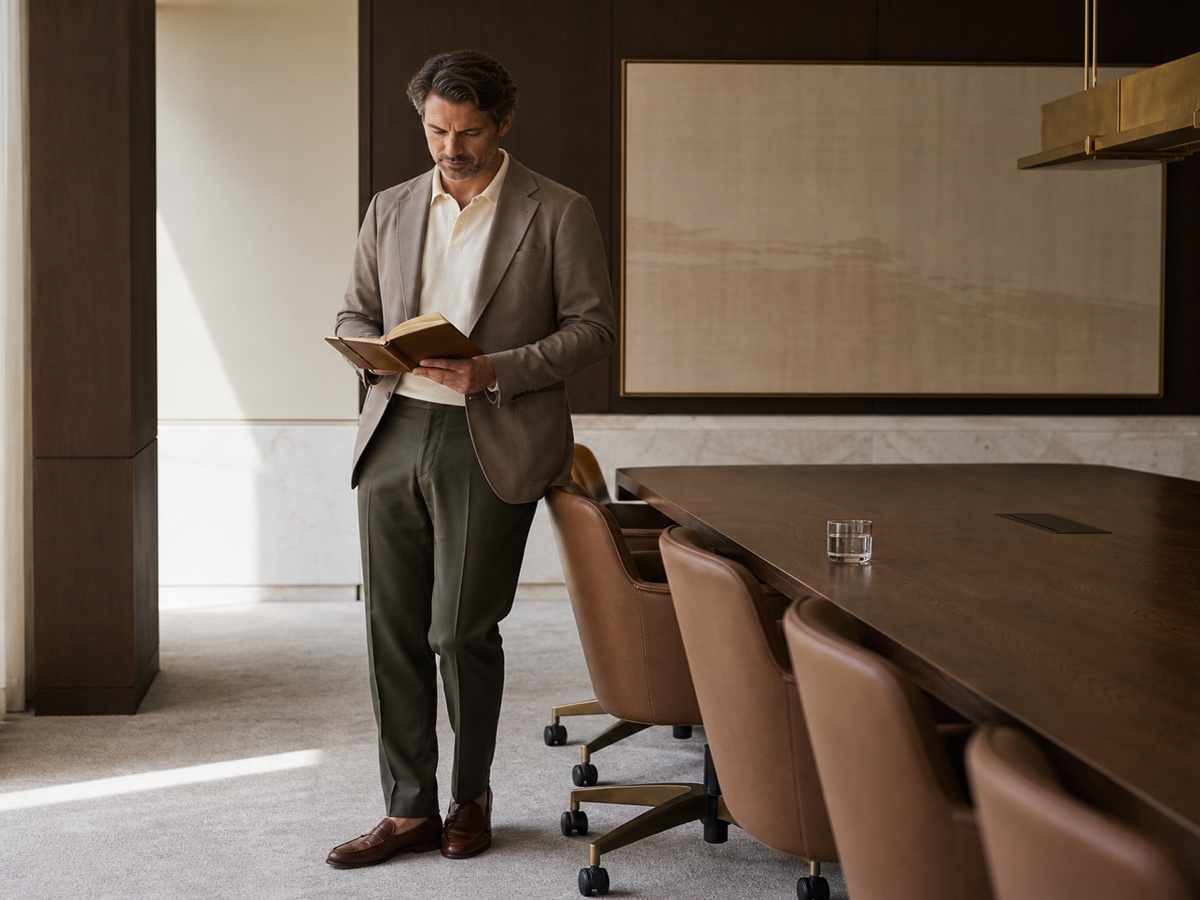
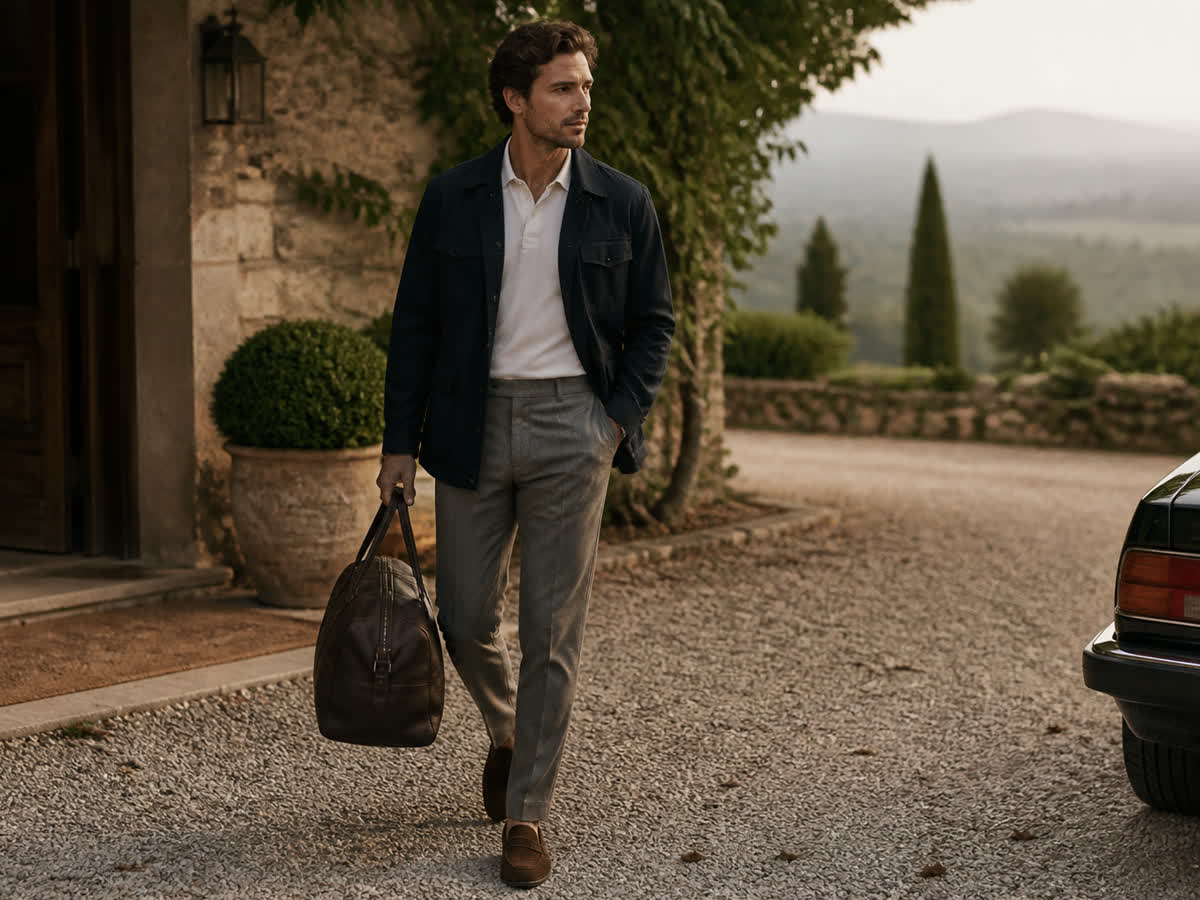
Think navy overshirt with a pale shirt and grey trousers. Dark olive chore jacket with a knit polo and tobacco chinos. Soft brown blazer with a fine merino crewneck and relaxed wool trousers. These are not loud outfits. They are coherent outfits.
The mistake is usually choosing one side too strongly. A suit can make you look like you did not understand the setting. A hoodie, tech vest, and trainers can make you look like you forgot your position in the room.
Use structure, not stiffness
A work retreat is the right place for soft structure. Unlined jackets, overshirts, chore jackets, cardigans, refined knit polos, suede loafers, and tailored drawstring trousers all work because they sit between office and weekend.
You want clothes that hold a line. Shoulders should not collapse. Collars should not curl. Trousers should not look like travel pants unless the entire retreat is genuinely outdoors. Shoes should look intentional even if they are comfortable.
This is where many men accidentally lose the signal. They keep the expensive watch and the serious role, then pair it with gym-adjacent clothes because the invitation said casual. Casual is not the same as unconsidered.
Plan the outfit by moments
Most retreats have more than one dress code inside the same day. There is the arrival moment, the workshop, the lunch, the walk, the dinner, and the late conversation at the bar. Your outfit needs to flex across those moments without requiring a full costume change.
Arrival
Wear the outfit you would be comfortable being seen in by the most senior person there. A knit polo, overshirt, trousers, and loafers or clean suede sneakers can work well. Avoid arriving in the worst version of your travel clothes.
Workshop day
Choose clothes that let you sit, stand, write, and move. A soft jacket or overshirt over a shirt or fine knit is usually better than a stiff blazer. Keep color quiet. A retreat already has enough visual noise.
Strategy dinner
Add polish. Swap the sneakers for loafers, add the jacket, choose the darker trouser, and make sure the shirt or knit under the layer looks clean on its own. This is closer to a client dinner outfit than a weekend dinner.
Outdoor or activity block
If there is a genuine outdoor element, bring the right clothes for that separate moment. Do not force business casual into hiking. Do not force hiking gear into dinner. The cleanest solution is usually one packable technical layer and one separate pair of activity shoes.
Pack a small retreat capsule
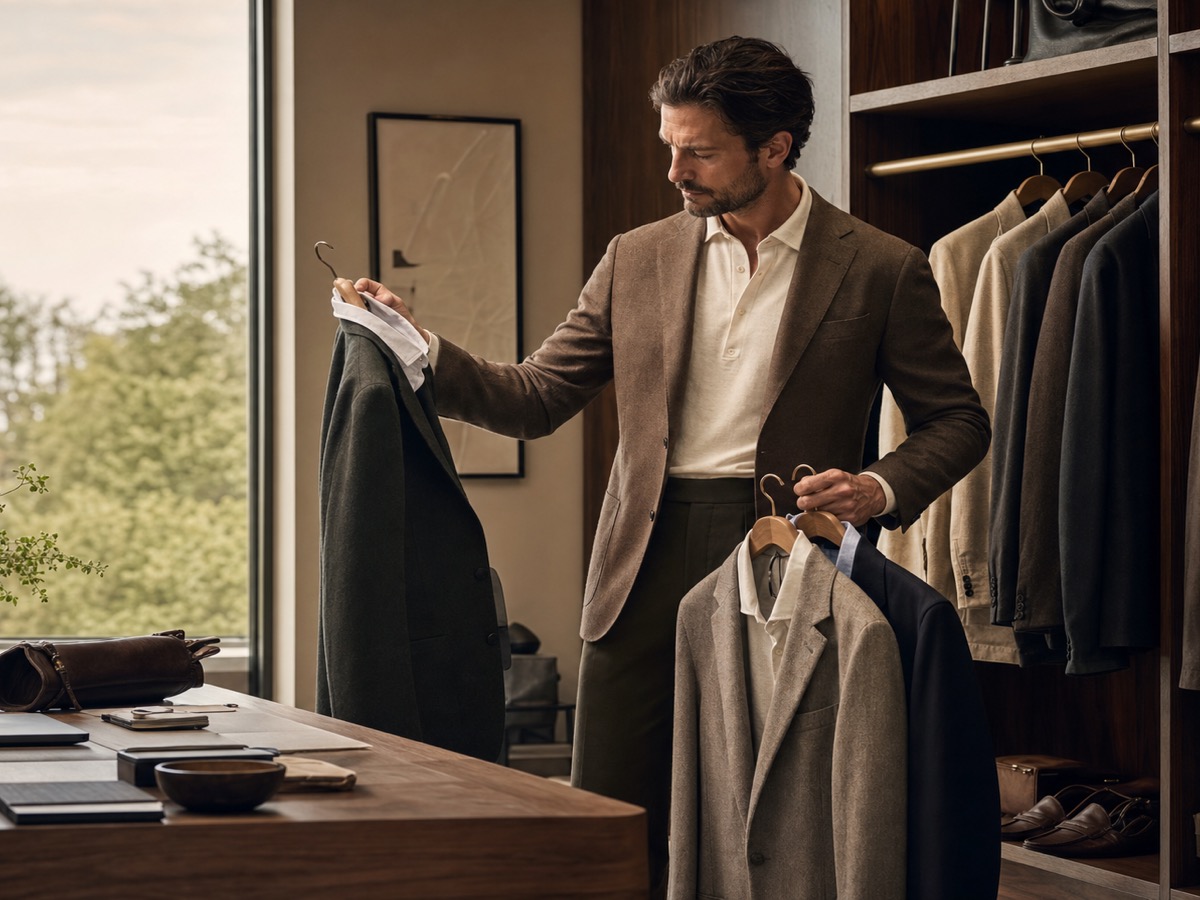
For a two-day work retreat, you do not need many clothes. You need pieces that speak to each other. Pack one soft jacket or overshirt, two tops, two trousers, one refined shoe, one activity shoe if needed, and one knit layer that works under or over the rest.
A useful capsule might be: navy overshirt, pale blue oxford, cream knit polo, grey wool trousers, olive chinos, brown suede loafers, dark knit, and a light rain jacket if the location needs it. The palette should be tight enough that every piece can move.
If your work has many retreats, offsites, and travel days, this should become part of your wider founder wardrobe. The goal is not to own more casual pieces. The goal is to have the right casual authority already solved.
What to avoid
- Performance vests that make the outfit look like a finance uniform parody.
- Running shoes unless there is an actual activity block.
- Thin T-shirts under jackets when the room still expects leadership.
- Wrinkled linen unless the setting is clearly warm, relaxed, and outdoors.
- Novelty socks, slogans, logos, or anything that makes the outfit ask for attention.
- A full office suit when everyone else has been told to dress casually.
These are not moral rules. They are signal rules. A retreat is full of informal observations, and those observations still attach to your role.
The simplest decision rule
If you are unsure, dress one step softer than your normal business outfit and one step sharper than your weekend outfit. That usually lands in the correct place.
Use texture instead of formality: suede instead of polished black calf, knit instead of stiff shirt, overshirt instead of hard blazer, tailored cotton instead of suit trouser. The outfit should feel like you are fully present, not like you are either performing authority or escaping it.
For men who do not want to keep solving this manually, The Curated Outfit builds this into a personal wardrobe system. The Curated Reset is designed for serious men who need clothes for real rooms: meetings, travel, dinners, retreats, visibility, and ordinary weeks.
FAQ
What should men wear to a company offsite?
Men should wear a softened version of business casual to a company offsite: a structured knit, overshirt, soft jacket, good shirt or knit polo, tailored trousers, and refined casual shoes. The outfit should feel comfortable, but still connected to the authority of the work setting.
Can men wear jeans to a work retreat?
Men can wear jeans to a work retreat if the setting is clearly casual and the jeans are dark, clean, and well fitting. Pair them with a structured upper layer and better shoes so the outfit does not read as weekend default.
Are sneakers acceptable at a company retreat?
Sneakers are acceptable at a company retreat when they are clean, simple, and appropriate to the setting. For dinners, client-facing moments, or leadership sessions, loafers, suede derbies, or refined boots usually read better.
What should executives wear to a leadership retreat?
Executives should wear relaxed structure to a leadership retreat: soft tailoring, refined knitwear, tailored trousers, and quiet shoes. The goal is approachable authority, not office stiffness or weekend anonymity.
Conclusion
A good work-retreat outfit holds two truths at once. The setting is more relaxed than the office, and the work still matters. Dress for both.
If your wardrobe only has formal workwear and disconnected weekend clothes, retreats will keep feeling awkward. The better solution is a system where casual, professional, travel, and dinner all come from the same visual language.