Cocktail Attire for Men, Done Properly
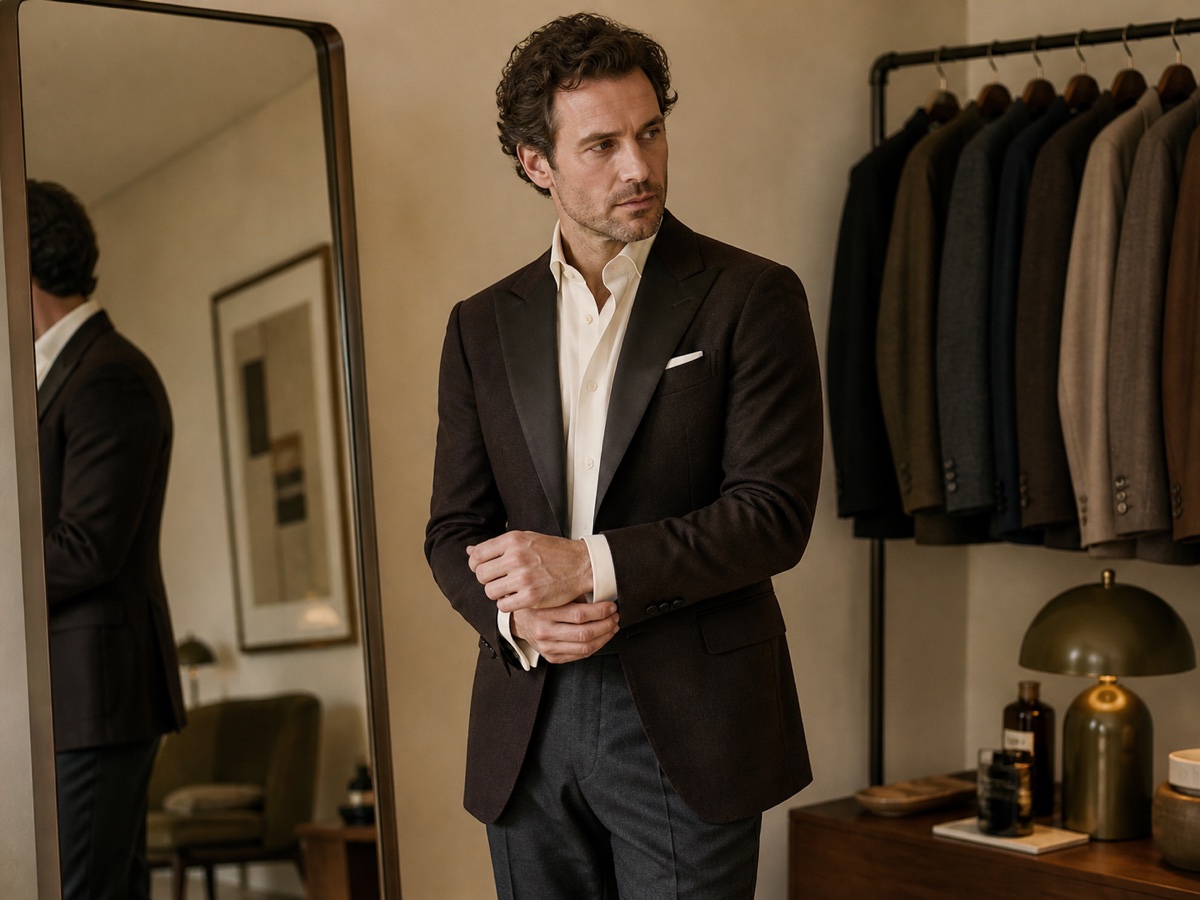
Cocktail attire for men should look considered without looking theatrical. For a founder, executive, or consultant, the useful question is simple: does the outfit match the invitation, the room, and your role in it?
Most advice gives you a list of pieces. Dark suit. Dress shirt. Good shoes. Maybe a pocket square. That is fine as a starting point, but it does not solve the real problem for serious men: how to dress for an evening event without looking like you borrowed a wedding outfit or tried too hard.
What cocktail attire actually means for men
Cocktail attire sits between business formal and black tie. It is polished, evening-appropriate, and more intentional than normal office wear. It usually means a tailored suit or jacket-and-trouser combination, a proper shirt, refined shoes, and restrained details.
The dress code gives you room to look like yourself. It does not give you room to look unfinished. The difference is in the fabric, fit, shoe weight, shirt collar, grooming, and the confidence of the whole combination.
Search results for this phrase are mostly outfit guides, celebrity examples, and dress-code explainers. The recurring advice is useful but broad: wear a suit, choose darker colors for evening, avoid casual shoes, use accessories carefully. The missing part is calibration for men whose work already puts them in rooms where visual judgment matters.
The safest cocktail outfit formula
If you want one reliable formula, start here: a navy, charcoal, deep brown, or dark olive suit with a clean dress shirt, leather loafers or lace-ups, and one quiet detail. The detail can be a textured tie, a pocket square, a fine watch, or a better-than-usual belt. It should not be all of them competing at once.
This formula works because it keeps the signal clean. You look like a man who understands the room, not a man who found a Pinterest image and copied it without context.
- Evening business event: dark suit, cream or pale blue shirt, polished dark shoes, simple watch.
- Creative client dinner: soft tailored jacket, dress trousers, open-collar shirt, loafers.
- Fundraiser or gala cocktail hour: sharper suit, slightly richer cloth, better shirt collar, restrained pocket square.
- Warm-weather cocktail event: tobacco, stone, or muted olive tailoring in linen blend or tropical wool, still with proper shoes.
Where men usually get cocktail attire wrong
The first mistake is wearing the office suit exactly as it appears at 11am. A corporate suit can work at night, but it needs evening adjustment. A better shirt, sharper shoes, a darker palette, and cleaner grooming make it feel intentional instead of leftover.
The second mistake is wedding energy. Shiny shoes, a skinny tie, a satin-looking lapel on the wrong jacket, a novelty pocket square, or a suit that only appears twice a year can make a successful man look less at ease than he is.
The third mistake is casual drift. A knitted polo, sneakers, or an unstructured blazer can look excellent in the right setting, but cocktail attire has a threshold. If the host used the phrase, they are asking for more effort than smart casual. This is where a clear executive personal style standard helps. You stop guessing and start choosing the correct level.
How to choose the right suit or jacket
Fit matters more than novelty. The shoulder should sit cleanly, the sleeve should reveal a small amount of shirt cuff, the jacket should close without pulling, and the trousers should fall without clinging. Cocktail attire often exposes poor fit because the event is social. People see you standing, sitting, moving, ordering a drink, greeting someone, and being photographed.
Cloth is the next decision. Very flat business wool can feel too daytime. Very shiny cloth can feel cheap unless it is a true dinner jacket context. Aim for depth: fine wool, wool-silk, wool-linen, flannel for cooler months, or a subtle texture that gives the outfit evening weight.
For men who dislike suits, a jacket-and-trouser combination can work if it is deliberate. A deep brown jacket with charcoal trousers, a dark navy blazer with grey wool trousers, or a muted olive jacket with cream or stone trousers can feel modern and elegant. The pieces need enough contrast to look chosen, and enough formality to satisfy the invitation.
Shirt, collar, and tie decisions
A white shirt is safe, but cream, pale blue, or a very soft stripe can be better if pure white looks harsh on you. The collar should hold its shape. A collapsing collar makes the whole outfit feel tired, especially when worn open.
A tie is optional in many cocktail settings. If you wear one, choose texture over shine: grenadine, wool-silk, matte silk, or a quiet pattern. If you skip the tie, the shirt needs to be good enough to stand alone. That means correct collar height, clean placket, no pulling at the chest, and no exhausted fabric.
Accessories are where many men try to add personality after ignoring the basics. Better to fix the base first. If you want a luxury detail, make it coherent with the outfit. A pair of vintage or pre-owned sunglasses can be useful for daytime arrivals or destination events, and this guide to Gucci sunglasses options for luxury shoppers is a reminder that accessories only work when they serve the larger visual system.
Shoes decide the level
For cocktail attire, shoes should look intentional and maintained. Dark brown, black, oxblood, or deep espresso leather usually works. Loafers can be excellent if the room is stylish rather than conservative. Oxfords, derbies, or sleek boots can work depending on the suit and season.
The common problem is weight. Shoes that are too chunky pull the outfit down. Shoes that are too shiny or pointed can look like eventwear from another decade. If the outfit is otherwise quiet, the shoe must hold the line. It should support the outfit without taking over.
Color choices that look expensive quietly
For evening, depth usually beats brightness. Navy, charcoal, espresso, tobacco, dark olive, black-brown, and soft cream are easier to wear well than loud jewel tones. The color should sharpen you. It should not announce itself before you do.
If you are unsure, repeat colors already proven in your wardrobe. A man with good coloring for olive and cream should not suddenly wear electric blue because an event feels special. A man who looks clear in navy and white can stay there and make the outfit better through fit, texture, and shoe choice.
This is also why a strong color strategy for men matters. It removes fake creativity. You can dress for a cocktail event with a narrow palette and still look more distinctive than the man wearing every detail at once.
What to wear when the invite is vague
Many invitations are imprecise: drinks, reception, celebration, launch, dinner, private event, founder gathering. When the dress code is vague, read the host, the venue, the time, and your role. Are you a guest, speaker, investor, founder, client, donor, or partner? Your outfit should answer that before it answers your personal taste.
If the event starts after 6pm, go slightly darker and sharper. If it is connected to business, keep the outfit more disciplined. If it is creative, you can use texture or color, but the fit still has to be excellent. If there will be photography, avoid anything that only works in person and collapses under flash.
When you are unsure, it is usually better to be half a step more polished than half a step too relaxed. The goal is not maximum formality. The goal is respect for the room.
How this fits into a wardrobe system
A cocktail outfit should not live as a separate costume in the closet. The jacket should work for dinners. The trousers should work with other tailoring. The shoes should support client meetings. The shirts should already be part of your best layer of clothing. This is how evening dressing becomes easier instead of turning into another category to panic-buy.
If your wardrobe is built as a wardrobe system, cocktail attire is only one higher-formality setting inside the system. You know your colors, your fit standards, your shoe shape, your preferred jacket line, and what level of polish each room requires.
That is the standard inside The Curated Reset. We are not building a separate event wardrobe for one nice night. We are building a system that can handle normal workdays, travel, board exposure, dinners, speaking moments, and evening events without making clothes your new hobby.
When to get help
Get help if every invitation creates a new shopping loop. Get help if you own good pieces but cannot assemble them. Get help if your evening clothes feel borrowed from an older version of you. Get help if the outfit looks fine in a mirror but wrong in photos.
A good process should audit what you own, define the missing level, fix fit and color, and give you formulas for real rooms. Cocktail attire is one of the quickest places to see whether the wardrobe has logic.
If your wardrobe needs that kind of clarity, apply for The Curated Reset. We will build the standard before you buy more event clothes.
FAQ
What is cocktail attire for men?
Cocktail attire for men is a polished dress code between business formal and black tie. It usually means a tailored suit or refined jacket-and-trouser combination, a proper shirt, dress shoes, and restrained accessories.
Do men need to wear a tie for cocktail attire?
Men do not always need a tie for cocktail attire. A tie is useful for more formal, traditional, or business-heavy events. For modern cocktail settings, an open-collar shirt can work if the shirt, jacket, trousers, and shoes are sharp enough.
Can men wear a blazer for cocktail attire?
Yes, men can wear a blazer for cocktail attire when the blazer is refined and the trousers, shirt, and shoes are clearly evening-appropriate. Avoid casual blazers that look like office leftovers or weekend jackets.
What colors work best for men's cocktail attire?
Navy, charcoal, espresso, black-brown, tobacco, deep olive, cream, and soft blue work well for men's cocktail attire. Darker, richer colors usually read better for evening than bright colors or very flat office suiting.
Are sneakers acceptable for cocktail attire?
Sneakers are usually too casual for cocktail attire unless the host, venue, and industry are clearly relaxed. Most serious men will look better in loafers, derbies, oxfords, or sleek leather boots.
If you want evening outfits that feel accurate instead of improvised, apply for The Curated Reset.