Executive Interview Outfit for Men
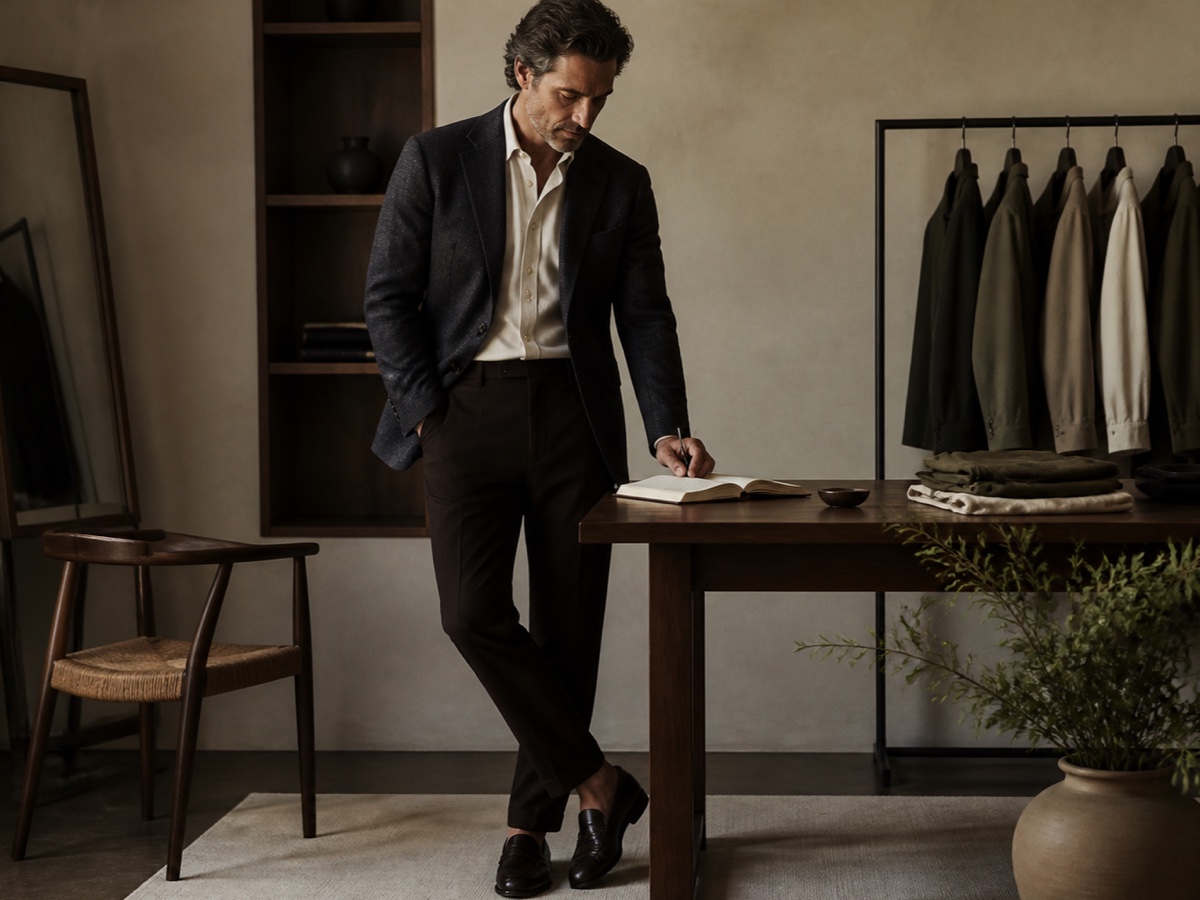
An executive interview outfit for men should make the room read judgment before taste. At senior level, the question is rarely whether you own a suit. The question is whether your clothes make you look like the person who can carry the responsibility being discussed.
This is a different problem from ordinary interview attire. A graduate interview can tolerate neatness as the main signal. An executive interview needs authority, ease, precision, and enough restraint that the clothes never compete with your track record.
Start with the level of the room
Before choosing the outfit, name the room. Are you meeting a founder, board, recruiter, private equity partner, hiring committee, family office, or future direct report? A senior interview is often several rooms in one process, and each room reads formality differently.
The safest move is to dress one level more considered than your usual workday, without dressing as if you borrowed someone else’s authority. If your daily uniform is a hoodie and jeans, a full corporate suit may feel like costume. If your world is finance, law, or institutional leadership, a casual jacket can look under-calibrated.
This is the same principle behind investor meeting outfits for men. The clothes should meet the room where trust is being decided.
The safest executive interview formula
For most senior interviews, start here:
- A dark navy, charcoal, espresso, or deep olive jacket with a clean shoulder line.
- A crisp shirt, fine-gauge knit, or open-collar shirt depending on the industry.
- Tailored trousers that hold their line when seated.
- Dark brown or black loafers, derbies, or sleek boots in excellent condition.
- A simple belt, watch, and outer layer that do not ask for attention.
The formula works because it gives you structure without making the outfit feel stiff. The jacket creates authority. The trousers keep the silhouette adult. The shirt or knit controls how formal the whole thing feels. The shoes finish the read.
When to wear a suit
Wear a suit when the interview is with a conservative company, financial institution, board-heavy role, legal environment, public company, or a room where not wearing one would become information. The suit should be current, quiet, and well fitted. A sharp charcoal or deep navy suit is usually better than a bright blue business suit.
If you wear a tie, choose one because the room asks for it, not because you are trying to prove seriousness. At executive level, over-formality can be as distracting as under-formality when it does not match the company culture.
Test the suit seated. Senior interviews often happen across a table, on video, or in a meeting room where you sit for an hour. Pulling buttons, short sleeves, gaping collars, and trousers that collapse at the shoe all read before you notice them.
When separates are stronger
Tailored separates are often stronger for founder-led, creative, tech, consulting, and modern leadership roles. A jacket and trouser combination can carry authority while leaving enough ease for a room that dislikes corporate stiffness.
A good version might be a charcoal hopsack jacket, cream shirt, dark olive trousers, and brown loafers. Or a deep navy jacket, soft blue shirt, taupe trousers, and dark suede shoes. The pieces should look intentional together, not like the suit trousers were missing.
If you already struggle to connect your role, body, and wardrobe, this is where a wardrobe system for men becomes useful. You are not building one interview outfit. You are building a set of professional levels you can repeat.
Use color to look clear, not loud
Interview color should help your face and message come forward. Navy, charcoal, espresso, olive, tobacco, cream, soft blue, and pale grey are usually easier than black, bright white, or high-contrast patterns.
Black can look severe on many men outside formal evening contexts. Bright white shirts can flatten some complexions under office or video light. A softer white, ecru, blue, or subtle stripe often looks more considered and more human.
If color repeatedly feels difficult, solve it once instead of improvising before important rooms. A practical color palette for men gives you a narrower, stronger set of decisions.
Control the visible details
At senior level, details do not need to be expressive. They need to be handled. Shoes should be clean. Sleeves should show the right amount of shirt cuff. The jacket collar should sit against the shirt collar. The belt should make sense with the shoes. The watch should not feel like a status announcement.
The same applies to glasses, bag, phone case, notebook, and LinkedIn photo. A senior candidate is read as a whole system. Visual inconsistency creates small questions the conversation should not have to answer.
That is why brand recognition matters beyond clothes. A useful visual system keeps the same person visible across the room, the profile, the deck, and the follow-up. Lalit Bahel’s piece on social media graphics design makes a similar point from the brand side: recognition comes from consistency, not decoration.
Dress for video differently
If the first interview is on video, the upper half matters more, but the full outfit still affects how you sit. Wear the trousers and shoes too. You will carry yourself differently than you do in gym shorts.
On camera, avoid tiny checks, harsh black and white contrast, shiny fabrics, and collars that collapse. A soft jacket, clean shirt or knit, and grounded color near the face usually works better than trying to look more formal through a screen.
For more detailed camera logic, use the thinking in virtual meeting outfits for men. The screen does not remove the signal. It compresses it.
What to avoid
Most executive interview outfit mistakes come from overcorrecting. The man knows the room matters, so he reaches for the most serious thing he owns. Or he wants to look culturally current, so he softens the outfit until it no longer carries enough authority.
- Too generic: shiny blue suit, white shirt, loud tie, black belt, black shoes, no personal precision.
- Too casual: unstructured overshirt, tired sneakers, soft denim, and no clear senior signal.
- Too fashionable: obvious designer cues, aggressive silhouette, statement eyewear, or accessories that ask for comment.
- Too neglected: poor alterations, worn shoes, collar gaps, weak trouser length, and bags that cheapen the outfit.
The outfit should help the interviewer stop thinking about your clothes quickly. It should make your competence easier to believe, then get out of the way.
Prepare the outfit like part of the interview
Do not choose the outfit on the morning of the interview. Try it on three days before. Sit down. Stand up. Button and unbutton the jacket. Check the shirt under the jacket. Walk in the shoes. Put the coat or bag with it. Look at the outfit in the same light you will be seen in if possible.
Harvard Business School Online advises candidates to prepare concrete examples before interviews because vague confidence is not enough. Clothing works the same way. You need to know the outfit performs under the actual conditions, not in theory.
If the interview is attached to travel, dinner, or a second meeting, plan the whole sequence. A strong interview outfit that fails at the airport, hotel, or dinner afterward is not a system. It is a single controlled moment.
Where The Curated Reset fits
The Curated Reset is built for men whose role has moved faster than their wardrobe. An executive interview is often the moment that makes the gap visible. You are being considered for a larger room, and the clothes still belong to the previous one.
Inside the work, we map your actual rooms, body, role, colors, formality levels, and outfit formulas so you are not reinventing yourself before every high-stakes meeting.
If your wardrobe is decent but not accurate enough for the rooms you are entering, apply for The Curated Reset.
FAQ
What should men wear to an executive interview?
Men should wear an executive interview outfit with controlled authority: a well-fitting jacket, crisp shirt or fine knit, tailored trousers, and serious shoes. The outfit should look senior, current, and calm without feeling flashy or borrowed.
Should a man wear a suit to an executive interview?
A man should wear a suit to an executive interview when the company, industry, board, or role is formal enough that not wearing one would distract. For modern founder, creative, or tech environments, tailored separates can look more accurate than a full suit.
Can men wear jeans to a senior interview?
Men should be careful with jeans in a senior interview. Dark, clean denim can work in some founder-led or creative companies, but tailored trousers are safer when trust, authority, or board-level judgment is being assessed.
What colors are best for a men’s interview outfit?
The best colors for a men’s interview outfit are serious and flattering: navy, charcoal, espresso, dark olive, cream, soft blue, and pale grey. Avoid colors that look harsh on your face or make the outfit feel more visible than your message.
What shoes should men wear to an executive interview?
Men should wear clean, well-maintained loafers, derbies, oxfords, or sleek boots to an executive interview. The shoes should match the formality of the jacket and trousers and should never look like an afterthought.
If you need a wardrobe that supports interviews, boardrooms, client rooms, and the role after the offer, apply for The Curated Reset.