Wardrobe Mistakes Men Make After 35
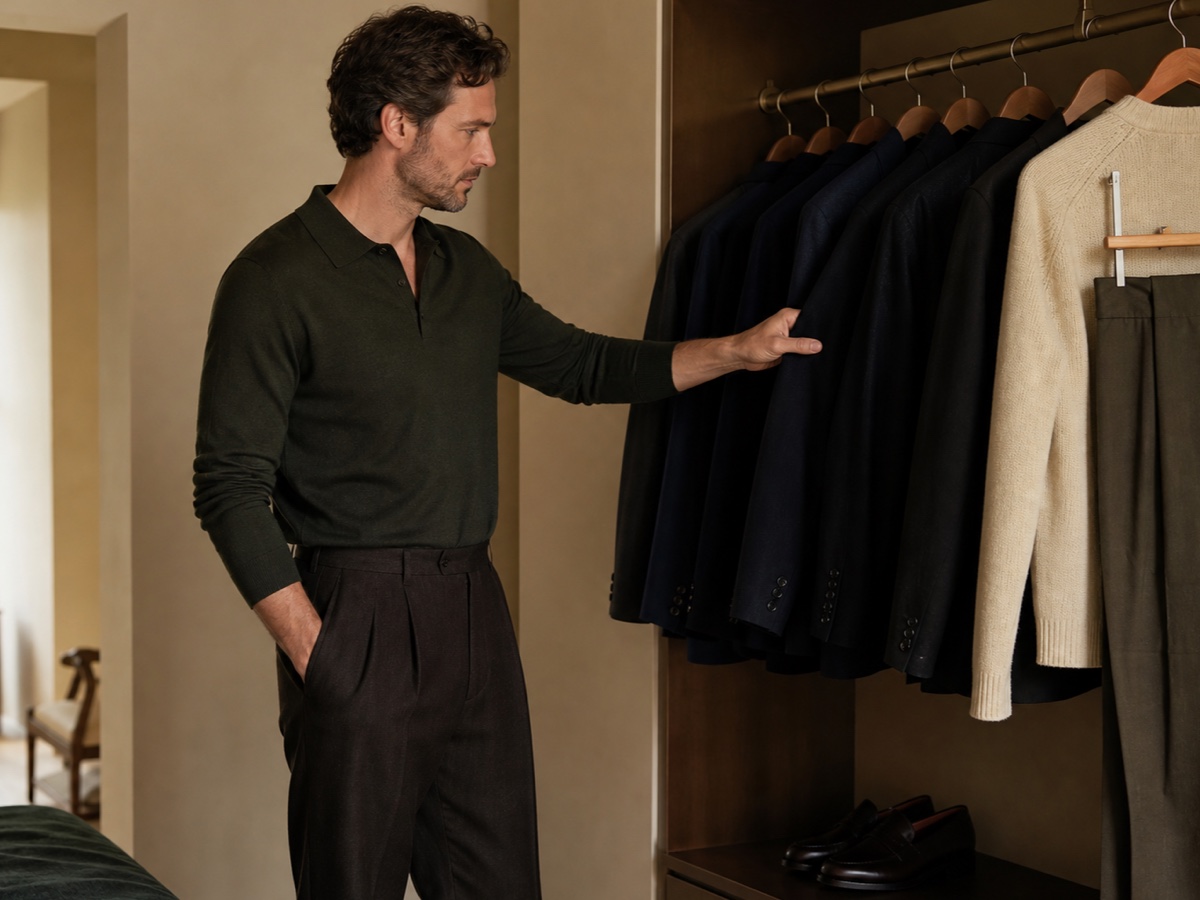
Most wardrobe mistakes men make after 35 are not loud mistakes. They are small mismatches between the man, the room, and the clothes he keeps reaching for.
A jacket that is almost right. Shoes that make the rest of the outfit feel less precise. A row of shirts bought in different years, for different versions of work, with no shared logic. Nothing is disastrous. That is why the problem can stay invisible for a long time.
For founders, executives, consultants, and senior operators, those small mistakes matter because the wardrobe is no longer private. It sits in meetings, on video calls, at dinners, in investor rooms, and beside your work. The goal is not to care more about clothes. The goal is to remove the friction your clothes keep creating.
1. Buying good pieces instead of building outfits
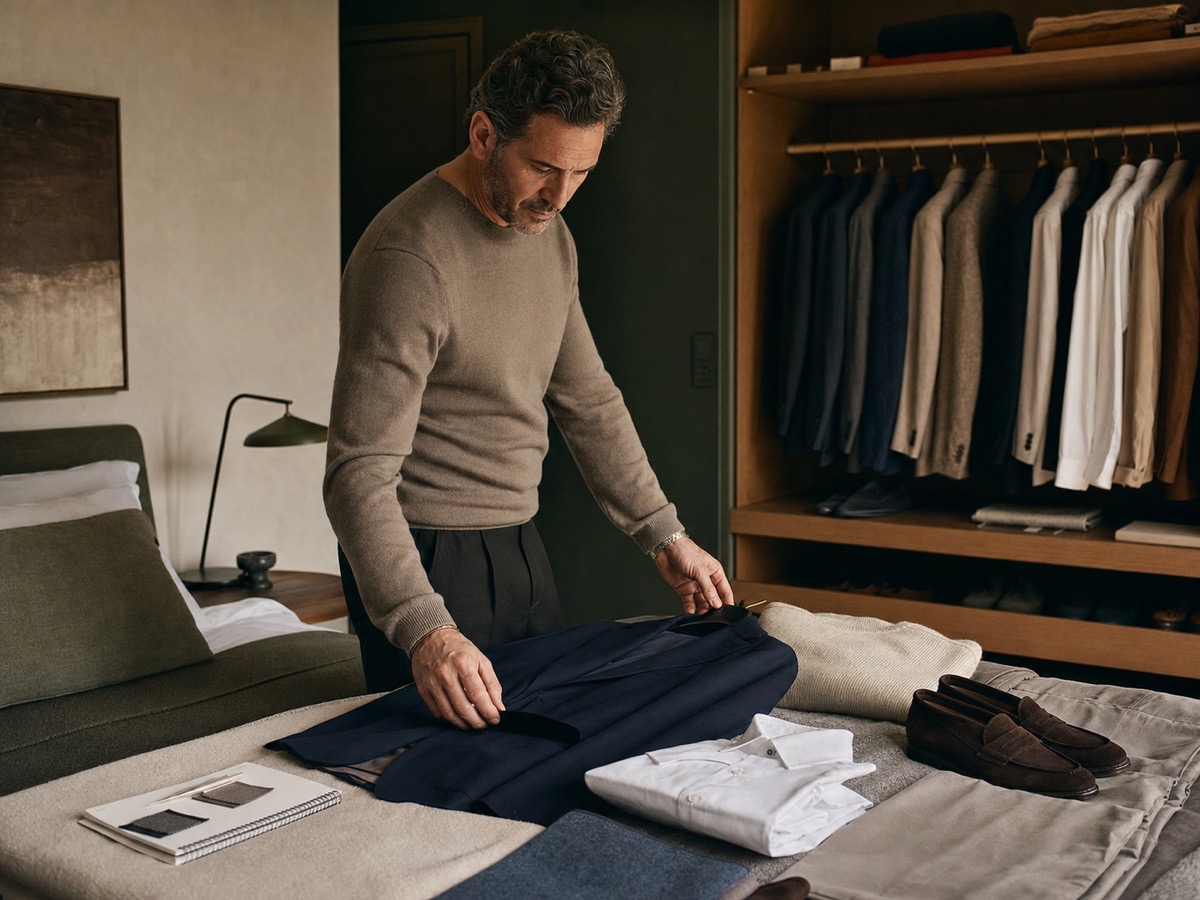
The most common mistake is buying good pieces in isolation. A beautiful jacket, excellent trousers, a quality knit, a pair of interesting shoes. Each item is defensible on its own. Together, they still do not make getting dressed easier.
This happens when a man shops from taste instead of structure. He sees something well made and assumes it will solve the wardrobe. But an item only earns its place if it connects to the rest of the system: the colors you already wear, the shoes you reach for, the formality level of your week, the body shape you are dressing, and the rooms you enter.
A better question is not "Do I like this?" It is "What three outfits does this complete?" If the answer is vague, the piece is probably another orphan. The wardrobe does not need more candidates. It needs clear combinations.
2. Keeping clothes from an older role
Many men carry a wardrobe from a previous stage of life. The office dress code changed. Their seniority changed. Their body changed. Their industry changed. Their wardrobe did not get the memo.
This is why a closet can be full and still feel wrong. The clothes were purchased for an old version of authority: sharper suits, slimmer shirts, tech-casual basics, finance-safe separates, or weekend clothes that made sense before the calendar became more visible. None of those pieces are automatically bad. They are simply answering a question you may no longer be asking.
Start with a wardrobe audit before you shop. Pull out the pieces that belong to your current role, current body, and current rooms. Then look honestly at what is left. That gap is usually more useful than another inspiration board.
3. Mistaking expensive for specific
Expensive clothes can still be generic. A luxury label does not know your face, your posture, your industry, your climate, your calendar, or the way you want to be read by a room.
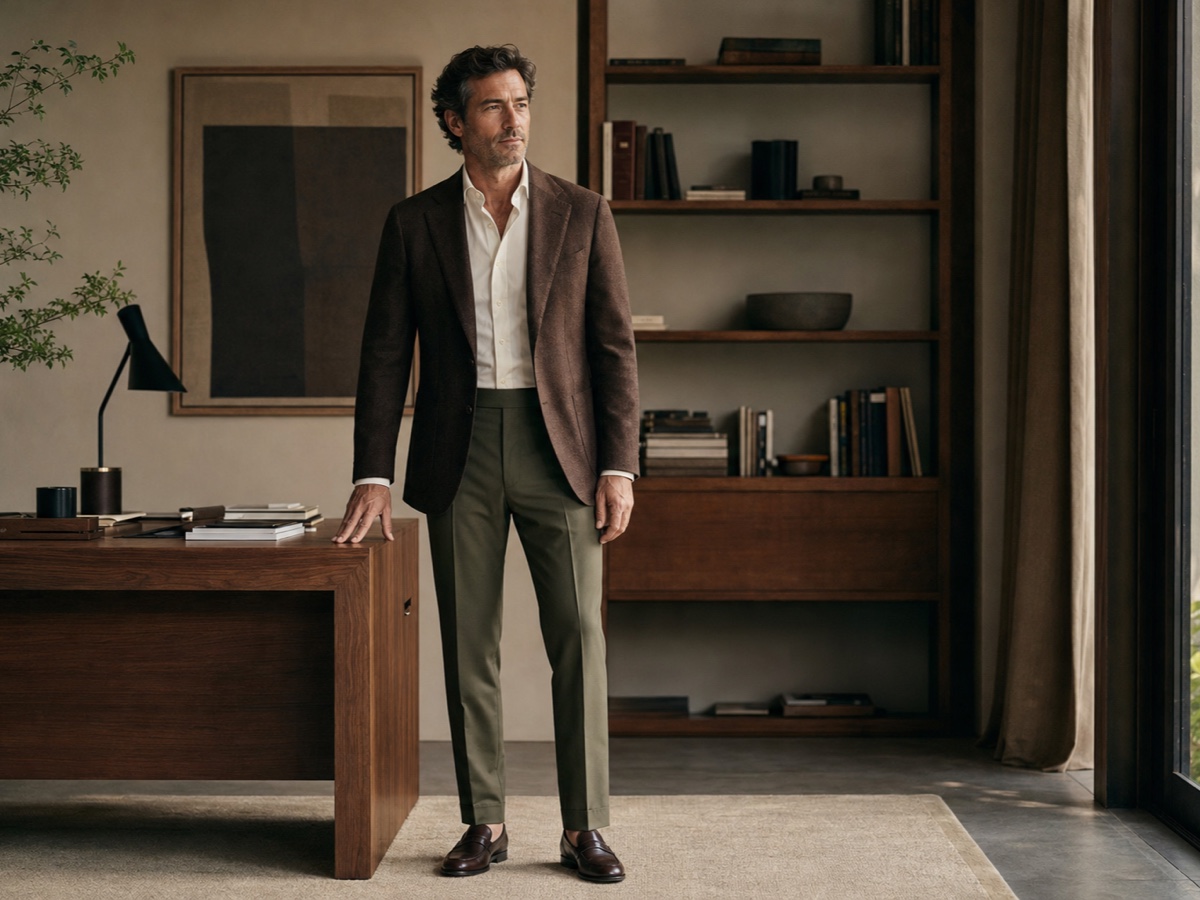
Specificity is what makes a wardrobe feel considered. It shows up in the right shade of brown instead of the standard one. A jacket shoulder that works with your frame. A trouser rise that makes your proportions cleaner. A knit texture that softens a severe face. A shoe choice that makes the outfit feel current without making you look like you are trying to be noticed.
This is where many men waste the most money. They buy the better version of the wrong thing. Better fabric, wrong fit. Better brand, wrong role. Better shoe, wrong wardrobe. The upgrade feels rational, but the result still does not click.
4. Letting casual clothes collapse the signal
Modern work has made casual dressing more important, not less. The mistake is assuming casual means the visual standard can drop.
For a man with responsibility, casual clothes still need structure. The difference between relaxed and careless is often quiet: fabric weight, collar shape, trouser line, shoe refinement, and how clean the outfit looks from a few feet away. A thin T-shirt, tired sneakers, and soft chinos may be comfortable, but they rarely carry the same authority as an overshirt, substantial knit, tailored trouser, and clean leather shoe.
If your week includes hybrid offices, founder meetings, travel days, and informal dinners, build casual outfit formulas on purpose. Your business casual outfits should still make sense beside your role.
5. Treating fit as a one-time issue
Fit is not something you solved once in 2018. Bodies shift. Brands change blocks. Proportions move. What looked correct five years ago can now look tight, short, long, dated, or simply less comfortable than it should.
The fit mistakes that hurt most are usually subtle. Sleeves cover too much hand. Trousers pool at the shoe. A jacket pulls slightly at the button. Knitwear clings at the stomach. Shirts sit too low at the collar. These details do not announce themselves, but they change the way the whole man reads.
Fit also has to match the period. Extremely slim clothes now often make a man look like he has not updated his eye in years. Oversized clothes can look considered on some men and sloppy on others. The answer is not trend-chasing. It is proportion that works now, on your body, with your authority intact.
6. Having no formality ladder
A strong wardrobe gives you degrees of formality. A weak wardrobe gives you extremes.
Many men have a suit for serious occasions and casual clothes for everything else. The problem lives in the middle: client lunches, internal leadership days, dinners, advisory calls, conferences, investor updates, and rooms where a full suit is too much but soft basics are not enough.
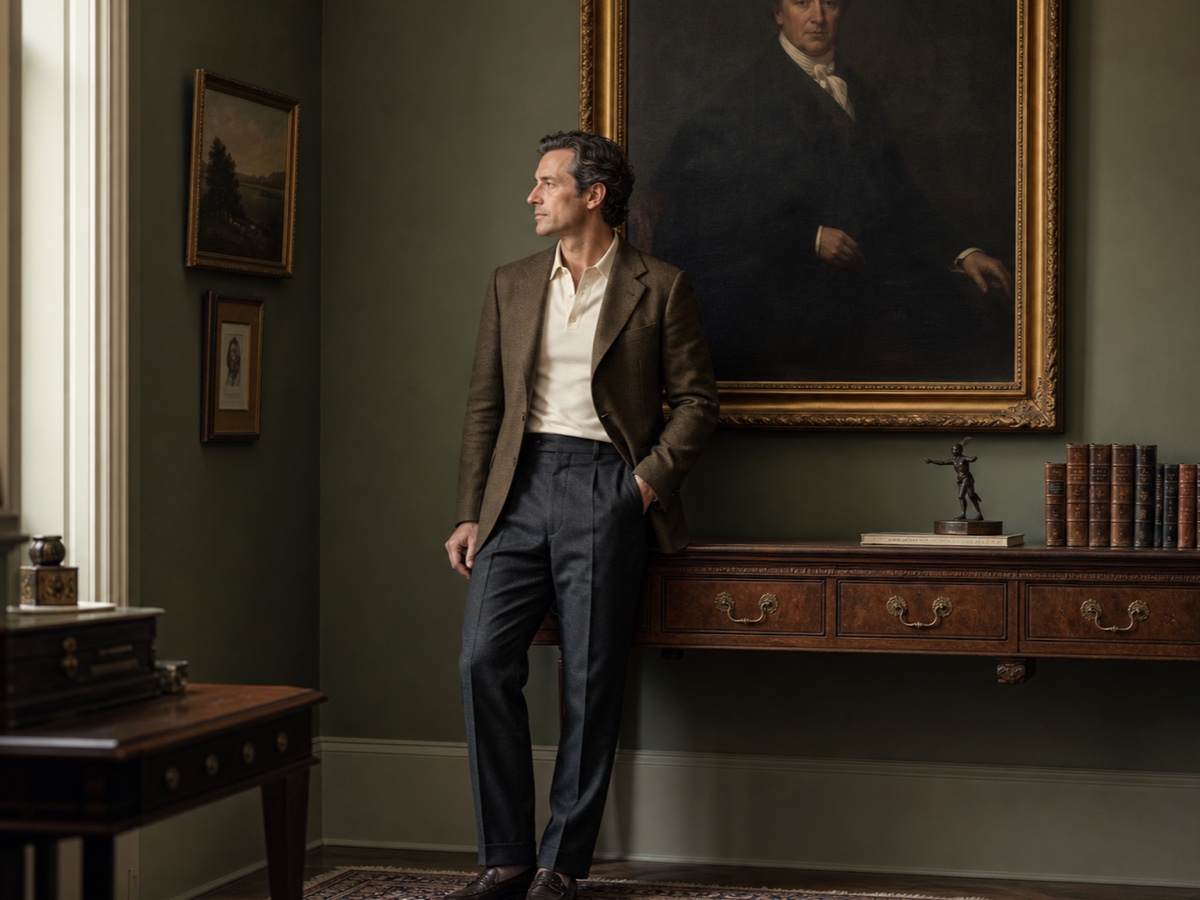
Build a ladder. At the relaxed end: refined casual layers, better trousers, good shoes. In the middle: soft jackets, knit polos, substantial shirts, textured tailoring. At the sharp end: suits or separates with proper shirts and shoes. Once the ladder exists, you can move one step up or down instead of reinventing the outfit every time.
7. Copying another man's uniform
There is nothing wrong with taking inspiration from stylish men. The mistake is copying the whole uniform without asking whether the context matches.
A creative director in Milan, a private equity partner in London, a founder in Singapore, and a consultant in New York do not need the same wardrobe. Their climates, industries, social codes, and bodies ask for different answers. Even if the clothes are excellent, the signal may be wrong on you.
Use inspiration as data, not instruction. What are you responding to? The color palette, the ease, the texture, the sharpness, the old-money restraint, the relaxed tailoring? Once you name the principle, you can translate it into your own system instead of borrowing someone else's costume.
8. Ignoring the rooms that repeat
Your wardrobe should be built around repeated rooms. Most men shop around categories: shirts, jackets, trousers, shoes. More useful is to shop around situations.
What do you wear to a board meeting? A client presentation? A first dinner with a major prospect? A conference where you are visible all day? A virtual call where your upper body carries the whole signal? A founder retreat where too formal feels strange and too casual feels careless?
When the rooms are clear, the wardrobe becomes easier to diagnose. You can see where you have enough range and where you keep improvising. The man who travels often needs different decisions than the man whose pressure point is a weekly boardroom. If travel is part of your visibility, connect the system to your business travel outfits so you are not starting from zero in a hotel room.
9. Using color only as decoration
Color is not decoration. It is one of the most practical tools in a man's wardrobe.
Most men lean on navy, white, grey, black, and denim because they feel safe. Safe can be useful. Too much safe can make a wardrobe flat, especially if your coloring needs warmth, softness, or contrast. A man may look more expensive in tobacco, cream, olive, chocolate, charcoal, or ink blue than in the default colors he has bought for years.
Good color choices also reduce shopping mistakes. Once your palette is clear, many tempting pieces become easy no's. The wardrobe starts to compound because each new item has a place to go.
10. Waiting until an event exposes the gap
Most men do not fix their wardrobe when they have time. They fix it when a room exposes the gap.
A panel invitation. A new role. A conference. A board meeting. A launch dinner. A founder photo shoot. Suddenly the clothes that were "fine" are no longer enough. The panic shop begins, and panic rarely builds a system.
High-performing men understand this in other parts of life. They build systems before pressure arrives. The same logic applies to the wardrobe. Whether you use an operator peer group, a coach, or even a founder mastermind, the useful pattern is the same: better inputs before the room gets expensive.
The fix: turn the wardrobe into a decision system
The answer is not to buy everything new. It is to create a decision system that makes the right clothes obvious and the wrong ones easy to leave behind.
That system includes your palette, fit rules, silhouette, formality ladder, outfit formulas, shopping filters, alteration list, and the specific rooms your wardrobe needs to support. Once those decisions are made, getting dressed becomes less emotional. You are not asking who you should be today. You are choosing the right expression of a system that already fits you.
Inside The Curated Outfit, The Curated Reset is built for men who want this level of clarity without turning style into another project to manage. The work is application-only because the answer has to be precise: your role, your body, your calendar, your taste, and the way you want to be understood.
FAQ
What are the most common wardrobe mistakes men make?
The most common wardrobe mistakes men make are buying isolated pieces, keeping clothes from an older role, ignoring fit changes, having no formality ladder, and using color without a strategy. These mistakes are usually subtle, but together they make getting dressed harder than it needs to be.
How do I know if my wardrobe is wrong for my role?
Your wardrobe is wrong for your role if it regularly feels too casual, too stiff, too dated, or too anonymous for the rooms you now enter. Look at the meetings, dinners, calls, and public moments that repeat. If your clothes do not support those situations, the system needs updating.
Should men over 35 follow fashion trends?
Men over 35 should notice trends through proportion, color, and styling, but they should not build their wardrobe around novelty. The stronger move is to keep the wardrobe current enough that it does not look stuck, while staying specific to your body, work, and temperament.
What should I fix first in my wardrobe?
Fix fit first, then outfit structure. Make sure your best jackets, trousers, shirts, knitwear, and shoes fit the body you have now. Then build repeatable combinations for the rooms you enter most often. Buying more before those two steps usually creates more noise.
When should a man work with a stylist?
A man should work with a stylist when his wardrobe affects his confidence, authority, or decision-making in visible rooms. The best time is before a major role change, public visibility increase, investor cycle, leadership season, or repeated calendar friction turns into another panic shop.
If your clothes are close but still not coherent, apply for The Curated Reset. We will build the wardrobe logic behind the rooms where you need to be read clearly.